Review · TOURS
Small Group Tour; Belgrade to Tirana 5 Balkan Countries in 8 Days
Five countries, eight days, one busy ride. This small-group route links Belgrade, Sarajevo, Mostar, Kotor, Prizren, Kruja, and Tirana across Serbia, Bosnia and Herzegovina, Montenegro, Albania, and Kosovo. I like the powerful mix of Ottoman, Austro-Hungarian, communist, and medieval sites, and I like that the route includes local food stops such as Mrizi i Zanave farm and Tirana’s markets. The main drawback is the pace: you will spend long hours in the vehicle, especially early in the trip, and this is not a holiday for slow mornings.
The group is limited to 10 people, which should make border crossings, city walks, and hotel pickups easier than on a large coach. Past praise has highlighted guides including Anna, Ana, Juli, and Taulant, along with quick help from Alban and Sirma during trip planning. At $2,754.29 per person, the tour is costly, but transport, seven breakfasts, seven nights of accommodation, guide service, fuel, road taxes, tourist taxes, and listed entry tickets are covered.
In This Review
- Six things to know before booking
- Belgrade to Sarajevo, a strong opening with a long road
- Sarajevo and Mostar, where history is close to the pavement
- Kotor, a compact old town beneath the mountains
- Budva, Sveti Stefan, and Shkoder in one day
- Mrizi i Zanave and Prizren, the trip’s best food and culture pairing
- Gjakova, Decan, and Rahovec, three different sides of Kosovo
- Kruja, Albanian resistance and an old bazaar
- Tirana food, markets, and Bunk’Art 2
- What the $2,754.29 price really covers
- Who should choose this fast-paced Balkan route?
- Should you book this tour?
- FAQ
- Where does the tour start?
- Where does the tour end?
- How many countries does the tour visit?
- How long is the tour?
- What is included in the price?
- Are meals included?
- What is the maximum group size?
- Is single-room accommodation available?
Six things to know before booking
- Five countries in one cross-border route: You visit Serbia, Bosnia and Herzegovina, Montenegro, Albania, and Kosovo without arranging separate transport.
- A maximum of 10 people: The small group suits travelers who want guidance without a full-size coach.
- Long driving days: The first day includes a substantial road journey from Belgrade toward Sarajevo, and traffic can add time.
- Food is part of the story: The route includes Sarajevo specialties, a farm lunch opportunity, Albanian byrek, qofte, gjize, coffee, and raki.
- Uneven ground in Sarajevo: Ruins and historic areas require comfortable shoes and steady footing.
- The trip ends in Tirana: Hotel drop-off is provided there, but the tour begins in Belgrade at 8:00 a.m.
Belgrade to Sarajevo, a strong opening with a long road
Your tour begins with hotel pickup in Belgrade. The first walk takes you to Belgrade Fortress and Kalemegdan Park, set above the meeting point of the Sava and Danube rivers. The setting gives you an immediate sense of Serbia’s capital as a river city with a long military past.
At the fortress, the Pobednik monument is a key photo stop. Its history reaches back to 1913, and its position gives you broad views across the water and over Belgrade. Kalemegdan adds a welcome patch of green, with trees and quiet paths after the stone walls and open viewpoints.
From there, you walk along Knez Mihailova, Belgrade’s main pedestrian street and a social center for local life. The route finishes at Republic Square. This is a sensible introduction because you see the fortress, a major city street, and a central meeting place rather than spending the whole morning inside one museum.
The road then turns toward Bosnia and Herzegovina. Zvornik, beside the Drina River, is mainly a lunch and leg-stretch stop. You get free time to try local food or walk through the town, but the planned visit is only about an hour. Think of it as a useful pause rather than a full sightseeing visit.
The drive to Sarajevo takes up much of the afternoon. That is the first clear tradeoff of the trip. You cover ground that would be difficult to connect independently in a week, but you give up time for a slower look at each place. One useful advantage is having reading time in the vehicle, so bring something connected to Balkan history if you want to make the road hours count.
Other trips worth a look in Belgrade:
- Northern Serbia: Sremski Karlovci and Novi Sad Full-Day Tour from Belgrade
★ 5.0 · 425 reviews - Day Trip from Belgrade: Gems of Eastern Serbia
★ 5.0 · 424 reviews - Belgrade Nightlife Bar Pub Club Crawl with Drinks
★ 5.0 · 277 reviews
Sarajevo and Mostar, where history is close to the pavement
Sarajevo deserves attention, and the tour gives it a fuller visit than several of the smaller stops. You walk across uneven ground and see physical reminders of the Yugoslav War, including bullet holes and cannon marks. These details are not tucked away in a museum. They appear on buildings and along ordinary streets.
The city’s story reaches back to the medieval Bosnian Kingdom, then moves through Ottoman and Austria-Hungarian rule. The route takes you through markets, bazaars, mosques, churches, and synagogues. That combination explains why Sarajevo is often called the European Jerusalem. You do not just see one religious quarter or one architectural style. You see several traditions sharing a compact city center.
The Latin Bridge is one of the essential stops. It crosses the Miljacka River and takes its name from the Catholic quarter once known as Latinluk during Ottoman times. The bridge is linked to the assassination of Archduke Franz Ferdinand, an event that helped trigger the First World War. Your guide’s explanation matters here because the location can look modest until you understand its place in European history.
Food gives Sarajevo a more relaxed side. The city is known for meat dishes and desserts, and you will have chances to try local specialties during free time. Lunch is not included, so budget separately for meals and drinks. That arrangement gives you choice, but it also means the final cost will be higher than the headline tour price.
The route continues to Mostar and its famous Old Bridge. The bridge is the visual centerpiece, but the surrounding Old Bazaar is what makes the stop feel complete. Expect cobbled lanes, old mosques, Turkish-style shops, and stones marked with Don’t Forget, a reminder of the city’s wartime destruction.
Mostar is a UNESCO site, and you get free time to wander after the guided portion. That is valuable because the best way to understand the town is to move at street level, not simply stop for a bridge photograph. Still, the schedule allows about an hour at several individual points, so you should keep an eye on the clock.
Kotor, a compact old town beneath the mountains
Day three brings you to Kotor in Montenegro. The old town is a UNESCO World Heritage site filled with narrow cobblestone streets. Its confusing layout was designed to make it harder for invaders to move through the town. Today, the same maze gives Kotor much of its character.
Small plaques on older buildings and churches identify their original use and construction dates. You visit Saint Luke’s Church, which has special meaning for local residents because it represents unity. The guided walk lasts about three hours, followed by free time.
Kotor is one of the places where the tour’s structure works well. You receive enough orientation to understand the old town, then have time to choose your own cafés, photographs, and side streets. You should wear shoes with a good grip, since the paving can be uneven.
The drawbacks are practical. Kotor is a popular stop, and the old town’s tight lanes can feel crowded at busy times. The schedule also moves on the next day, so you will not have unlimited time for the wider bay area. The tour focuses on the historic center rather than offering a full coastal stay.
Budva, Sveti Stefan, and Shkoder in one day
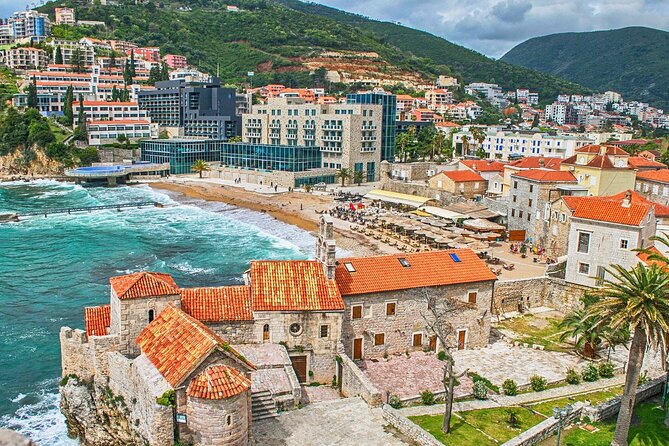
Budva offers a different face of Montenegro. It has a modern section with shopping, offices, restaurants, and bars, plus a historic center with churches and medieval buildings. The guided stop lasts about an hour, so you will see the old town but should not expect a detailed museum visit.
Sveti Stefan is a short photo stop on the road toward Albania. The former fishing settlement occupies a small island connected to the coast. It now operates as an exclusive residential resort, and the island cannot be visited. The view from the shore is still worth the pause, but set your expectations correctly: this is a viewpoint, not an island tour.
After crossing into Albania, you reach Shkoder. The city has more than a thousand years of habitation and gives its name to the largest lake in the Balkans. Rozafa Castle is the main attraction, with views toward the lake and the point where three rivers run together before reaching the Adriatic Sea.
The castle also gives useful context for Shkoder’s position at a crossroads between inland Albania, Montenegro, and the Adriatic. The city’s architecture shows Venetian influence, and its traditional masks are handmade locally. If you happen to visit in February, the carnival can add a special layer to the stop, though the festival is not part of the tour’s standard promise.
Shkoder receives about two hours, more than Budva or Sveti Stefan. That extra time makes sense because the castle requires both a visit and a look at the surrounding views. The road day remains busy, so carry water and snacks. They are not included.
A completely different kind of day:
- Taxi to/from Belgrade Airport to/from Belgrade City Center
★ 5.0 · 241 reviews - Belgrade Big Tour: Top Attractions and Belgrade Neighborhoods
★ 5.0 · 232 reviews - Along the Danube: Golubac Fortress & Iron Gate Gorge day trip from Belgrade
★ 4.5 · 185 reviews - From Belgrade: Golubac Fortress & Iron Gate Danube Gorge
★ 4.8 · 185 reviews
Mrizi i Zanave and Prizren, the trip’s best food and culture pairing
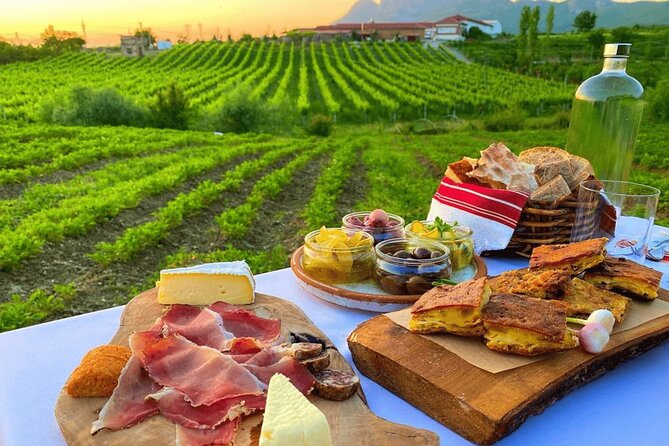
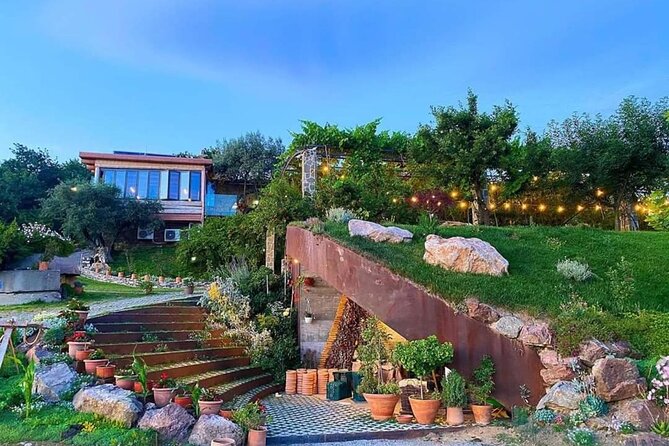
Mrizi i Zanave is one of the most distinctive stops on the route. This slow-food farm collects, prepares, and preserves regional organic products. You tour the farm, hear how the family business developed, and see how old communist buildings were reused for storage.
The farm has helped create work for more than 400 people in nearby communities. That makes the visit more than a meal stop. You get a look at how local agriculture, food production, and rural business can support a wider area.
You have free time for a traditional lunch or to buy fresh produce. Lunch is extra, but this is one place where spending more may add real value to the day. The tour’s price covers breakfast each morning, not midday meals, so farm food belongs in your meal budget.
Later, you reach Prizren in Kosovo, a city known as the country’s cultural capital. The old town is shaped by the river, stone bridges, religious buildings, and layers of Illyrian, Byzantine, and Ottoman influence. You can walk the streets at an easy pace and stop for food or coffee during free time.
The Sinan Pasha Mosque is included, with colorful arabesque decoration and patterned interiors. You also visit Kalaja Fortress above the town. The climb rewards you with a wide view over Prizren, but the uphill route may feel demanding after a full day on the road.
August brings Dokufest, an international short film festival held in the medieval city. The festival is not guaranteed by the tour dates, but if your trip matches it, Prizren will feel especially active. The town also works well outside festival season because its main attractions sit within a walkable area.
Gjakova, Decan, and Rahovec, three different sides of Kosovo
Gjakova is home to Kosovo’s oldest and largest bazaar. It has been destroyed and rebuilt more than once, including after the Balkan wars, the Second World War, and the Kosovo War. Today, the rebuilt market offers shops selling handmade crafts and traditional goods.
You have around an hour here. That is enough for a meal, a short walk, or a look at local products, but not enough for a long shopping session. If you see something you want, do not assume you will pass through again.
The Monastery of Decan provides a sharp change of mood. Its white exterior is memorable, but the interior frescoes are the real reason for the visit. The monastery entered UNESCO protection in 2004, and Orthodox monks still live there and produce food such as cheese.
This stop also requires sensitivity. It is an active religious site, not simply an old building. Dress and behave respectfully, and follow your guide’s instructions.
Rahovec Valley finishes the Kosovo section with vineyards on soft hills at elevations between 350 and 520 meters. Grapes have been grown here since Illyrian times, and the area holds a wine festival each September. The tour includes a visit to the wine-growing region, but the provided details do not promise a tasting, so do not book expecting a formal wine experience.
Kruja, Albanian resistance and an old bazaar
Kruja sits on rocky ground about 560 meters above sea level, on the slopes of Sarisalltik Mountain. Its importance comes from Albanian resistance to Ottoman expansion in the fifteenth century.
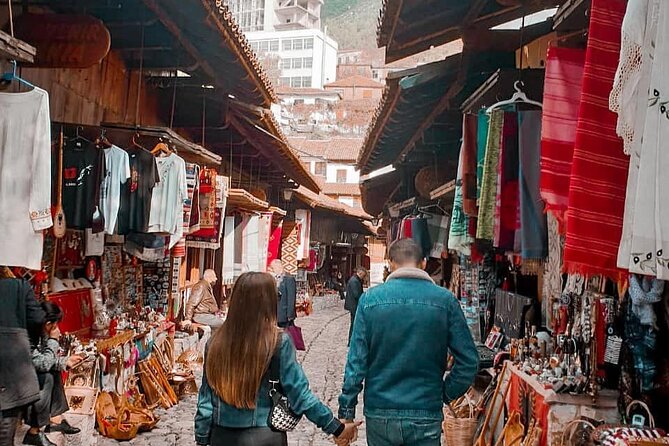
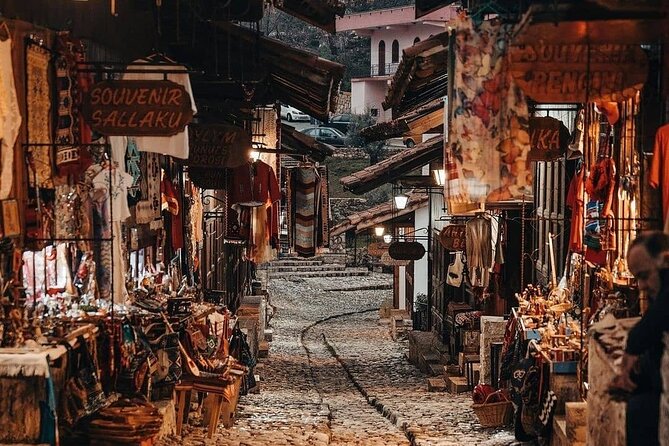
The Medieval Old Bazaar is one of the biggest and oldest in the Balkans. Wooden buildings and narrow lanes give it a strong sense of place, and this is the best stop on the route for Albanian souvenirs. You can look for carpets, jewelry, and handmade goods, though prices may require bargaining.
Kruja Castle sits on a rocky hill and dates to the fifth century AD. Your tour leader takes you along less obvious paths once used by local people to leave the fortress unseen during attacks. The castle stop lasts about an hour, followed by free time for lunch and shopping.
This is another active day on uneven ground. The combination of hills, stone paths, and a long road schedule means comfortable shoes are essential. The payoff is a town that feels tied to Albania’s national story rather than designed only for sightseeing.
Tirana food, markets, and Bunk’Art 2
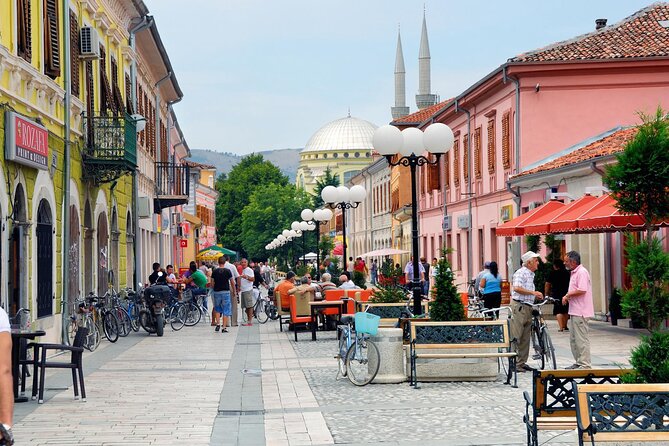
The final day focuses on Tirana through food and ordinary city life. A local companion joins you, taking you to places that are easy to miss if you only follow the main sights.
At Tregu Çam, you try byrek, a pastry filled with options such as cheese, meat, or spinach. You then visit Çam Bazaar, founded by the Albanian Çam community, where sellers offer clothing, household equipment, and other goods. Bargaining is part of the visit.
The route continues through local neighborhoods, street markets, and alleyways. You sample a traditional dessert, sit down for Albanian coffee, and see vendors selling fresh fruit and vegetables. This part of the tour is less about monuments and more about how Tirana works day to day.
At Pazari i Ri, also called the New Bazaar, you try qofte with fresh bread. Vegetarians can have bread with gjize, a cottage cheese. Albanian raki is included in the tasting, so take the portion seriously. It is a strong finish to a food-focused morning.
Bunk’Art 2 gives the final historical note. The museum occupies a former nuclear bunker built to shelter communist leader Enver Hoxha and senior party members during the Cold War. Its exhibits cover the communist army and everyday life under the regime, making it a useful counterpoint to the medieval castles and Ottoman streets seen earlier.
What the $2,754.29 price really covers
The price is based on double or twin room occupancy. It includes accommodation and breakfast for seven nights, professional guiding, company transport, listed entry tickets, hotel pickup in Belgrade, hotel drop-off in Tirana, tourist taxes, road taxes, and petrol.
That is a meaningful package for a route crossing five countries. Booking separate vehicles, border connections, hotels, and guides would take considerable planning. The small group also adds value because a van for up to 10 people can reach places that are less convenient with a large bus.
Still, the price does not cover lunch, drinks, snacks, souvenirs, or personal expenses. Add money for meals every day. Single occupancy costs an additional 30 euros per night per person.
The tour is non-refundable and cannot be changed for any reason. That is a serious condition, so book only when your dates and plans are firm.
Who should choose this fast-paced Balkan route?
I would choose this tour if you want a broad first look at the western Balkans and prefer having transport, hotels, border routes, and guides arranged for you. It suits active people who are comfortable walking on cobblestones and uneven ground, changing cities often, and spending long stretches in a vehicle.
You will like it less if you want several nights in each city, long lunches, or free time for museums and independent wandering. The schedule gives you a taste of many places rather than a slow study of one country.
The strongest parts are Sarajevo, Mostar, Kotor, Prizren, Mrizi i Zanave, and Tirana’s food walk. Belgrade and Kruja provide good openings and endings, while Zvornik and Sveti Stefan work mainly as short breaks. Guides such as Anna, Ana, Juli, and Taulant have been praised for professional, patient service, so the quality of your guide can add greatly to the experience.
Should you book this tour?
Book it if your priority is coverage and convenience. In eight days, you see five countries, several UNESCO sites, major religious and political landmarks, mountain towns, markets, a farm, vineyards, and local food stops.
Skip it if you need a relaxed holiday. This is a carefully packed road trip, not a slow retreat. For an active first visit to the Balkans, though, the route offers strong value despite its high price, especially because the transport, accommodation, taxes, fuel, and many entries are already handled.
FAQ
Where does the tour start?
The tour starts in Belgrade, Serbia, with hotel pickup at 8:00 a.m.
Where does the tour end?
The tour ends in Tirana, Albania, and hotel drop-off in Tirana is provided.
How many countries does the tour visit?
The route covers Serbia, Bosnia and Herzegovina, Montenegro, Albania, and Kosovo.
How long is the tour?
The tour lasts approximately eight days.
What is included in the price?
The price includes seven nights of accommodation with breakfast, seven breakfasts, a professional tour guide, company transport, listed entry tickets, hotel pickup in Belgrade, hotel drop-off in Tirana, tourist taxes, road taxes, and petrol.
Are meals included?
Breakfast is included, but lunch, drinks, and snacks are not included. Some food tastings and meal opportunities appear during the route, but you should pay for those separately unless specifically covered.
What is the maximum group size?
The maximum group size is 10 people.
Is single-room accommodation available?
Yes. Single-room occupancy is available for an extra 30 euros per night per person. The standard price is based on double or twin room occupancy.
Just added in Belgrade
- Private Half Day Serbia Tour Novi Sad and Petrovaradin Fortress★ 5.0 · 3 reviews
- Zasavica Bike Tour★ 5.0 · 1 review
- Private Belgrade Street Art and Adventures Walking Tour★ 5.0 · 4 reviews
- Private Wine Tasting by Party in Belgrade★ 5.0 · 3 reviews
- VIP Reservation Service in Belgrade★ 5.0 · 2 reviews
- Urban & Alternative Belgrade tour★ 5.0 · 4 reviews
- Rakija Tasting for groups in Belgrade★ 5.0 · 1 review
- Wonders of Eastern Serbia a Full Day Tour from Belgrade★ 5.0 · 1 review
Tours, compared.
Northern Serbia: Sremski Karlovci and Novi Sad Full-Day Tour from Belgrade
Read our review →
Belgrade Big Tour: Top Attractions and Belgrade Neighborhoods
Read our review →
Belgrade Underground Tour w/ Sparkling Wine Along the River
Read our review →
Iron Gate NP Tour with 1-hour speedboat ride + 2 viewpoints
Read our review →
Culinary Tour – get to know the Serbian food. Come hungry!
Read our review →