Review · PRIVATE
NATO Bombing of Belgrade Private Tour
The scars of 1999 still shape Belgrade. This private tour connects five bombing sites with clear explanations, period images, and the personal cost behind the headlines. I like the small private format, which lets your group focus on difficult questions without being swept along by a large crowd. I also like the on-site visual storytelling, praised for making the events easier to understand. The main drawback is the narrow subject: if you want a broad introduction to Belgrade, this is not it.
You will spend about three to four hours riding between locations with a guide who also drives. The $145.10 per-person price is easier to justify for two or more people, since it covers private transport, hotel pickup and drop-off, bottled water, and an English-speaking guide. Still, this is an emotionally heavy outing, and the Serbian point of view receives the most attention.
In This Review
- Key points to know before booking
- Why this Belgrade tour matters
- RTS and the monument to the 16 night-shift workers
- The Ministry of Defence and the April 29 attack
- Ušće, from Communist headquarters to business center
- The Chinese Cultural Center and a disputed strike
- The Air Force Command Building and the final stop
- How the private format changes the experience
- Is $145.10 per person a fair price?
- Who should book this experience?
- Booking and cancellation details
- Should you book the NATO Bombing of Belgrade Private Tour?
- FAQ
- Where does the tour take place?
- What time does the tour start?
- How long does the experience last?
- Is hotel pickup included?
- Is this a private tour?
- What language is the tour offered in?
- Can I cancel for a full refund?
Key points to know before booking
- Five major sites in one half-day: The route covers RTS, the Ministry of Defence, Ušće, the former Chinese embassy, and the Air Force Command Building.
- A private guide and driver: Your own group participates, with pickup and drop-off included from listed locations, apartments, Airbnbs, and the Belgrade port.
- Strong visual support: Photographs and on-site remains help turn a complicated military campaign into something you can follow.
- A memorial site left unrepaired: The RTS building still shows the damage connected with the deaths of 16 mostly young night-shift workers.
- A sensitive political subject: The tour presents Serbia’s experience of the 1999 NATO campaign, so you should expect a focused and sometimes somber account.
- Best for history-minded visitors: The experience suits you if you want context and eyewitness-style storytelling more than museums or general sightseeing.
Why this Belgrade tour matters
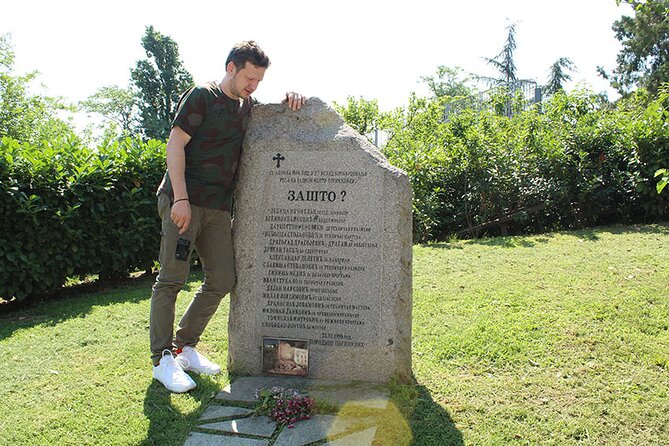
The 1999 NATO bombing campaign is not distant history in Belgrade. Damaged buildings remain part of the city’s daily view, and several stops on this route sit beside ordinary streets and modern offices. You are not just looking at a plaque or a preserved military exhibit. You are seeing places that were hit, rebuilt, or left damaged as reminders.
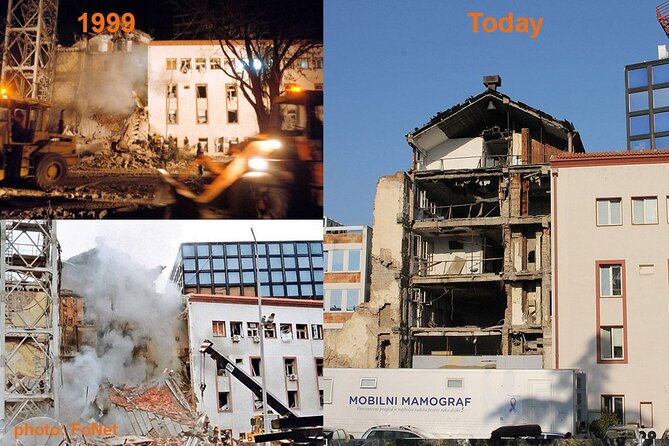
That setting gives the tour its real value. A guide can show you an old photograph, then point to the same structure in front of you. The gap between the image and the present-day city helps you understand both the destruction and the rebuilding.
The experience also gives you a Serbian perspective on the campaign. That is useful, but you should know what it means. The tour focuses on Serbian losses, damaged institutions, military targets, and disputed decisions. It is not designed as a neutral military seminar covering every NATO government or political argument in equal detail.
I would book it when I wanted to understand how the bombing affected Belgrade itself. I would not choose it as my only history activity in the city, since it covers one conflict and one national viewpoint in depth.
A few more options to weigh up in Belgrade
- Private Red Star-Partizan Stadium Tour in Belgrade
★ 5.0 · 72 reviews - Belgrade Private City Tour
★ 5.0 · 41 reviews - Private Transfer
★ 5.0 · 40 reviews
RTS and the monument to the 16 night-shift workers
The first stop is the Radio Television of Serbia building, usually called RTS. Outside, you will see the monument named Zašto?, or Why? The question is simple, but the story attached to it is painful.
Here, the guide explains the night attack that killed 16 people, mostly young workers on the night shift. The original building remains unrepaired at the site, giving the account a physical focus that no photograph alone could provide.
You have about 30 minutes here. That is enough time for the guide to explain what happened and show supporting images without turning the visit into a long lecture. The free admission also keeps the stop simple: you step out, listen, look, and continue.
This is likely to be one of the most affecting moments of the morning. It is also where the tour’s tone becomes clear. You should expect an account centered on the people inside the building, not only on the military reasoning behind the strike.
The Ministry of Defence and the April 29 attack
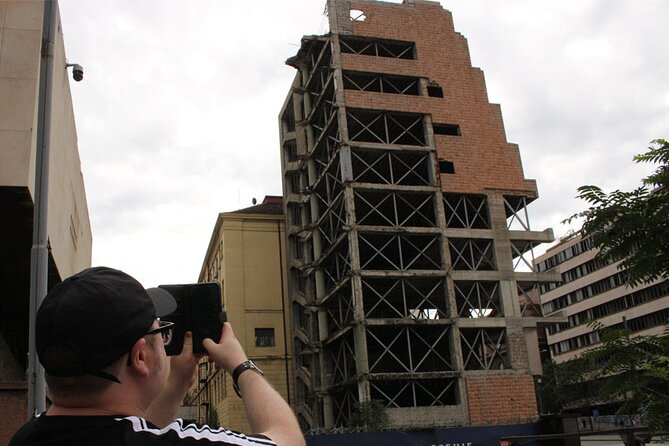
The Ministry of Defence is one of Belgrade’s most familiar images from the bombing. Its damaged sections have become a visual shorthand for the 1999 campaign, and the building makes the destruction easy to grasp even if you know little about the conflict.
The guide discusses the night of April 29, 1999, when several military objectives were hit. The attack killed one person, and civilian buildings nearby were also damaged. You will hear how the ministry fit into the campaign and why this site became such a common subject in photographs.
The planned stop lasts around 30 minutes. Since you are visiting from outside rather than touring an interior museum, the guide’s explanation matters a great deal. The value comes from linking the visible structure with the dates, targets, and nearby civilian effects.
The limitation is that a damaged building can only tell part of the story. If you want detailed maps, military records, or a full account of NATO planning, you will need another source. For a compact city tour, though, this is an effective stop because the subject is immediately visible.
Ušće, from Communist headquarters to business center
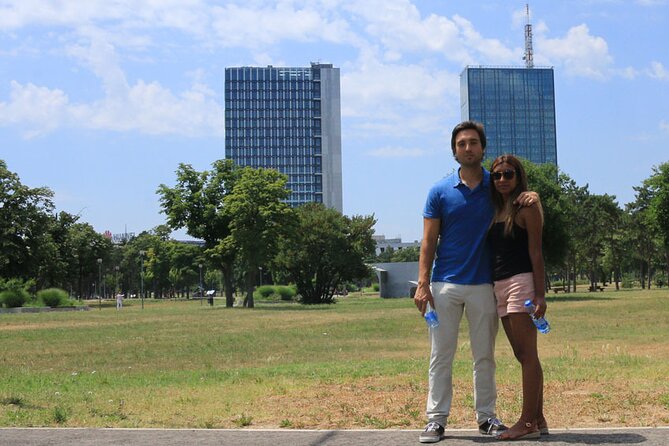
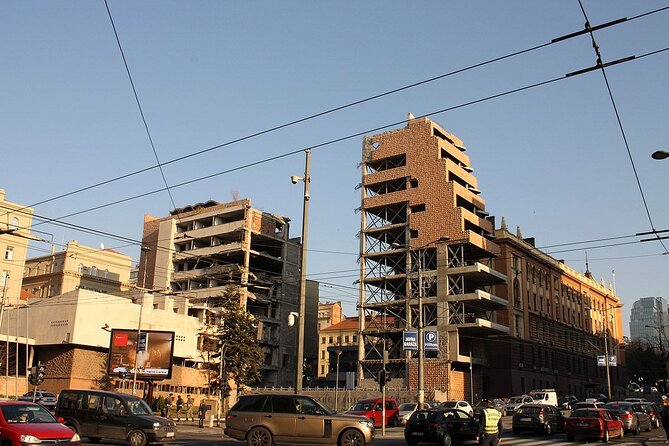
Next comes Ušće, a modern business center built on the skeleton of the former Central Committee of the Communist Party of Yugoslavia. The building retains the appearance of the original structure, so the stop connects the 1999 bombing with an older chapter of Yugoslav political history.
This is one of the more interesting stops because the building was designed to resist missile damage. The guide explains why it was considered NATO missile-proof in 1999 and why it was targeted in the first place.
You get another 30-minute visit, although much of the learning here will come from the guide rather than from a memorial at ground level. The building’s changing use gives you a useful reminder that Belgrade’s war scars are part of a city that continued to work, rebuild, and modernize.
I like this stop because it adds political context to the route. The tour is not only about broken concrete. It also asks why certain institutions became targets and how a symbol of Communist Yugoslavia later became a business center.
A completely different kind of day:
- Northern Serbia: Sremski Karlovci and Novi Sad Full-Day Tour from Belgrade
★ 5.0 · 425 reviews - Day Trip from Belgrade: Gems of Eastern Serbia
★ 5.0 · 424 reviews - Belgrade Nightlife Bar Pub Club Crawl with Drinks
★ 5.0 · 277 reviews - Taxi to/from Belgrade Airport to/from Belgrade City Center
★ 5.0 · 241 reviews
The Chinese Cultural Center and a disputed strike
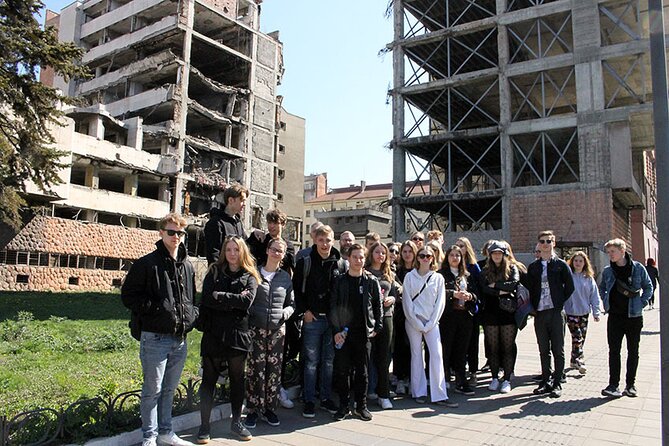
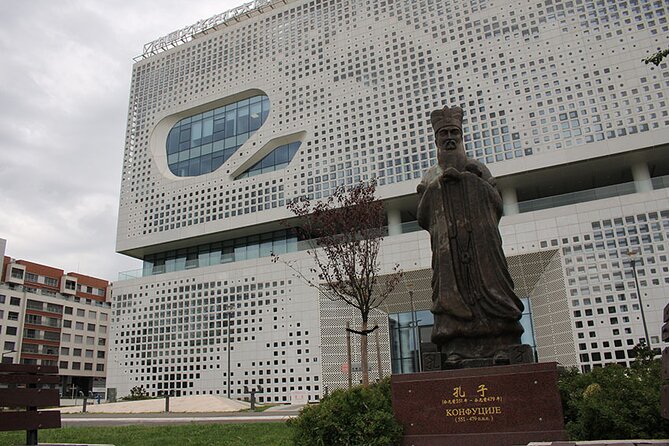
The former Chinese embassy, now the Chinese Cultural Center, is perhaps the most controversial location on the route. Four Chinese citizens died here on the night of May 7, 1999.
The official explanation discussed on the tour is that the bombing resulted from an intelligence mistake. At the same time, the guide presents the suspicion that the building had another purpose. This makes the stop more politically charged than some of the others, and you should be prepared for a story without a tidy ending.
A 30-minute visit gives you time to hear the competing explanations and consider why the incident remains sensitive. The site is useful for understanding how the campaign affected foreign nationals and international relations, not only Serbian citizens.
This is also a place where you should listen carefully to the wording. The tour presents disputed claims, so it is sensible to treat them as part of the controversy rather than settled fact. A good guide should help you separate confirmed deaths and damage from theories about the building’s role.
The Air Force Command Building and the final stop
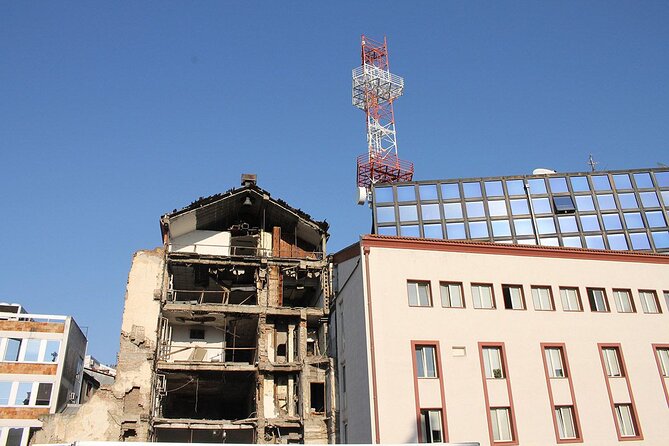
The last stop is the Air Force Command Building, a 1935 structure linked with Yugoslav and Serbian architecture. Before the bombing, it was regarded as an important example of the period’s design. On April 5, 1999, two missiles hit it because of its strategic role.
The guide also tells the story of the pilots who knowingly entered the fight against a much stronger NATO air force. According to the tour’s account, some lost their lives defending the skies over Serbia and Yugoslavia.
This final stop shifts the focus from damaged buildings to military personnel. That gives the route a natural ending, although it also reinforces the tour’s Serbian perspective. You will hear about courage and sacrifice from the side that faced the bombing at home.
The building itself brings together architecture, military history, and memory. After several stops focused on destruction and civilian loss, it gives you a clearer sense of the people and institutions that Serbia viewed as defending the country.
How the private format changes the experience
A private tour is more than a comfort feature here. The subject involves civilian deaths, national trauma, and contested political claims. With only your group participating, you can ask for clarification, pause over a photograph, or spend more time on a site that interests you.
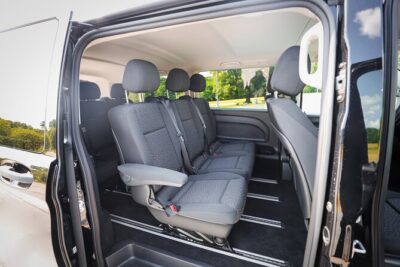
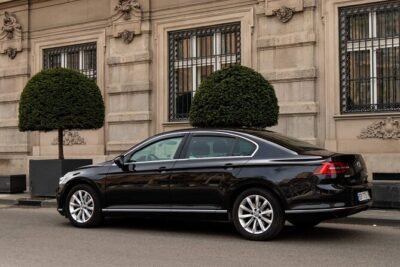
The guide also drives, which makes the route practical. You do not need to work out public transport between five separate locations, and hotel pickup and drop-off save time at the beginning and end. Pickup can also be arranged from an apartment or Airbnb if you specify the address. The company can collect you at the Belgrade port where cruise boats dock.
The listed start time is 10:00 a.m. The tour lasts roughly three to four hours, with each of the five stops planned for about 30 minutes. Since those stops total about two and a half hours, the remaining time is used for driving and explanations along the route.
Bottled water is included. Food, drinks beyond that, and personal expenses are not, so eat before departure if you prefer a full morning without a break. The experience is offered in English.
Is $145.10 per person a fair price?
At $145.10 per person, this is not a budget sightseeing ride. The price makes the most sense when you value private transportation and focused guiding more than a low-cost group excursion.
You are paying for a private guide and driver, hotel pickup and drop-off, bottled water, and a route that would be awkward to organize independently in one morning. If two or three people share the booking, the convenience becomes easier to appreciate. A solo visitor pays the full per-person price for a more personal experience.
The tour also saves research time. You could find the five locations yourself, but you would need to study the events, identify the correct buildings, and arrange transport. The guide adds the dates, photographs, and explanations that connect each site.
I would compare the price with your interests. If the 1999 bombing is a central reason for visiting Belgrade, the cost may be worthwhile. If you are mainly looking for a cheap city orientation, choose a general walking tour instead.
The experience has an overall rating of 4.3 from 11 ratings. That is a positive result, but it is based on a small sample. The clearest praise centers on education, visual presentation, and the chance to see the locations while hearing the story from the guide.
Who should book this experience?
You should consider this tour if you enjoy modern history, military history, architecture, or difficult political subjects. It is especially useful if you learn best through a mix of photographs, buildings, and spoken explanation.
It can also work well for a private family group or a small party with a shared interest in the Balkan conflicts. The guide can keep the pace suited to your group, and the transport removes much of the practical hassle.
You may want to skip it if you prefer light sightseeing. The subject includes deaths of civilians and soldiers, damaged buildings, and unresolved questions. It is not a cheerful morning excursion, though it can be an important one.
You should also arrive ready to hear a Serbian-centered account. That does not make the information useless, but it does mean you should keep your own judgment switched on. The strongest experience will come if you listen closely, ask fair questions, and later compare the account with other historical sources.
Booking and cancellation details
Confirmation is normally sent at booking. If you book within 20 hours of departure, confirmation arrives as soon as possible and depends on availability.
Free cancellation is available when you cancel at least 24 hours before the 10:00 a.m. start time. Cancellations or changes made less than 24 hours before departure are not accepted for a refund, and the cut-off follows local time.
The tour provider is Serbian Private Tours. Most people can participate, and only your own group joins the activity.
Should you book the NATO Bombing of Belgrade Private Tour?
Book it if you want a focused, emotionally direct look at Belgrade’s 1999 bombing sites and prefer a private guide to explain what you are seeing. The RTS memorial, the unrepaired building, the Ministry of Defence, and the disputed Chinese embassy strike give the route real weight.
Think twice if you want a neutral account of the entire NATO campaign or a broad introduction to Serbia. This tour has a clear Serbian viewpoint and a serious tone. For the right reader, that focus is its greatest strength. For everyone else, it may feel too narrow for the price.
FAQ
Where does the tour take place?
The tour takes place in Belgrade, Serbia, and visits five locations connected with the 1999 NATO bombing campaign.
What time does the tour start?
The listed start time is 10:00 a.m.
How long does the experience last?
The tour lasts approximately three to four hours.
Is hotel pickup included?
Yes. Hotel pickup and drop-off are included. Pickup can also be arranged from an Airbnb, apartment, or the Belgrade port if you provide the location.
Is this a private tour?
Yes. Only your group participates in the activity.
What language is the tour offered in?
The tour is offered in English.
Can I cancel for a full refund?
Yes, if you cancel at least 24 hours before the experience start time. Cancellations or changes made less than 24 hours before the start are not refunded or accepted.
Just added in Belgrade
- Private Half Day Serbia Tour Novi Sad and Petrovaradin Fortress★ 5.0 · 3 reviews
- Zasavica Bike Tour★ 5.0 · 1 review
- Private Belgrade Street Art and Adventures Walking Tour★ 5.0 · 4 reviews
- Private Wine Tasting by Party in Belgrade★ 5.0 · 3 reviews
- VIP Reservation Service in Belgrade★ 5.0 · 2 reviews
- Wonders of Eastern Serbia a Full Day Tour from Belgrade★ 5.0 · 1 review
- Urban & Alternative Belgrade tour★ 5.0 · 4 reviews
- Rakija Tasting for groups in Belgrade★ 5.0 · 1 review
Private, compared.
Private Red Star-Partizan Stadium Tour in Belgrade
Read our review →
Private transfer from Belgrade or Belgrade Airport to Novi Sad
Read our review →
Private Day Tour to Fruska Gora Monasteries, Sremski Karlovci and Novi Sad
Read our review →
Private Novi Sad, Titanic wine tasting and Farmer’s House
Read our review →