
Review · CITY TOURS
Belgrade Private City Tour
Belgrade reveals itself in layers. This private tour links royal palaces, Tito’s former home, Orthodox faith, and the city center into one clear introduction. I like the flexible private format and the way guides such as Andrija, Vlad, Vladica, and Dana bring Serbian history down to a human scale. The main drawback is that the Museum of Yugoslavia costs an extra €7 and closes on Mondays.
I also like that you see a wide sweep of Belgrade in four to five hours, with hotel or port pickup and a mix of short drives and easy central walks. The schedule is full, though, so anyone wanting long museum visits or a slow café morning may find the pace brisk.
In This Review
- Key points at a glance
- A smart first look at Belgrade
- Pionirski Park and Belgrade’s government quarter
- Dedinje, the White Palace, and the royal past
- Tito and the House of Flowers
- Church of Saint Sava and Serbian Orthodox identity
- Republic Square and Knez Mihailova Street
- St. Michael’s Cathedral and Kafana ?
- How the timing works in real life
- What the $137.57 price gets you
- The guides make the difference
- Who should book it?
- FAQ
- How long does the Belgrade Private City Tour last?
- What time does the tour start?
- Is hotel pickup included?
- Can I be picked up at the Belgrade port?
- Is the tour private?
- Is the tour offered in English?
- Is the Museum of Yugoslavia open every day?
- How much is the Museum of Yugoslavia entrance fee?
- Is food or drink included at Kafana ?
- Can I cancel for a full refund?
Key points at a glance
- Tito’s House of Flowers: The Museum of Yugoslavia gives you a personal look at Tito’s rule, popularity, and contradictions.
- A private guide and vehicle: Pickup, drop-off, bottled water, and a guide devoted only to your group make this a smooth first-day option.
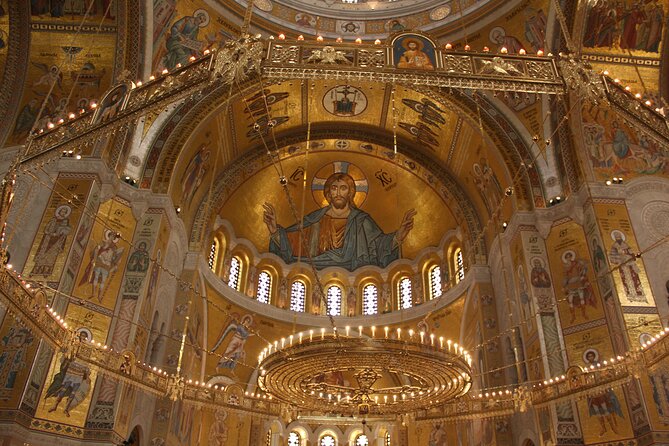
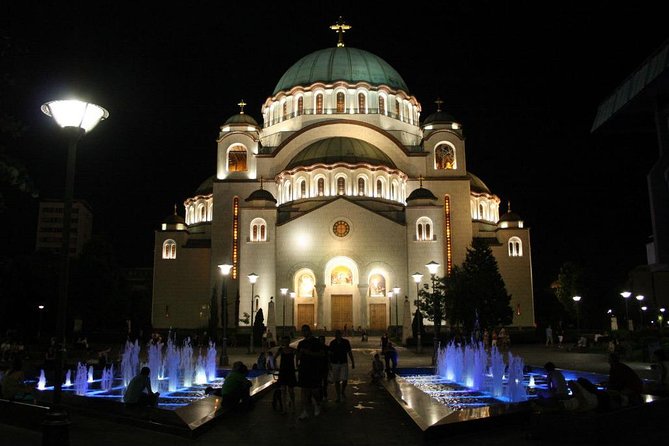
- Church of Saint Sava: You get time to appreciate one of the world’s largest Orthodox churches and learn why Saint Sava matters to Serbia.
- Belgrade’s political heart: Pionirski Park, the National Assembly, the Old Palace, and the New Palace help you understand the capital’s layout.
- Knez Mihailova on foot: The tour shifts from sightseeing by car to a walk through Belgrade’s main pedestrian and shopping street.
- A local-style finish: The final stop near Kafana ? adds an informal café moment beside St. Michael’s Cathedral.
A smart first look at Belgrade
Belgrade is easier to understand once you see how its parts fit together. This tour does that well. You begin in the government quarter, drive through diplomatic neighborhoods, visit Tito’s memorial complex, then move into the spiritual and commercial center of town.
That order matters. You are not simply ticking off monuments. You are moving from modern state power to royal history, socialist Yugoslavia, Serbian Orthodox identity, and daily city life. By the end, you have a useful mental map for exploring on your own.
The private setup is the strongest feature. Only your group participates, so you can ask questions without waiting for a busload of strangers. If Serbian history is your main interest, guides such as Andrija or Vlad have been praised for explaining difficult subjects clearly and answering detailed questions. If you need a slower pace, Dana has shown particular care with guests traveling with a parent who has limited mobility.
The tour is offered in English and begins at 10:00 a.m. Pickup is available from hotels, apartments, Airbnb addresses if specified, and the Belgrade port where cruise boats dock. The start time works well for a first full day in town, though you should allow some flexibility because the advertised four hours can stretch closer to five.
More city tours in Belgrade:
- Taxi to/from Belgrade Airport to/from Belgrade City Center
★ 5.0 · 241 reviews - Belgrade Underground Tour w/ Sparkling Wine Along the River
★ 5.0 · 151 reviews - Belgrade Sightseeing Half-Day Trip Old and New Belgrade
★ 4.5 · 71 reviews
Pionirski Park and Belgrade’s government quarter
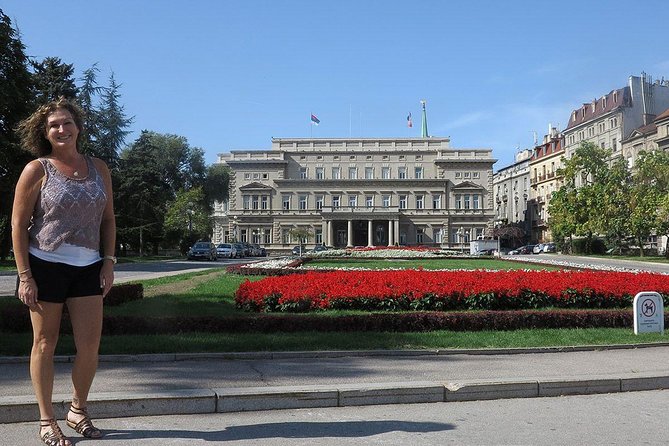
Your first stop is Pionirski Park, a small green space in central Belgrade. Around it sit the House of the National Assembly of the Republic of Serbia, the Old Palace, and the New Palace.
You spend about 15 minutes here, without an admission charge. That may sound brief, but the stop has a useful purpose. Your guide can point out the institutions and explain how Serbia’s political center developed. You begin to see Belgrade as a capital shaped by changing royal dynasties, governments, and periods of outside influence.
This is also a good place to ask your first questions. If you know little about Serbia, ask your guide to explain the broad timeline before the tour gets to Tito. A clear outline here will make the later stops easier to follow.
The drive along Prince Miloš Obrenović Street adds another layer. You pass embassies, ministries, and formal buildings that show Belgrade’s role as a political and diplomatic center. It is not a walking stop, so your view comes from the vehicle, but the route helps connect central Belgrade with the more residential Dedinje district.
Dedinje, the White Palace, and the royal past
Dedinje is one of Belgrade’s most prestigious residential areas. The drive takes you past refined villas and diplomatic residences, then pauses outside the White Palace.
The palace visit is an exterior view, not a full interior tour. That distinction matters. You get context about the complex and its place in Serbia’s royal story, but you should not expect to enter the rooms or spend a long time on the grounds.
Still, this short stop works well as part of the larger story. The royal buildings near Pionirski Park show official power in the city center, while the White Palace places that royal world in a quieter residential setting. Your guide can also help separate the different dynasties and political eras, a useful service in a country whose modern story can feel complicated at first.
The vehicle is especially helpful here. Dedinje is not the sort of area most people would understand fully from a quick walk between central sights. You cover more ground without spending your limited time on a long uphill route.
Tito and the House of Flowers
The emotional center of the tour is the Museum of Yugoslavia, especially the House of Flowers. This complex is tied to Josip Broz Tito, the long-time leader of former Yugoslavia, whose final resting place is here.
You spend about 45 minutes at the site. The €7 entrance fee per person is not included, and the museum is currently open Wednesday through Sunday, not Monday. Plan this carefully. If your only available day is Monday, the tour still includes the other sights, but you will miss one of its most distinctive stops.
The value here comes from the questions Tito raises. He was a communist leader, yet many people in Yugoslavia felt genuine affection for him. He also built a state with its own political path between the Soviet bloc and the West. Your guide can explain the public ceremonies, the personality cult, and the gap between official images and ordinary life.
This is where a good private guide makes a real difference. Andrija, Vlad, and Vladica have been praised for explaining Serbian and Yugoslav history in clear English, while handling sensitive subjects with honesty and respect. You can ask about Tito’s popularity, the breakup of Yugoslavia, or what changed after his death, rather than simply reading labels and moving on.
The 45-minute visit is enough for an introduction, not a full museum study. If Yugoslav history is your special interest, you may want a longer visit on another day. The advantage of seeing it here is that your guide gives you context before you continue around Belgrade.
A completely different kind of day:
- Northern Serbia: Sremski Karlovci and Novi Sad Full-Day Tour from Belgrade
★ 5.0 · 425 reviews - Day Trip from Belgrade: Gems of Eastern Serbia
★ 5.0 · 424 reviews - Belgrade Nightlife Bar Pub Club Crawl with Drinks
★ 5.0 · 277 reviews - Belgrade Big Tour: Top Attractions and Belgrade Neighborhoods
★ 5.0 · 232 reviews
Church of Saint Sava and Serbian Orthodox identity
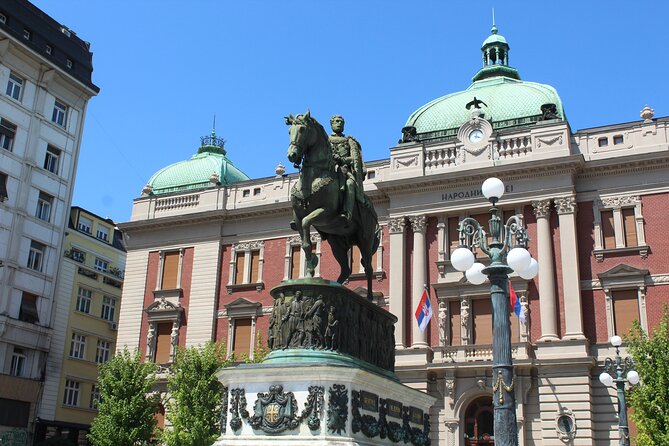
The next major stop is the Church of Saint Sava, one of the largest Orthodox churches in the world. Its scale is impressive from the outside, but the interior gives the visit its real force. Wide spaces and glittering decoration create a strong sense of ceremony and size.
You have about 45 minutes here, with no admission charge listed. Your guide explains Saint Sava’s role in Serbian history and why he remains the central figure of the Serbian Orthodox Church.
That explanation keeps the church from becoming just a large photo stop. Saint Sava is tied to Serbian religious identity, education, and national memory. You do not need a strong religious background to appreciate the visit, but you will get more from it if you ask how the church fits into Serbian life today.
The timing feels more generous than at Pionirski Park. You can look around, take in the interior, and listen without rushing through every corner. The church is also a good contrast to the House of Flowers. One stop deals with a modern political leader and a former federation. The other points to a much older spiritual tradition.
Republic Square and Knez Mihailova Street
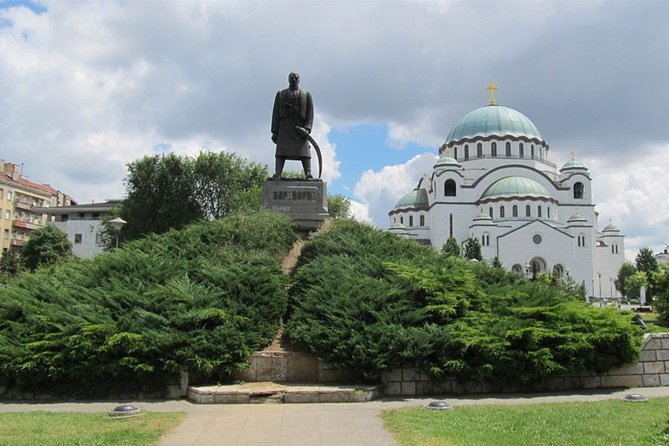
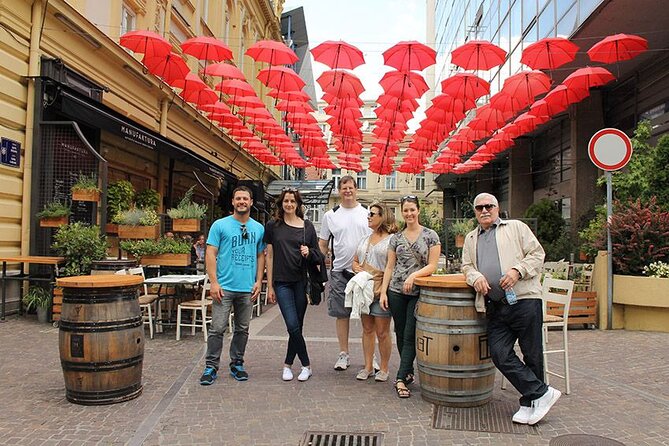
From the church, the tour returns to central Belgrade and Republic Square. This is the city’s main meeting point, framed by the National Theatre, the National Museum, and the monument to Prince Mihailo Obrenović.
You spend roughly 45 minutes in this area, then continue on foot along Knez Mihailova Street. The square gives you a compact look at Belgrade’s cultural life, while the pedestrian street shows how the center feels in ordinary use.
Knez Mihailova is the city’s main shopping avenue and pedestrian zone. Here, the tour becomes less formal. You walk, look at the architecture, and hear stories, legends, and everyday details from your guide. This is one of the best parts for getting a feel for Belgrade beyond its major monuments.
Wear comfortable shoes. The walking portion is not a strenuous hike, but the tour includes several transitions from vehicle to pavement, and the center is best enjoyed at an easy pace. If you have mobility concerns, mention them when booking. One guide, Dana, adjusted the pace carefully for a parent with more limited movement, and the private format makes that kind of change possible.
Families may also find this portion manageable. A private guide can keep children engaged with short explanations and answer questions without forcing the whole group to follow a fixed script. The tour has also worked well for a family traveling with a two-year-old, with the guide remaining accommodating throughout the day.
St. Michael’s Cathedral and Kafana ?
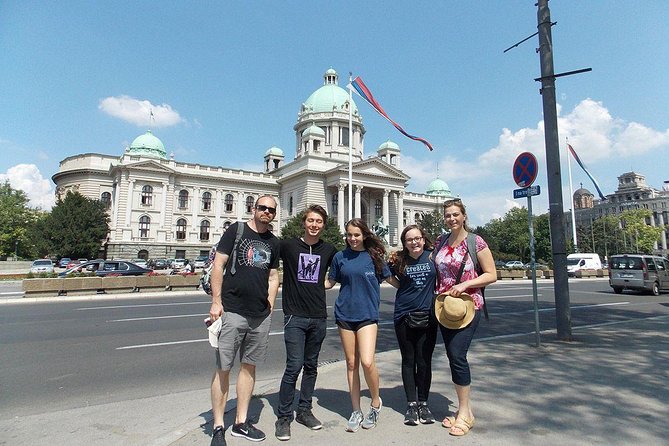
The walking route ends around King Peter Street, one of Belgrade’s oldest and most atmospheric streets. Nearby are Kafana ?, described as the city’s oldest restaurant, and the Cathedral Church of St. Michael the Archangel.
You have about 30 minutes here. The cathedral adds another important religious site, while Kafana ? gives the tour a more social ending. You can settle inside its traditional interior for a drink or light snack and talk through what you have seen.
Food and drinks are not included, so budget for your own order. That is a small extra cost, but it gives you a chance to experience a Serbian kafana, a traditional café and meeting place, rather than ending beside a parking lot. The stop is relaxed and useful for asking final questions about restaurants, neighborhoods, or places to return later.
The tour’s listed ending point is here, though the included service also covers hotel or port drop-off. Confirm the preferred drop-off plan with the operator, especially if you want to remain in the old center after the café stop.
How the timing works in real life
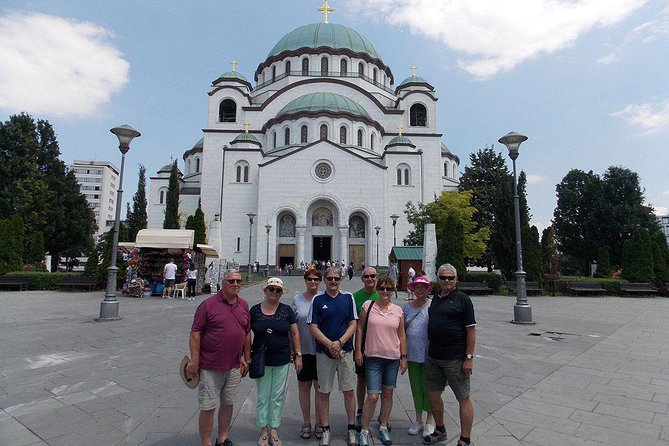
The named stops add up to about three hours of visit time, before the drives between them. That explains the advertised four to five hours. The vehicle lets you cover Dedinje and the wider central area efficiently, while the final section gives you a proper walk.
You should not treat this as a slow, in-depth museum day. It is better viewed as a carefully packed orientation tour. You see the major symbols, hear the city’s story, and learn where you may want to return.
The private format also gives the schedule some breathing room. Guides have adjusted routes and drop-off plans to suit individual interests. One guide even dropped a group at the Museum of Yugoslavia at the end, which was useful for a longer independent visit. That kind of flexibility is not guaranteed in every case, but it is worth requesting.
Cold or windy weather can affect the experience, especially at outdoor stops and during the central walk. One guest found the guide worked hard to show as much as possible despite difficult conditions. Spring and summer should make the outdoor portions more comfortable, but the museum’s Wednesday to Sunday schedule still applies.
What the $137.57 price gets you
At $137.57 per person, this is not the cheapest way to see Belgrade. The price makes more sense for a small private group than for a solo visitor, because the attention of a driver-guide and private vehicle is built into the experience. Group discounts may also be available.
You receive hotel or port pickup and drop-off, a private driver-guide, bottled water, and an English-language tour. The vehicle saves you time between central Belgrade, Dedinje, and the Church of Saint Sava. You also avoid the work of planning a route that combines sites spread across different parts of town.
Add €7 per person for the Museum of Yugoslavia, plus any food or drink at Kafana ?. Personal expenses are also separate. The total remains reasonable if you value convenience, historical explanation, and the ability to ask for changes.
For a solo visitor focused mainly on low cost, a self-guided walk may be better value. For a couple, family, cruise passenger, or short-stay visitor who wants a strong introduction in one morning, the private price is easier to justify.
The guides make the difference
The strongest praise centers on the guides. Andrija is noted for beautiful English, clear explanations, and an ability to handle detailed questions about Serbia and Belgrade. Vlad is described as courteous and well informed, especially on Tito and the problem of understanding how a dictator could be loved by many people.
Vladica is praised for taking good care of the group and responding to requests. Bojan provided a useful history lesson alongside the main sights, while Dana adjusted the pace for a family member with limited mobility. Andrew also received credit for staying positive and informative in cold, windy weather.
Guide assignments can vary, so you should not assume a particular person will lead your tour. The consistent point is that the private setting supports conversation. Tell your guide what interests you most: royal history, Yugoslavia, religion, architecture, food, or modern Belgrade. You will get more from the morning if you treat it as a discussion rather than a performance.
Who should book it?
I would choose this tour if you have only one day in Belgrade, arrive by cruise ship, or want a clear introduction before exploring independently. It suits couples, families, and small groups who appreciate door-to-door transport and personal attention.
It is also a strong choice if you want Tito and Yugoslavia explained by a local guide rather than encountered without context. The combination of the House of Flowers, royal sites, and the church gives you a useful view of Serbia’s competing identities.
I would hesitate if you dislike fixed schedules, want extensive time inside museums, or plan to spend the whole day in cafés and markets. The route covers a lot, and some stops are brief. Monday bookings also require care because the Museum of Yugoslavia is closed.
Free cancellation is available up to 24 hours before the 10:00 a.m. start. Changes or cancellations within 24 hours are not accepted for a refund. Book ahead if your schedule is tight, since the tour is commonly reserved well in advance.
FAQ
How long does the Belgrade Private City Tour last?
The tour lasts approximately four to five hours.
What time does the tour start?
The stated start time is 10:00 a.m.
Is hotel pickup included?
Yes. Hotel pickup and drop-off are included. Pickup can also be arranged from an apartment or Airbnb if you provide the location.
Can I be picked up at the Belgrade port?
Yes. Pickup is available at the Belgrade port where cruise boats dock.
Is the tour private?
Yes. Only your group participates in the activity.
Is the tour offered in English?
Yes. The tour is offered in English.
Is the Museum of Yugoslavia open every day?
No. The museum is currently open Wednesday through Sunday and is closed on Mondays.
How much is the Museum of Yugoslavia entrance fee?
The entrance fee is €7 per person and is not included in the tour price.
Is food or drink included at Kafana ?
No. Food and drinks are not included. You pay separately for anything you order.
Can I cancel for a full refund?
Yes, if you cancel at least 24 hours before the experience start time. Cancellations made less than 24 hours ahead are not refunded.
Just added in Belgrade
- Private Half Day Serbia Tour Novi Sad and Petrovaradin Fortress★ 5.0 · 3 reviews
- Zasavica Bike Tour★ 5.0 · 1 review
- Private Belgrade Street Art and Adventures Walking Tour★ 5.0 · 4 reviews
- Private Wine Tasting by Party in Belgrade★ 5.0 · 3 reviews
- VIP Reservation Service in Belgrade★ 5.0 · 2 reviews
- Rakija Tasting for groups in Belgrade★ 5.0 · 1 review
- Wonders of Eastern Serbia a Full Day Tour from Belgrade★ 5.0 · 1 review
- Urban & Alternative Belgrade tour★ 5.0 · 4 reviews
City Tours, compared.

Taxi to/from Belgrade Airport to/from Belgrade City Center
Read our review →
Belgrade Underground Tour w/ Sparkling Wine Along the River
Read our review →
Belgrade Sightseeing Half-Day Trip Old and New Belgrade
Read our review →
Half-Day Sightseeing and Walking Tour of Belgrade City
Read our review →
2 hours / Sightseeing Boat cruise Drinks Included
Read our review →Browse the lists this tour appears in