
Review · WALKING TOURS
Half-Day Sightseeing and Walking Tour of Belgrade City
Belgrade rewards curious walkers. This small-group tour links royal buildings, Orthodox heritage, pedestrian streets, and the fortress above the Danube. I like the six-person maximum, which should make questions easy, and I like the way a Turkish-style coffee ritual adds a local touch. The main drawback is that the advertised two to three hours may feel short for ten stops, especially if your guide pauses to explain Serbia’s complicated past.
The route begins near the National Assembly at 11 a.m. and finishes on Knez Mihailova, so you end in a useful central spot. Guides such as Aleksandar Bastic and Milica have earned praise for clear storytelling and practical city advice, but traffic noise can make some explanations hard to hear. If Russian matters to your group, confirm the language before booking, since English is the stated offering and one reported booking had a language mismatch.
In This Review
- Key points to know before you book
- Why this half-day walk works well in Belgrade
- From Saint Mark’s Church to Serbia’s medieval ruler
- The Old Palace and Serbia’s royal chapter
- The National Assembly and the slow birth of a capital
- Terazije Fountain and the Prince Mihailo Monument
- Knez Mihailova, Belgrade’s natural walking corridor
- Kalemegdan Fortress and the meeting of two rivers
- The City Keys and the end of Ottoman rule
- The coffee ritual adds a human pause
- The guide makes or breaks the experience
- Who should book this Belgrade tour?
- Should you book it?
- FAQ
- Where does the Belgrade walking tour begin?
- Where does the tour finish?
- What time does the tour start?
- How long does the tour last?
- What language is offered?
- Is coffee included?
- Are transportation and lunch included?
- How large is the group?
- Can I cancel for a full refund?
Key points to know before you book
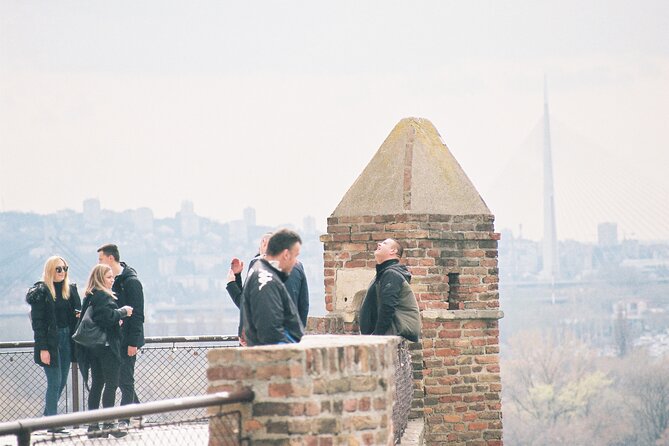
- The tour covers Belgrade’s essential first-day sights, from the National Assembly and Terazije to Knez Mihailova and Kalemegdan Fortress.
- A group of no more than six people gives the walk a personal feel and leaves room for questions.
- History is the main attraction, with attention to medieval Serbia, Ottoman rule, royal dynasties, Yugoslavia, war, and modern Serbian life.
- The coffee stop is included, offering more than a quick caffeine break. Coffee in Serbia is treated as a social ritual.
- The fortress section is the longest stop, but one account wished for more detailed attention to Kalemegdan itself.
- The route is central and ends near the Belgrade City Library, making it easy to continue sightseeing afterward.
Why this half-day walk works well in Belgrade
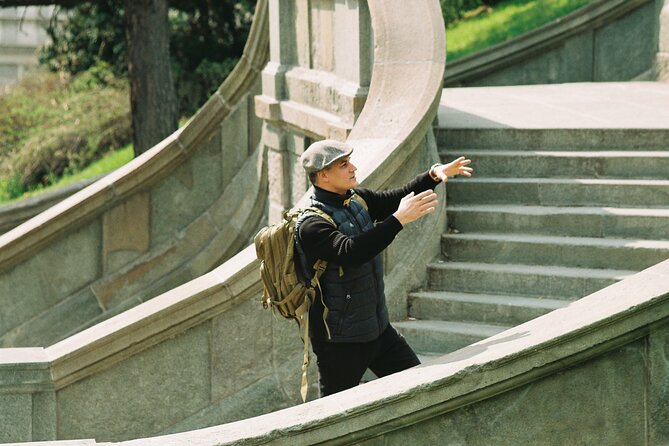
Belgrade is not a city you understand by ticking off monuments. Its streets carry layers of Byzantine, Ottoman, Habsburg, royal Serbian, Yugoslav, and modern European history. A good guide helps you see how those layers overlap.
This tour gives you that framework without requiring a full-day commitment. At $38.34 per person, the price is fair if you want a personal introduction rather than a simple stroll past buildings. The value rests heavily on the guide. Aleksandar is repeatedly praised for explaining difficult subjects in a friendly way, including Serbian politics, regional tensions, and the events that shaped the country. Milica is described as warm, professional, and attentive to the whole group.
The small group matters here. Belgrade’s history includes wars, shifting borders, religion, empire, and national identity. You may want to ask questions that do not fit neatly into a guidebook paragraph. With up to six people, you have a better chance of getting a real answer instead of being hurried along.
The listed route has ten stops and about 200 minutes of suggested stop time. That is already more than three hours, before walking between sights or stopping for coffee. The official duration is approximately two to three hours, yet one booking lasted four hours. I would plan for at least three hours and avoid scheduling a tight lunch or museum appointment afterward.
More city tours in Belgrade:
- Taxi to/from Belgrade Airport to/from Belgrade City Center
★ 5.0 · 241 reviews - Belgrade Underground Tour w/ Sparkling Wine Along the River
★ 5.0 · 151 reviews - Belgrade Sightseeing Half-Day Trip Old and New Belgrade
★ 4.5 · 71 reviews
From Saint Mark’s Church to Serbia’s medieval ruler
The walk begins at Crkva Svetog Marka, or Saint Mark’s Church, near the center of Belgrade. The main historical detail highlighted here is the tomb and sarcophagus of Stefan Uroš IV Dušan.
Dušan ruled as king of Serbia from 1331 to 1346 and then as Emperor of the Serbs, Greeks, and Albanians from 1346 to 1355. He is presented as medieval Serbia’s greatest ruler, so this opening stop gives you an early sense of the country’s long political ambitions.
You should not expect a full church visit to dominate the tour. The listed stop lasts about 20 minutes and admission is free. If you are visiting with children, pay attention to clothing. One family learned that shorts can prevent church entry, and the guide helped by lending a coat so a child could enter. It is a small but useful reminder to dress respectfully.
The Old Palace and Serbia’s royal chapter
From Saint Mark’s, the route moves toward Belgrade’s Old Palace at the corner of Kralja Milana and Dragoslava Jovanovića streets. Built from 1882 to 1884 for the Obrenović dynasty, the building now houses the City Assembly of Belgrade.
The palace is one of the clearest reminders that modern Serbia was building a European-style capital in the nineteenth century. Its academist design is formal and grand, with the sort of exterior that makes more sense when a guide explains the ambitions behind it.
The stop is listed at 30 minutes, one of the longer pauses before the fortress. There is no admission charge included because the tour focuses on the exterior. That is not a major problem for a first visit, but you should not book this walk expecting interior access to every landmark.
The National Assembly and the slow birth of a capital
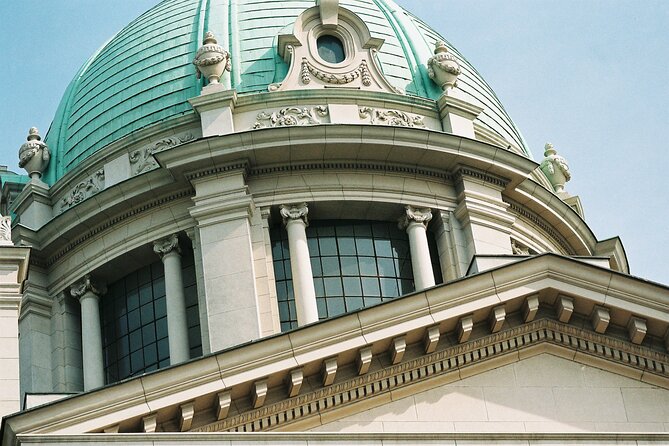
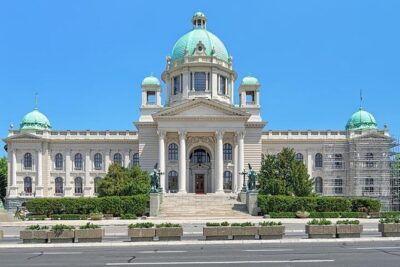
The meeting point is in front of the National Assembly of the Republic of Serbia. That makes the first sight easy to find, and the building itself gives the group an immediate subject for discussion.
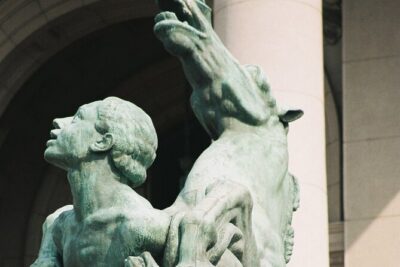
Construction took almost 30 years. Lack of money, wars, and disagreement within society all delayed the work. The building’s long construction period says something about Serbia’s difficult path toward a stable modern state. In front of it is the sculpture group Play of the Black Horses, a striking feature that helps you identify the site.
The listed visit is 15 minutes, so expect a concise introduction rather than an architectural lecture. If the group is large, a building like this can be hard to discuss in detail. Here, the six-person limit should help.
More walking tours in Belgrade:
- Belgrade: 3-Hour Small Group Walking Tour
★ 5.0 · 180 reviews - Belgrade Private Walking Tour with a Local
★ 5.0 · 19 reviews - Belgrade City Walk, Gathering and Sightseeing
★ 5.0 · 19 reviews - Belgrade Old City 2-Hour Walking Tour
★ 5.0 · 15 reviews
Terazije Fountain and the Prince Mihailo Monument
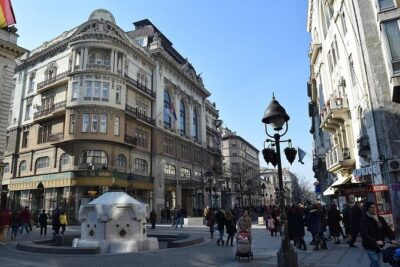
Terazije Fountain dates from 1860. It began as a practical water source as well as a decorative object, which is a useful detail to remember as you walk through the city. Not every monument began as decoration. Some answered daily needs in a growing capital.
The next stop is the monument to Prince Mihailo. Sculptor Enrico Pazzi created the monument, while Konstantin Jovanović designed the decorative reliefs. The monument links art, royal authority, and Serbian independence, so it works well as a bridge between architecture and political history.
Both stops are listed at 15 minutes. They are brief, but they break up the longer historical explanations. You will also get a sense of how Belgrade’s central streets connect rather than seeing each sight as an isolated photo stop.
Knez Mihailova, Belgrade’s natural walking corridor
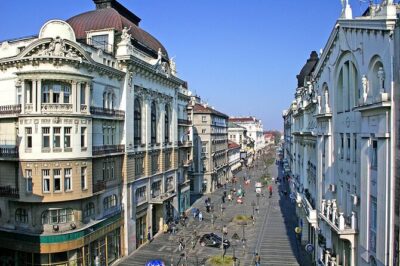
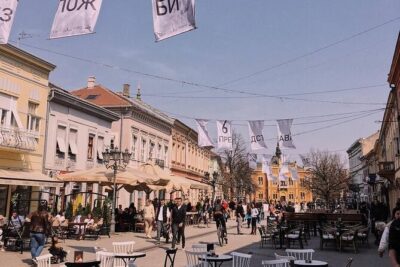
Knez Mihailova is Belgrade’s main pedestrian street and one of the easiest places to continue exploring after the tour. It leads toward Kalemegdan Fortress and connects shopping, cafés, public buildings, and city life.
The tour spends about 20 minutes here. That is enough to explain its role and point out key sights, but not enough for a leisurely browse. I would save shopping and café time for after the walk.
The ending point is in front of the Belgrade City Library at 56 Knez Mihailova Street, listed as Kneza Mihaila 54a in the meeting details. That slight address variation is worth checking on your confirmation. The practical upside is clear: you finish downtown, close to one of Belgrade’s busiest pedestrian areas.
Kalemegdan Fortress and the meeting of two rivers
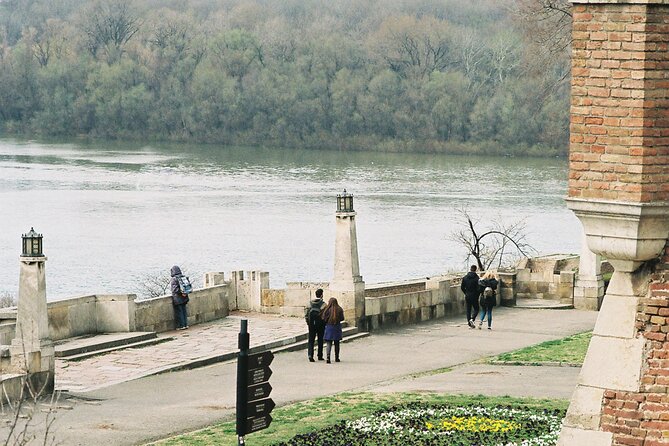
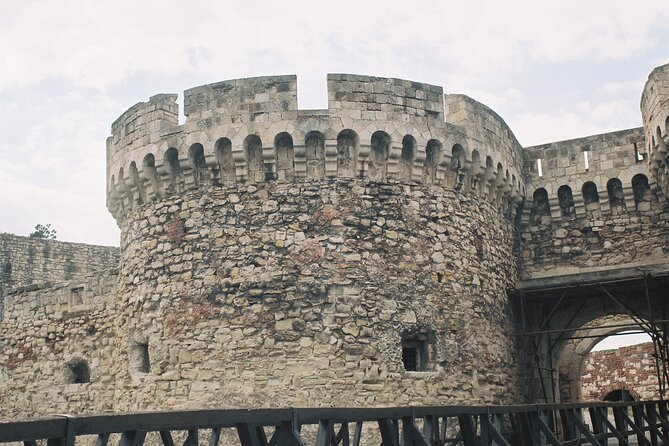
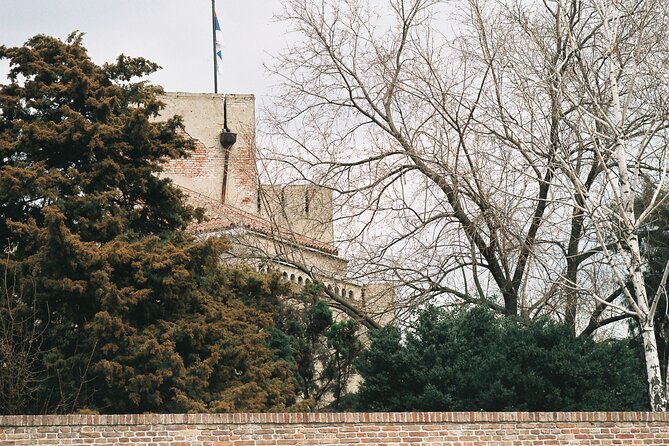
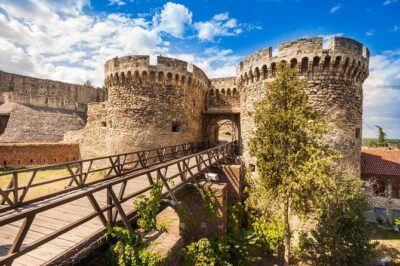
Kalemegdan Park and Belgrade Fortress are the heart of the route. The fortress sits on a ridge above the meeting point of the Sava and Danube rivers. That position explains why the site mattered for centuries. From the ridge, armies could watch the surrounding plain and control movement from the north and west.
The area has been inhabited since prehistoric times. This is where the tour’s broad historical story should come together: ancient settlement, medieval Serbia, Austrian rule, Ottoman rule, and the modern city all meet on one hill.
The stop is listed at 45 minutes, the longest on the walk. That gives you time for views, fortification details, and a clearer sense of the site’s strategic value. Still, one person felt the fortress deserved more explanation. If Kalemegdan is your main reason for visiting Belgrade, plan to return on your own after the tour.
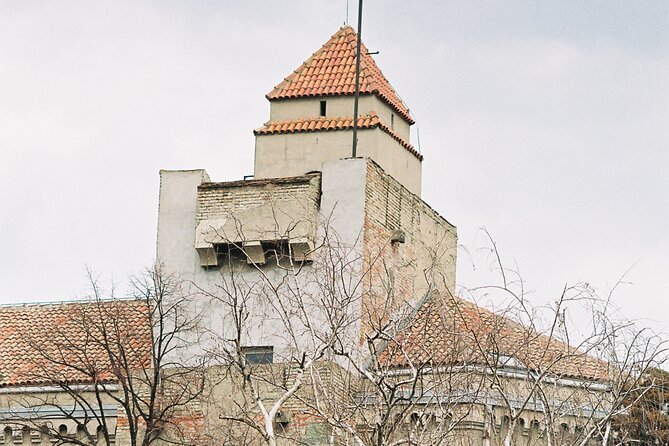
The Clock Tower, or Sahat Kula, receives a separate ten-minute stop. Construction began under Austrian control and finished under Ottoman rule between 1740 and 1789. That detail neatly shows how control of Belgrade changed hands and how the fortress carries more than one political story.
The Monument of Gratitude to France lies just outside the fortress. It honors the friendship and cooperation between Serbia and France during World War I. It is a quieter stop than the fortress, but it helps place Serbia within the wider European story rather than treating its past as something sealed inside the Balkans.
The City Keys and the end of Ottoman rule
The final historical stop marks the place where the keys to several Serbian fortresses were handed to Prince Mihailo Obrenović by the Ottoman Turks on April 6, 1867.
The handover did not instantly create the modern Serbian state, but it was an important step toward international recognition, which came with the Treaty of Berlin in 1878. This is the kind of event that can disappear in a list of dates. A guide’s explanation helps you understand why a simple ceremony mattered.
The stop lasts about 15 minutes. By this point, the route has moved from medieval Serbia through royal architecture, Ottoman rule, and national independence. That gives the walk a clear shape instead of a random collection of monuments.
The coffee ritual adds a human pause
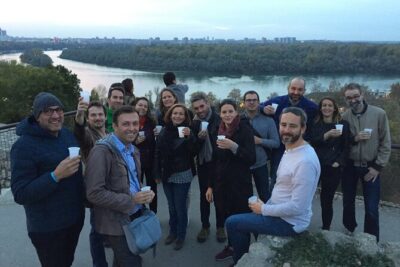
Coffee and tea are included, with Serbian coffee treated as a ritual rather than a rushed drink. That is one of the most appealing details of the experience.
The coffee stop gives you a chance to ask about Belgrade beyond its monuments. Several accounts describe useful conversations about local life, food, nightlife, restaurants, politics, and the way people in Serbia see their own country. The coffee is therefore part refreshment, part informal conversation.
Do not count on lunch. Lunch is not included, and transportation is not included either. The route is a walking tour, so you should arrive ready to spend the morning on foot and bring comfortable shoes. Since most stops are outdoors, weather will shape your comfort.
The guide makes or breaks the experience
This is a guide-led history walk, not an audio tour. The strongest part is the explanation, especially when the subject turns complicated.
Aleksandar Bastic is often praised for knowing Belgrade and the wider Balkan region, while also making sensitive questions easier to discuss. He is described as friendly, charismatic, and willing to offer suggestions for the rest of your stay. That can be especially useful on your first morning in the city, when restaurant and nightlife advice may help shape your plans.
A solo booking can work very well. One January booking became a private experience, and the guide used the smaller group to add detours and tailor the conversation. The small maximum also helps couples and families avoid the anonymous feel of a large coach tour.
There are limits. Traffic noise caused one person to miss parts of the commentary. A busy street can make even a good explanation difficult to follow, so stay close to the guide and ask for repetition if needed. Also, the stated language is English. If you are hoping for Russian, do not assume it will be available simply because a language option appeared during booking. Confirm directly before paying.
Who should book this Belgrade tour?
I would choose this walk if you are visiting Belgrade for the first time and want a historical frame for the city. It is also a good match for solo visitors, couples, families with older children, and anyone who prefers conversation over a large group.
You will get the most from it if you enjoy asking questions. The route moves quickly, and the landmarks make more sense when you connect them to Serbian rulers, Ottoman control, royal dynasties, World War I, and the breakup of larger political systems.
I would look elsewhere if you want long interior visits, a fortress-only tour, or a relaxed café crawl. The walk touches many places, but it cannot give every one of them equal time. It also may run longer than the short description suggests, so leave space in your schedule.
Free cancellation is available when you cancel at least 24 hours before the 11 a.m. start. The experience requires a minimum number of participants, and service animals are allowed. Most people can take part, and the route is near public transportation, but no transport is supplied as part of the tour.
Should you book it?
Book this tour if you want a compact, personal introduction to Belgrade with serious historical context. The $38.34 cost is reasonable for a small group, a coffee ritual, and a guide who can connect the buildings to the people and conflicts behind them.
I would book it early, since the experience is commonly reserved about 35 days ahead. Confirm the guide language, wear comfortable shoes, dress properly if you hope to enter the church, and keep extra time after the official finish. For a first look at Belgrade, this is a strong choice. Just treat Kalemegdan as an introduction, not the final word on the fortress.
FAQ
Where does the Belgrade walking tour begin?
The tour begins at Kosovska 47 in Belgrade, with the meeting point described as in front of the National Assembly of the Republic of Serbia.
Where does the tour finish?
It ends at Kneza Mihaila 54a, in front of the Belgrade City Library at 56 Knez Mihailova Street.
What time does the tour start?
The scheduled start time is 11:00 a.m.
How long does the tour last?
The stated duration is approximately two to three hours. The listed stop times add up to about 200 minutes, and one booking lasted four hours, so you should allow extra time.
What language is offered?
English is the stated language. If you need Russian, confirm availability before booking because one reported experience was conducted only in English despite a Russian selection.
Is coffee included?
Yes. Coffee and/or tea is included, with coffee described as an important Serbian social ritual.
Are transportation and lunch included?
No. Transportation and lunch are not included.
How large is the group?
The maximum group size is six people.
Can I cancel for a full refund?
Yes, if you cancel at least 24 hours before the experience start time. Changes or cancellations made less than 24 hours in advance are not accepted for a refund.
Just added in Belgrade
- Private Half Day Serbia Tour Novi Sad and Petrovaradin Fortress★ 5.0 · 3 reviews
- Zasavica Bike Tour★ 5.0 · 1 review
- Private Belgrade Street Art and Adventures Walking Tour★ 5.0 · 4 reviews
- Private Wine Tasting by Party in Belgrade★ 5.0 · 3 reviews
- VIP Reservation Service in Belgrade★ 5.0 · 2 reviews
- Wonders of Eastern Serbia a Full Day Tour from Belgrade★ 5.0 · 1 review
- Urban & Alternative Belgrade tour★ 5.0 · 4 reviews
- Rakija Tasting for groups in Belgrade★ 5.0 · 1 review
Walking Tours, compared.
Browse the lists this tour appears in