
Review · WALKING TOURS
Belgrade Walking Tour in French
Belgrade reveals itself in layers. This French-language walk with journalist-guide Nenad connects Serbian history, current life, overlooked corners, and the long relationship between Serbia and France. I especially like the small-group format, capped at eight people, and the unusual mix of famous sights and lesser-known stories. The main consideration is the pace: three and a half hours on foot may feel long if you want only a quick introduction.
The tour starts at 9:30 a.m. on Republic Square and ends near the crossing of Kneza Mihaila and Kralja Petra streets. I also like the clear Francophone thread, which links the rue de France, the Monument of Gratitude to France, the French Embassy, and the French-speaking King Peter I. Since the tour covers several historic districts, comfortable walking shoes and an appetite for detail will help.
In This Review
- What makes this French-language walk different
- Starting at Republic Square with Belgrade in view
- Skadarlija, Belgrade’s bohemian address
- Dorćol and the clues written in Cyrillic
- Ruzica Church inside the citadel
- Kalemegdan and the meeting of two rivers
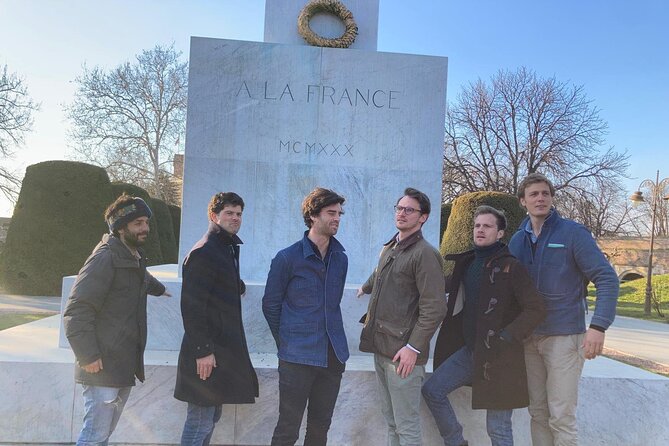
- France and Serbia at the Monument of Gratitude
- The French Embassy and King Peter I Street
- Nenad’s guiding style and the value of a small group
- Is $43.94 a fair price?
- Timing, walking, and who should book
- Booking details worth knowing
- Should you book this Belgrade walk?
- FAQ
- Where does the Belgrade Walking Tour in French begin?
- What time does the tour start?
- Where does the tour end?
- How long does the tour last?
- What language is the tour conducted in?
- How many people can join the tour?
- What places are included?
- Does the tour include the Belgrade Fortress?
- Does the tour include the French Embassy?
- What is the cancellation policy?
What makes this French-language walk different
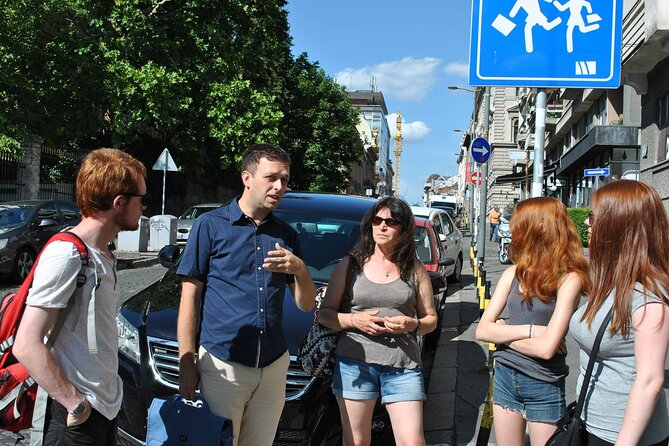
- A journalist as your guide: Nenad adds anecdotes from his work in journalism, along with his view of modern Serbia.
- A small group of up to eight: The size should make it easier to ask questions and follow a discussion in French.
- A route through old Belgrade: Republic Square, Skadarlija, Dorćol, Kalemegdan, and the fortress all appear in one morning.
- A rare French-Serbian focus: The route includes the Monument of Gratitude to France, the French Embassy, and streets tied to Francophone Serbia.
- A practical introduction to Cyrillic: In Dorćol, you will be encouraged to notice signs and learn how the Cyrillic alphabet works.
- Free entry at the listed stops: The price pays for the guided experience rather than separate attraction tickets.
Starting at Republic Square with Belgrade in view
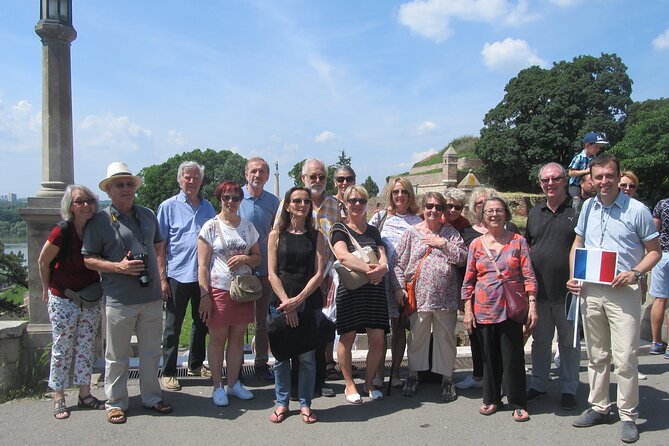
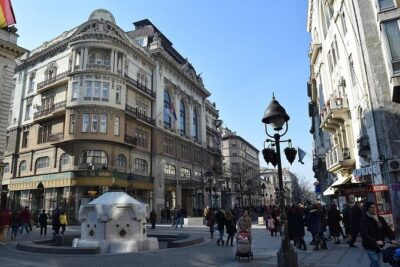
The walk begins at Trg Republike, or Republic Square, at 9:30 a.m. This is a sensible meeting point because it places you in the heart of central Belgrade, close to major pedestrian streets and public transportation.
The opening section introduces the city through the monument to Prince Mihailo, the National Theatre, and the National Museum. The listed time here is about 15 minutes, so expect a compact orientation rather than a full museum visit. That is useful on a walking tour: you get the setting, the political symbolism, and the shape of the city before moving on.
I like beginning with the square because it gives the tour a clear starting point. You are not dropped into an obscure side street with no idea how the city fits together. Nenad’s journalistic approach should also help connect the formal buildings with present-day Serbia, although the amount of current-affairs discussion will depend on your questions and the group.
There is no admission charge for this stop. The National Museum and National Theatre are seen from the route, not presented as extended interior visits. If you want to explore either one in detail, plan separate time.
More walking tours in Belgrade:
- Belgrade: 3-Hour Small Group Walking Tour
★ 5.0 · 180 reviews - Half-Day Sightseeing and Walking Tour of Belgrade City
★ 5.0 · 37 reviews - Belgrade City Walk, Gathering and Sightseeing
★ 5.0 · 19 reviews
Skadarlija, Belgrade’s bohemian address
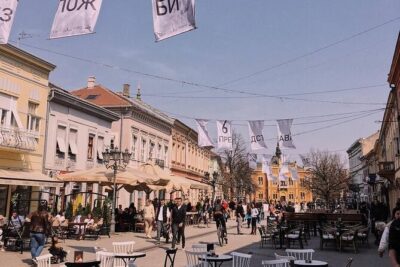
From Republic Square, the route moves toward Skadarska Street, in the district commonly called Skadarlija. This 19th-century bohemian quarter is often compared with Montmartre in Paris. The connection is not just a loose travel metaphor: Skadarska is described as the only street twinned with Montmartre.
The scheduled visit is around 10 minutes, which tells you how to use this part of the walk. You will get the character of the street, its place in Belgrade’s cultural life, and the French connection, but you should not expect a long meal or a detailed restaurant crawl.
Skadarlija is valuable because it shows a different side of central Belgrade. Republic Square gives you official institutions and monuments. Skadarlija shifts the mood toward artists, old urban traditions, and the city’s bohemian identity. Nenad’s unusual addresses and personal anecdotes are likely to be most useful here, since a guide can explain why a place matters instead of simply pointing at a picturesque street.
If you return later, remember that the tour only passes through the district. The walk gives you a reason to come back, perhaps for a meal or another look, but it does not include one.
Dorćol and the clues written in Cyrillic
The route continues to Dorćol, one of old Belgrade’s central districts. Its buildings show an unusual mix of architectural styles, and the tour uses that variety as a way to explain the city’s past and present.
One of the key stops is Belgrade’s only mosque. The itinerary does not promise a long interior visit, so think of this as a cultural and historical stop within the district. The value is in understanding how different periods and communities have left their mark on this part of town.
Nenad also asks you to pay attention to plates and signs. This is a small but useful travel lesson. You will have the chance to begin reading Serbian Cyrillic, which can make later walks around Serbia less intimidating. Even learning a few letter differences can help you recognize street names, public signs, and place names.
I like this section because it turns the city into something you can read. Dorćol is not presented only as a collection of old façades. You are encouraged to look at the writing, the building styles, and the way the neighborhood has changed. For French-speaking visitors, that practical language element adds something a standard sightseeing circuit may not offer.
Ruzica Church inside the citadel
The walk then reaches Ruzica Church, within the Belgrade fortress area. Its past is unusual: the building once served as a gunpowder warehouse before being converted into a military church between 1867 and 1869.
The stop is listed at about 10 minutes. That is enough for an explanation and a look at the building, but probably not enough for a long, quiet examination of every detail. The short visit also reflects the nature of this tour. It is a broad city introduction, not a specialist church tour.
Ruzica helps explain why Belgrade’s fortress is more than a viewpoint. Military use, religious life, and urban history overlap here. A guide can make that change easier to understand than a plaque alone, especially when the story is told in French and tied to the wider history of Serbia.
A completely different kind of day:
- Northern Serbia: Sremski Karlovci and Novi Sad Full-Day Tour from Belgrade
★ 5.0 · 425 reviews - Day Trip from Belgrade: Gems of Eastern Serbia
★ 5.0 · 424 reviews - Belgrade Nightlife Bar Pub Club Crawl with Drinks
★ 5.0 · 277 reviews - Taxi to/from Belgrade Airport to/from Belgrade City Center
★ 5.0 · 241 reviews
Kalemegdan and the meeting of two rivers
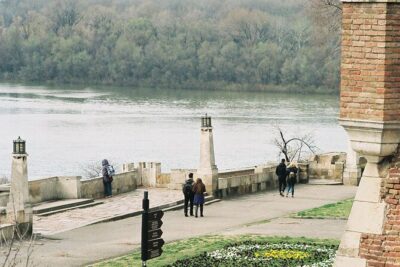
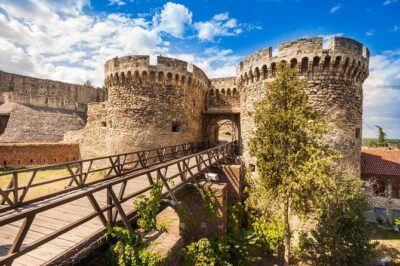
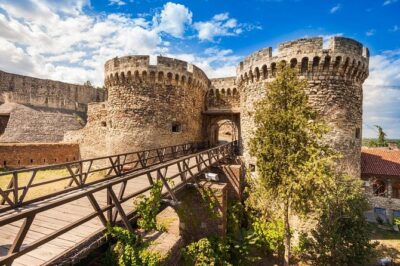
Kalemegdan Park and Belgrade Fortress form the scenic high point of the route. From here, you can look toward the confluence of the Sava and Danube, one of the defining views in the capital.
The listed time is about 15 minutes, but the stop may feel fuller because the fortress and park contain so much to discuss. The tour focuses on the Ottoman period and its influence on Serbian culture. That emphasis is important. Belgrade’s past cannot be reduced to one national story or one architectural style. The Ottoman era is part of the city’s long development, and the guide’s role is to place it in context.
I would pay close attention here if you want a better sense of why Belgrade looks and feels different from many Central European capitals. The fortress gives you physical evidence of the city’s strategic position, while the view shows how the rivers shaped its importance.
The drawback is that 15 minutes is brief for such a large area. You will not see every corner of Kalemegdan or explore the entire fortress in detail. Still, the tour gives you the essential view and enough background to return on your own.
France and Serbia at the Monument of Gratitude
The French connection becomes more direct at the Monument of Gratitude to France. Here, Nenad explains the story of Franco-Serbian friendship since the Great War.
This stop gives the tour a clear theme instead of making French references feel decorative. The route begins near the rue de France and later passes the Monument of Gratitude, the French Embassy, and the street associated with King Peter I. Together, these points show that the relationship between France and Serbia has a place in public memory, architecture, and street names.
The listed visit lasts about 10 minutes. That is enough for the central story, though anyone interested in military or diplomatic history may want more time afterward. I would treat the stop as an introduction and note down details for later reading.
This part may be the strongest reason to book the tour rather than a general English-language walk. You are not simply getting a translation of a standard route. The Francophone angle shapes the route itself.
The French Embassy and King Peter I Street
Before the tour ends, you pass the French Embassy. Its interwar design draws on monumental classicism, with carefully worked sculpture. The building offers a visual lesson in the cultural links between France and Serbia during the period between the world wars.
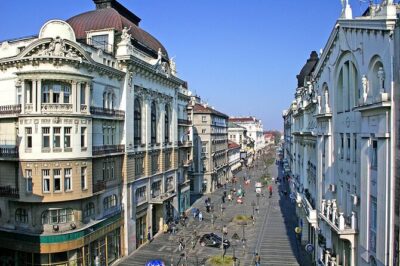
The route also includes King Peter I Street. Peter I was a French-speaking king, and the street contains several notable buildings, including Belgrade’s oldest restaurant and Princess Ljubica’s mansion.
This final stretch brings together architecture, royal history, dining tradition, and diplomacy. It is also a good reminder that the tour is not only about major monuments. Some of the most useful context comes from the ordinary streets between the headline sights.
The stated endpoint is Kneza Mihaila 49, near the crossroads with Kralja Petra. That makes the finish convenient for continuing through central Belgrade, though the experience itself does not include transportation back to your accommodation.
Nenad’s guiding style and the value of a small group
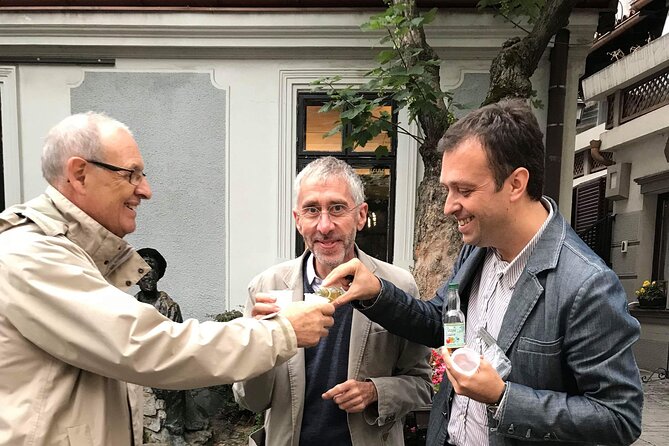
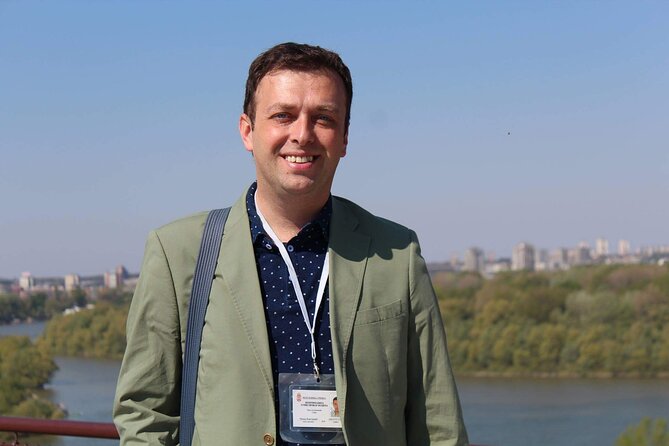
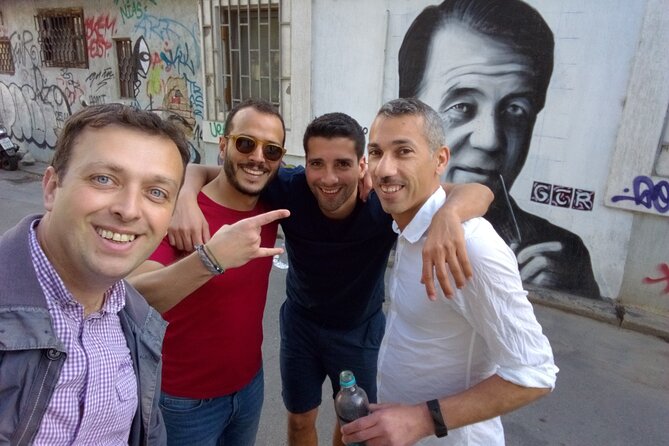
The guide is Nenad, a French-speaking journalist who leads the walk in French. His professional background matters because the tour promises more than dates and names. You can expect anecdotes from his journalism work, observations about current life in Serbia, and stories about places that may not appear in standard guidebooks.
The strongest praise in the supplied comments centers on his ability to make Belgrade and Serbia understandable, interesting, and personal. One French-speaking customer used Nenad for two days and appreciated his ability to show the country beyond a short city introduction. Another described the walk as a way to find places that would be difficult to locate alone.
That does not mean the tour will suit everyone. If you prefer a silent stroll with only occasional facts, Nenad’s story-led approach may feel dense. If you enjoy asking questions about Serbian and Yugoslav history, local life, and unusual corners of the city, the format should work well.
With a maximum of eight people, the group is small enough for conversation. You can ask about a sign in Cyrillic, a building style, or a historical point without waiting through a large group. The small size also makes the French-language setting more comfortable for people who want to speak rather than simply listen.
Is $43.94 a fair price?
At $43.94 per person, this is not the cheapest way to see Belgrade. You are paying for about three and a half hours with a specialist French-speaking guide, not for admission to a paid attraction. The listed stops have free admission, so the value rests almost entirely in Nenad’s explanations, route design, and ability to add context.
For a French-speaking visitor, that can be good value. A regular city walk may cover the same broad center, but it may not explain the Francophone links, teach you how to read Cyrillic, or include the journalist’s local anecdotes. The small group also gives the price more weight than a large bus tour would offer.
I would compare it with the cost of trying to assemble the same experience alone. You could visit Republic Square, Skadarlija, Dorćol, the fortress, and the French monuments independently, but you would need to research the connections between them. The tour saves that preparation time and gives you a single narrative.
The price is harder to justify if you want only photographs of the main sights or plan to spend little time in central Belgrade. In that case, a self-guided walk may be enough. For a first visit, especially in French, the personal interpretation is the main product.
Timing, walking, and who should book
The 9:30 a.m. start gives you a full morning route, with the possibility of continuing your own sightseeing after the finish. The tour lasts about three hours and 30 minutes, so you should plan for sustained walking through several districts and the fortress area.
The experience is listed as suitable for most people and close to public transportation. No special access details are provided, so you should ask the provider directly if you have specific mobility needs. The route includes a park, historic streets, and fortress grounds, making sensible footwear a practical choice.
I think this tour suits:
- French-speaking visitors who want more than a basic monument checklist.
- First-time visitors seeking a strong orientation to central Belgrade.
- People interested in Serbian, Yugoslav, Ottoman, and Franco-Serbian history.
- Curious walkers who enjoy anecdotes and questions.
- Small groups who want direct contact with the guide.
It may be less suitable if you want extensive interior visits, a food tasting, or a slow photographic walk. The schedule gives each major area a limited amount of time, so the tour favors range and interpretation over long stays.
Booking details worth knowing
Your meeting point is Republic Square, Trg Republike 3, Belgrade. The endpoint is Kneza Mihaila 49, near the crossing with Kralja Petra streets. The experience uses a mobile ticket, and confirmation is provided when you book.
Free cancellation is available if you cancel at least 24 hours before the local start time. Cancellations or changes made within 24 hours are not accepted for a refund. That policy is worth noting because the tour has a small eight-person limit.
The tour provider is Bienvenue en Serbie. Since the experience is conducted in French, it is sensible to choose it only if you are comfortable following a detailed spoken tour in that language.
Should you book this Belgrade walk?
I would book it if French is your preferred touring language and you want Belgrade explained through people, politics, architecture, and personal stories. Nenad’s journalism background, the small group, and the French-Serbian route give this walk a clear identity.
I would skip it if you only want quick views of the fortress and Republic Square, since the three-and-a-half-hour schedule may feel too detailed. For everyone else, the tour offers a thoughtful first look at Belgrade, with enough unusual material to keep the city from becoming a simple list of monuments.
FAQ
Where does the Belgrade Walking Tour in French begin?
It begins at Republic Square, Trg Republike 3, in Belgrade, Serbia.
What time does the tour start?
The tour starts at 9:30 a.m.
Where does the tour end?
It ends at Kneza Mihaila 49, near the crossroads of Kneza Mihaila and Kralja Petra streets.
How long does the tour last?
The tour lasts approximately three hours and 30 minutes.
What language is the tour conducted in?
The tour is conducted in French by Nenad, a French-speaking journalist.
How many people can join the tour?
The group has a maximum of eight participants.
What places are included?
The route includes Republic Square, Skadarlija, Dorćol, Ruzica Church, Kalemegdan Park, Belgrade Fortress, the Monument of Gratitude to France, the French Embassy, and King Peter I Street.
Does the tour include the Belgrade Fortress?
Yes. The route visits Belgrade Fortress and Kalemegdan Park, including the view of the Sava and Danube confluence.
Does the tour include the French Embassy?
The route passes by the French Embassy and includes stories about its interwar architectural style.
What is the cancellation policy?
You can cancel up to 24 hours before the local start time for a full refund. Cancellations or changes made less than 24 hours before the start are not accepted for a refund.
Just added in Belgrade
- Private Half Day Serbia Tour Novi Sad and Petrovaradin Fortress★ 5.0 · 3 reviews
- Zasavica Bike Tour★ 5.0 · 1 review
- Private Belgrade Street Art and Adventures Walking Tour★ 5.0 · 4 reviews
- Private Wine Tasting by Party in Belgrade★ 5.0 · 3 reviews
- VIP Reservation Service in Belgrade★ 5.0 · 2 reviews
- Wonders of Eastern Serbia a Full Day Tour from Belgrade★ 5.0 · 1 review
- Urban & Alternative Belgrade tour★ 5.0 · 4 reviews
- Rakija Tasting for groups in Belgrade★ 5.0 · 1 review
Walking Tours, compared.
Half-Day Sightseeing and Walking Tour of Belgrade City
Read our review →
Browse the lists this tour appears in