
Review · WALKING TOURS
Belgrade City Walk, Gathering and Sightseeing
Belgrade reveals itself one square at a time. This walking tour links grand churches, royal buildings, Republic Square, Kalemegdan, and the fortress, giving you a useful first look at the Serbian capital. I especially like the small maximum group of six and the included coffee or tea, which turns a standard sightseeing walk into something more local. The guide, Aleksandar Bastic, is often praised for his clear explanations and warm approach.
The tour also gives you a quick sense of Serbia’s political, religious, and cultural past, not just a parade of photo stops. My main caution is that the route may not always follow the advertised sequence exactly, and one booking found the discussion too political and left before the end. If you want a tightly scripted tour with interior visits, this may feel loose.
In This Review
- Five useful things to know before you go
- Why this walk makes a strong first morning in Belgrade
- St. Mark’s Church and the story of Serbian autonomy
- The National Assembly and Serbia’s political architecture
- The Old Palace and Hotel Moskva
- Republic Square and the Serbian character of the walk
- Nebojsa Tower and customs you may not meet elsewhere
- The French monument and Kalemegdan Park
- Pobednik, Belgrade’s famous symbol
- What $38.41 buys you
- Who will enjoy this Belgrade walk most?
- Timing, group size, and cancellation
- Should you book it?
- FAQ
- How long does the Belgrade City Walk take?
- What time does the tour start?
- Where does the tour begin?
- Where does the tour finish?
- Is coffee or tea included?
- How many people can join the tour?
- Is transportation included?
Five useful things to know before you go
- Coffee is part of the experience: The tour includes a hot coffee or tea, with Serbian coffee culture treated as a ritual rather than a quick caffeine stop.
- You see both royal Belgrade and fortress Belgrade: The route moves from churches and state buildings to Kalemegdan Park and the old fortress.
- The group is capped at six: That makes it easier to ask questions and hear the guide on busy streets.
- The tour is mainly about orientation: You pass many landmarks, then can return later for longer visits.
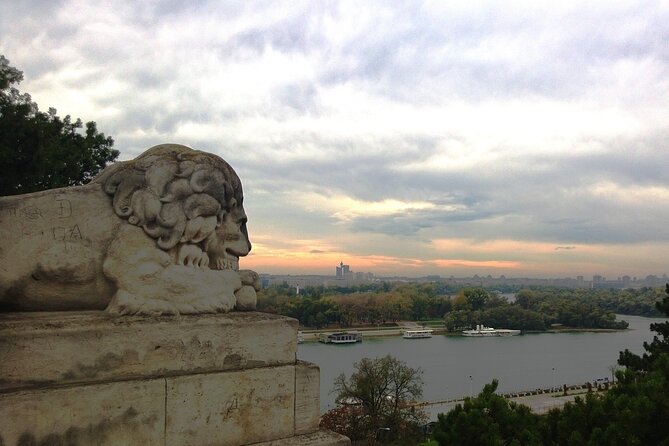
- The Victor gives you Belgrade’s signature view: Pobednik overlooks the meeting point of the Sava and Danube rivers from the fortress area.
Why this walk makes a strong first morning in Belgrade
At about two to three hours, this is a useful way to get your bearings early in a stay. The route covers a long list of important places without asking you to commit half a day to a museum or a formal bus excursion.
You begin at Kosovska 47 at 11 a.m. and finish near the Belgrade City Library on Knez Mihailova Street. That ending point is practical. Knez Mihailova is one of the city’s main pedestrian streets, so you can continue on foot after the tour, find lunch, or revisit a sight that caught your attention.
I like the balance of subjects. You hear about Orthodox religion at St. Mark’s Church, royal and parliamentary power near the National Assembly, modern city life at Republic Square, and military history around the fortress. The tour is not only about pretty façades. It tries to explain how Serbia’s identity was shaped by monarchy, religion, foreign rule, war, and the daily life of Belgrade.
The group limit matters here. With no more than six people, the guide can adjust explanations and respond to questions. Aleksandar has been praised for noticing what interests each person, speaking clearly, and adding lesser-known facts. Several ratings also describe the pace as easy, which is welcome on a walking route with many stops.
More city tours in Belgrade:
- Taxi to/from Belgrade Airport to/from Belgrade City Center
★ 5.0 · 241 reviews - Belgrade Underground Tour w/ Sparkling Wine Along the River
★ 5.0 · 151 reviews - Belgrade Sightseeing Half-Day Trip Old and New Belgrade
★ 4.5 · 71 reviews
St. Mark’s Church and the story of Serbian autonomy
The first stop is Crkva Svetog Marka, or St. Mark’s Church, for about 20 minutes. The church is linked to several important figures from Serbia’s royal past. Mlan Obrenovic, the eldest son of Milos Obrenovic, is buried here, along with King Alexander I Obrenovic and Queen Draga.
The site also carries an important political memory. In 1830, the sultan’s edict announcing Serbian autonomy within the Ottoman Empire was read here. That detail helps put later royal buildings and national monuments into context. Serbia’s road toward self-rule was not a single event, and this stop gives you a concise introduction to that process.
Admission is included for this stop. You should still think of the visit mainly as a guided look at the church and its setting, not as a long interior tour. The value comes from the story attached to the place.
The National Assembly and Serbia’s political architecture
The House of the National Assembly is a 15-minute stop, viewed from outside. The building was constructed between 1907 and 1936, with work interrupted by political and financial problems. Several leading architects of the period took part in its design, including Konstantin A. Jovanovic and Jovan Ilkic.
That stop is more useful than a quick photograph might suggest. The building reflects the changing Serbian and Yugoslav states, along with the complicated development of parliamentary life. Its long construction period mirrors a country dealing with political shifts, limited funds, and changing national ambitions.
There is no admission included here, and the tour does not promise an interior visit. You are paying for the explanation and the chance to place the building within Belgrade’s civic center. If you want to see parliamentary interiors, you would need to arrange that separately.
The Old Palace and Hotel Moskva
The Old Palace takes about 15 minutes. Built from 1882 to 1884 for the Obrenovic dynasty, it now houses the City Assembly of Belgrade. Architect Aleksandar Bugarski designed the building, whose academic style is one of the more important examples of 19th-century Serbian architecture.
This is a good stop for seeing how monarchy shaped central Belgrade. The building is not presented as an isolated landmark. It forms part of a cluster of state and royal sites, helping you read the streets around Kralja Milana and Dragoslava Jovanovića with more confidence.
Next comes Hotel Moskva, another 15-minute stop. Opened in 1908 on Terazije Square, the hotel is a protected cultural monument with a distinctive Russian secession style. It has 123 rooms, a café, restaurant, and spa, and has hosted figures including Albert Einstein and Robert De Niro.
The hotel is one of the tour’s most appealing human-scale stops. It connects architecture with café culture and the social life of the city. The included hot drink is associated with this part of the experience, and one particularly positive account called coffee at Hotel Moskva the high point of the walk.
Admission to the hotel is not included. The coffee or tea is included, so you should not confuse the drink with an entry ticket or a full meal. If you enjoy old hotels, ornate public spaces, and the simple pleasure of sitting down during a walking tour, this pause adds welcome variety.
More walking tours in Belgrade:
- Belgrade: 3-Hour Small Group Walking Tour
★ 5.0 · 180 reviews - Half-Day Sightseeing and Walking Tour of Belgrade City
★ 5.0 · 37 reviews - Belgrade Private Walking Tour with a Local
★ 5.0 · 19 reviews - Belgrade Old City 2-Hour Walking Tour
★ 5.0 · 15 reviews
Republic Square and the Serbian character of the walk
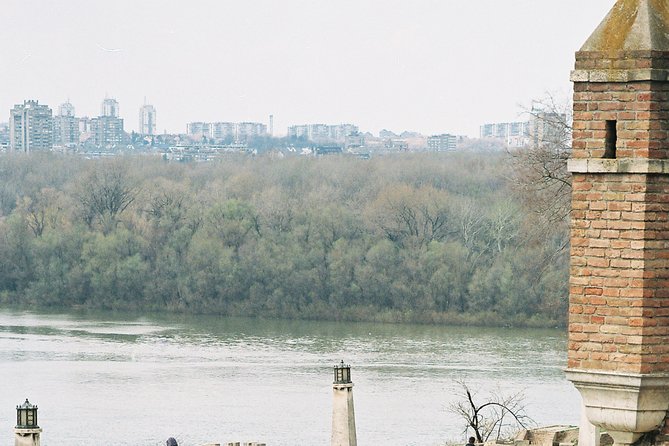
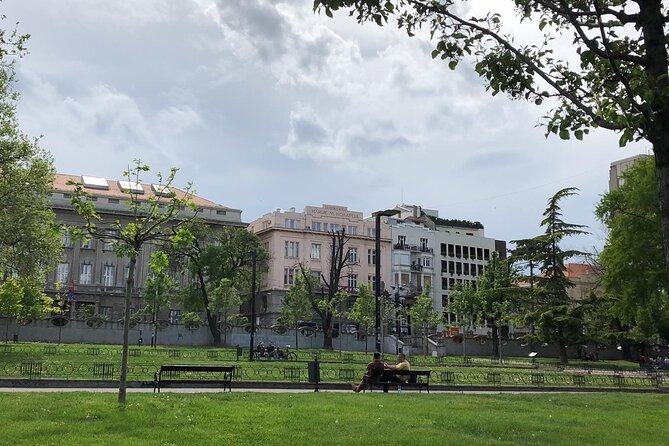
Republic Square is Belgrade’s main meeting point. It occupies the site where gates once led into the city, making it a useful place to discuss how the old settlement opened into a modern capital.
You will spend about 15 minutes here. The stop is not only about the square itself. Aleksandar also uses the walk to explain Serbian roots, religion, mentality, customs, and celebrations. This is where the tour can move beyond dates and architecture and give you a sense of how local identity is discussed in Serbia.
That personal approach is one of the tour’s strengths, but it also calls for the right expectations. This is a guide-led conversation, not a neutral audio recording or a fixed museum presentation. One dissatisfied booking felt the discussion became too political and that the planned route was not followed closely enough. If you prefer strictly factual commentary with no room for interpretation, ask early about the route and the topics you want covered.
At the same time, other ratings describe Aleksandar’s perspective as balanced and objective. The safest conclusion is that the tone depends partly on your interests and the flow of the group. You can help shape the experience by asking for more architecture, religion, daily life, or military history.
Nebojsa Tower and customs you may not meet elsewhere
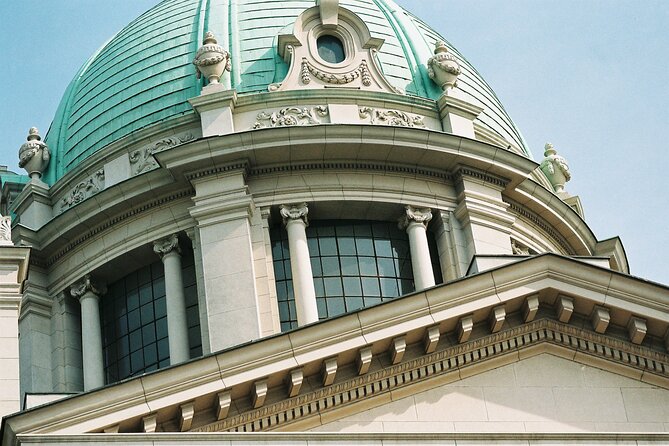
Nebojsa Tower receives about 25 minutes. The stop is tied to special Serbian customs and celebrations, giving the guide another chance to discuss parts of local life that a standard monument tour might skip.
The supplied details do not promise an interior admission, so you should treat this as a guided stop rather than a museum visit. The value is in the explanation. If you want to understand how national traditions are expressed through public celebrations and religious practice, this section may be especially worthwhile.
Because the tour covers many subjects, some stops will naturally be brief. You will get a framework, not a full course on every custom. I would note the names and topics that interest you, then ask Aleksandar where to learn more after the walk.
The French monument and Kalemegdan Park
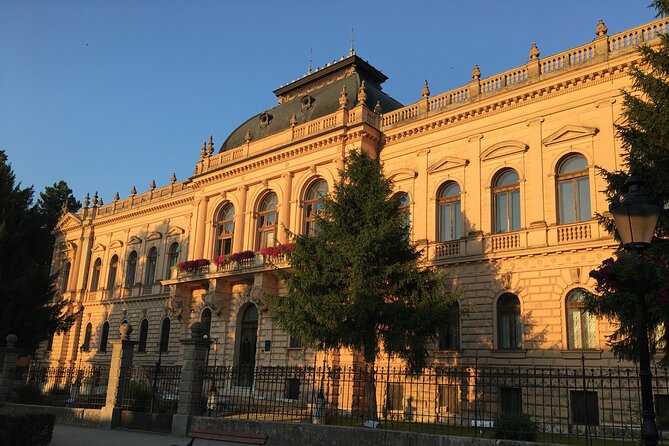
The Monument of Gratitude to France stands at the end of the main alley through Kalemegdan Park. Sculptor Ivan Mestrovic created it, and it was erected in 1930.
The monument points to Serbia’s relationship with France and the memory of wartime support. It also marks the transition from central-city architecture to the open grounds around the fortress. The stop lasts about 10 minutes, and admission is not included.
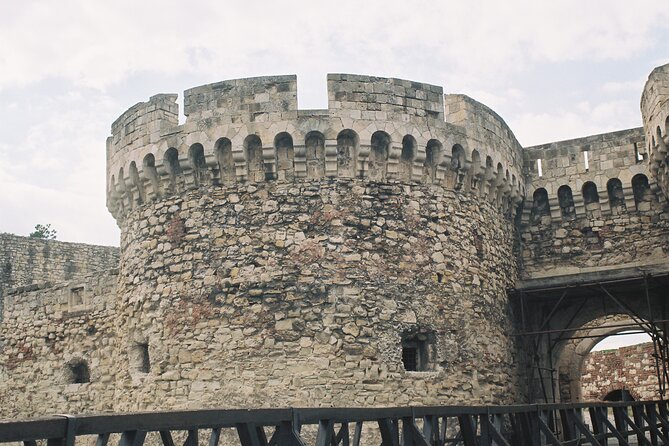
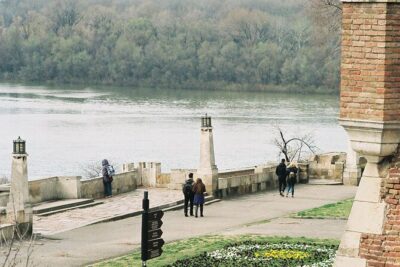
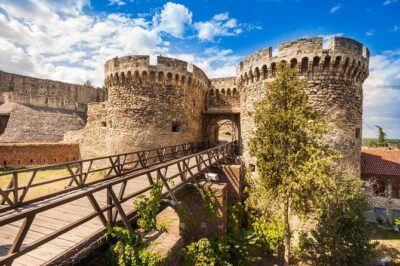
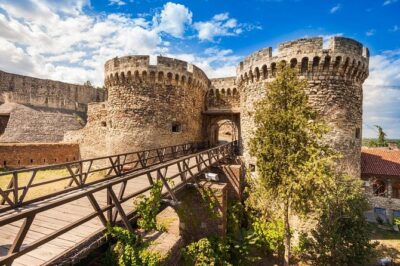
Kalemegdan Park and Belgrade Fortress receive the longest visit, about 45 minutes. The fortress includes the old citadel and the park above the confluence of the Sava and Danube rivers. This is the historical core of the city, and it is the part of the walk where Belgrade’s setting becomes easiest to understand.
Allow yourself a little patience here. The fortress area brings together layers of the city’s past, while the river views explain why this location mattered so much. The tour gives you a guided overview, but it is not designed to replace a full independent visit. You may want to return later when you can explore at your own speed.
Admission to the park and fortress area is listed as free. The route includes walking on outdoor paths, so sensible shoes are a good idea. The tour has been completed in light rain, but weather can affect how enjoyable the park and viewpoints feel.
Pobednik, Belgrade’s famous symbol

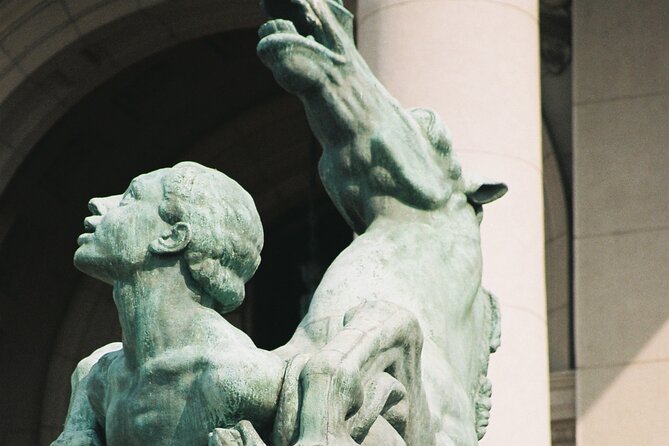
The final major sight is Pobednik, the Victor monument, for about 15 minutes. The figure holds a sword in his right hand, symbolizing war, and a falcon in his left hand, symbolizing peace.
The monument honors the Serbian army’s victory in the Balkan Wars. Its original concept was more elaborate: a fountain intended for Terazije Square. Ivan Mestrovic created the central male figure before the First World War, but the project took an unusual path before the monument reached its present setting.
This is an excellent final image because it combines art, military memory, and the city’s wide river outlook. Admission is not included, but the monument is viewed as part of the outdoor route.
What $38.41 buys you
At $38.41 per person, the tour is not the cheapest way to walk around central Belgrade. You could pass many of these sights alone for nothing. The price makes more sense if you want context, a local host, a small group, and a prepared route that connects places you might otherwise see as unrelated.
The included coffee or tea adds modest value, but it is not the main reason to book. The stronger value lies in the explanations, especially if Belgrade is new to you. A 4.8 rating from 19 ratings and a 95 percent recommendation suggest that the format has worked well for most bookings, though the smaller number of ratings means you should not treat that score as final proof for every style of visitor.
No transportation is provided. That is not a problem if you are comfortable walking and staying in or near central Belgrade. It does mean you should plan your arrival at Kosovska 47 and remember that the tour ends elsewhere, on Knez Mihailova Street.
Who will enjoy this Belgrade walk most?
I would choose this tour if you:
- Want a first-day orientation before exploring alone
- Prefer a local guide to a large group
- Enjoy history, architecture, religion, and national customs
- Want to ask questions as you walk
- Like mixing major monuments with a café stop
- Have two to three hours rather than a full day
It may be less suitable if you want long interior visits, a rigid route, or a tour free of political discussion. The experience has a conversational character, so you should tell Aleksandar what kind of history interests you.
Most people can participate, and the tour is near public transportation. Service animals are allowed. The details do not provide a specific accessibility assessment for every path or fortress surface, so anyone with mobility concerns should confirm conditions before booking.
Timing, group size, and cancellation
The start time is 11 a.m., and the maximum group size is six. You receive booking confirmation at the time of purchase. The experience is usually booked about eight days ahead, so reserving in advance is sensible if your dates are fixed.
Free cancellation is available up to 24 hours before the local start time. A cancellation made less than 24 hours ahead is not refundable, and late changes are not accepted. The tour also requires a minimum number of participants. If that minimum is not reached and the experience is canceled, you are offered another date or experience, or a full refund.
Should you book it?
Book this walk if you want useful context in a small group, especially at the start of your Belgrade stay. Aleksandar’s enthusiasm, local insight, easy pace, and ability to explain both famous sights and Serbian customs are the main reasons it earns strong marks.
I would not book it expecting a museum-heavy tour or a perfectly fixed script. The route may feel flexible, and the conversation can touch on politics. For the right person, that is part of the appeal. You get a thoughtful introduction to Belgrade, a cup of coffee, and a clear list of places worth returning to.
FAQ
How long does the Belgrade City Walk take?
The experience lasts approximately two to three hours.
What time does the tour start?
The tour starts at 11 a.m.
Where does the tour begin?
The meeting point is Kosovska 47, Beograd 11000, Serbia.
Where does the tour finish?
The tour ends on Knez Mihailova Street, in front of the Belgrade City Library. The supplied meeting information also identifies the end as 56 Knez Mihailova Street.
Is coffee or tea included?
Yes. Coffee or tea is included, and the experience presents coffee in Serbia as an important social ritual.
How many people can join the tour?
The group has a maximum of six participants.
Is transportation included?
No. Transportation is not included.
Just added in Belgrade
- Private Half Day Serbia Tour Novi Sad and Petrovaradin Fortress★ 5.0 · 3 reviews
- Zasavica Bike Tour★ 5.0 · 1 review
- Private Belgrade Street Art and Adventures Walking Tour★ 5.0 · 4 reviews
- Private Wine Tasting by Party in Belgrade★ 5.0 · 3 reviews
- VIP Reservation Service in Belgrade★ 5.0 · 2 reviews
- Wonders of Eastern Serbia a Full Day Tour from Belgrade★ 5.0 · 1 review
- Urban & Alternative Belgrade tour★ 5.0 · 4 reviews
- Rakija Tasting for groups in Belgrade★ 5.0 · 1 review
Walking Tours, compared.
Half-Day Sightseeing and Walking Tour of Belgrade City
Read our review →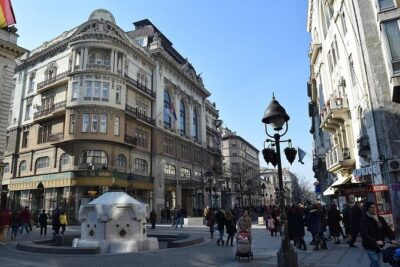
Browse the lists this tour appears in