
Review · HISTORICAL TOURS
Belgrade: The White Emigration in Serbia in the Wake of the Russian Revolution
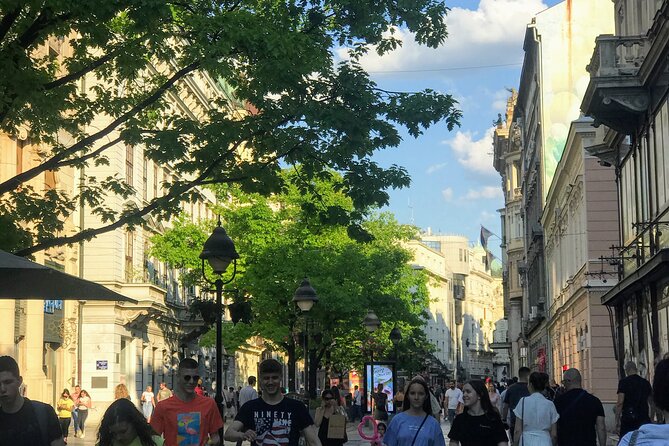
A forgotten Belgrade story comes alive here. This three-hour walk follows the Russian émigré presence that reshaped the Serbian capital after the Bolshevik Revolution, linking churches, royal buildings, theaters, cafés, architects, soldiers, and scientists. I like the way the tour treats history as a citywide puzzle rather than a museum lecture. I also like the food-and-café stop at Hotel Moskva, where the past gets a practical, edible introduction through old cake recipes.
The main consideration is the price: $173.64 per person is a serious sum for a walking tour, even with group discounts. The private format and specialist subject may justify it for the right group, but you should compare that cost with your interest in Russian exile history before booking.
In This Review
- Key points to know before you book
- Why the White Russian story matters in Belgrade
- Holy Trinity Church and Baron Wrangel
- Serbian Parliament and the Russian mark on Belgrade
- Royal Palaces and the monument to Nicholas II
- Hotel Moskva, old recipes, and a glimpse of Belgrade society
- Russian performers at the National Theatre
- University, the Academy, and the fate of émigré scientists
- Gavrilo Princip Square and the First World War
- Julja’s guiding style and the private format
- Who will get the most from this tour?
- Is this Belgrade walking tour worth booking?
- FAQ
- Where does the tour begin?
- Where does the tour end?
- How long does the experience last?
- Is this a private tour?
- What is included in the price?
- Are food and drinks included?
- Can I cancel for a full refund?
Key points to know before you book
- A three-hour walk through central Belgrade: The route connects seven locations, with roughly 15 to 30 minutes at each stop.
- A private experience for your group: You are not placed with unknown participants, and group discounts may affect the final value.
- A Russian émigré story told through the whole city: Churches, government buildings, royal sites, cafés, music, theater, and academic life all play a role.
- Baron Wrangel’s burial place: Holy Trinity Church gives the tour a direct connection to the White Russian military story.
- Julja is the guide to look for: The strongest praise centers on her command of Serbian history, Russian emigration, and the ability to answer detailed questions.
- The Hotel Moskva pause adds a local touch: You can see the hotel’s grand interior and try Moskva and Aurora cakes based on old recipes, though snacks are not included.
Why the White Russian story matters in Belgrade
After the Bolshevik Revolution, between one and two million people left Russia over a period of about three years. Up to 100,000 reached the Kingdom of Serbs, Croats and Slovenes, a large arrival for a country with a small population.
That number matters because this was not just a short-term refugee movement. Russian emigrants brought military experience, architectural skills, artistic training, scientific work, religious traditions, and professional networks. Belgrade became one of the places where these people tried to rebuild ordinary lives after a political and military collapse.
The tour asks a useful question: was the Russian presence good or bad for Serbia? You are not simply handed a patriotic answer. Instead, you look at buildings and institutions, then consider what this influx meant for a country willing to receive a trained and partly armed army from another state.
That military problem gives the tour its unusual edge. How do you house, control, and support an army in exile without allowing it to overthrow a government, seize territory, or run out of food? The question is dramatic, but it also makes the political situation easier to understand.
You will also hear about Nansen passports, a subject that connects the Russian exodus with wider questions of identity and statelessness. The tour brings these historical issues into the present without turning the walk into a modern political debate.
More history tours in Belgrade:
- History and Culture in my Belgrade
★ 5.0 · 41 reviews - NATO Bombing of Belgrade Historical Tour
★ 5.0 · 17 reviews - Football tour: Red Star and Partizan Ultras History
★ 5.0 · 14 reviews
Holy Trinity Church and Baron Wrangel
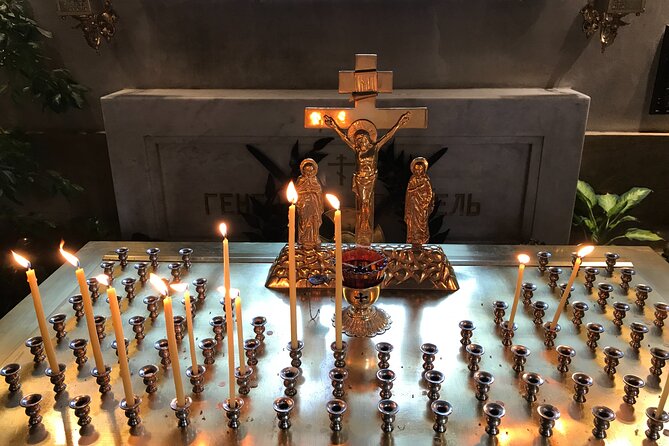
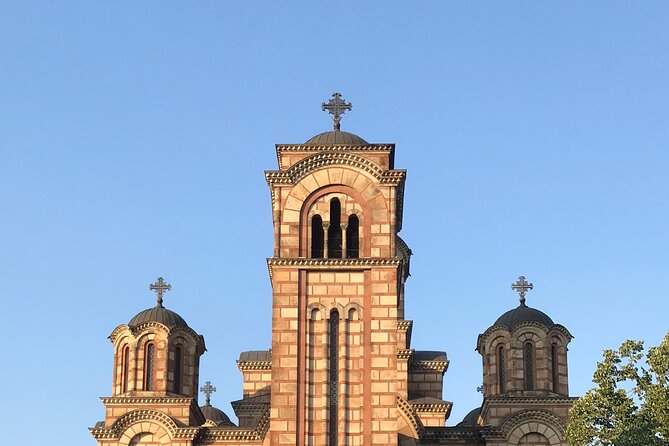
The walk begins at St. Mark Orthodox Church on Bulevar kralja Aleksandra 17, while the first major stop is Holy Trinity Church. This Russian church is connected with Baron Wrangel, who is buried there.
Wrangel is central to the White Army part of the story. The church gives the subject a physical starting point, and the burial site helps explain why Russian military and political figures mattered in Belgrade. You are not beginning with an abstract timeline. You are standing in a place tied to one of the best-known commanders of the anti-Bolshevik forces.
The planned visit lasts about 30 minutes. That is enough time for a focused explanation, though it is not a full church-history visit. If religious buildings are your main interest, you may want more time for independent looking before or after the tour.
I like this opening because it sets the tone quickly. The Russian émigré presence was not limited to wealthy families, writers, or artists. It also included soldiers and political figures whose futures were uncertain.
Serbian Parliament and the Russian mark on Belgrade
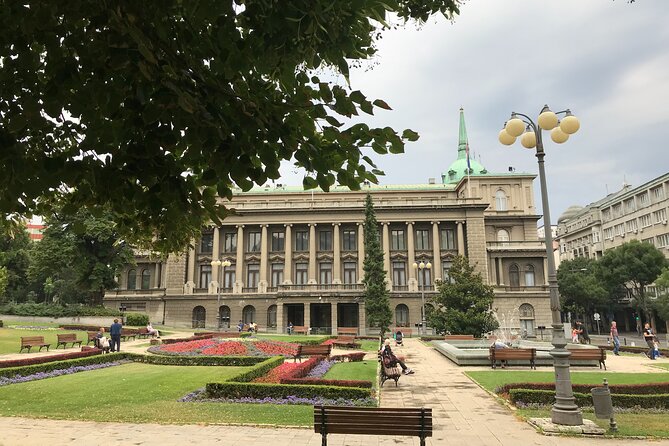
From Holy Trinity Church, you walk through a picturesque former royal park toward the House of the National Assembly of the Republic of Serbia. The route then takes in the post office, General Staff, and ministry buildings.
This is where the tour shifts from personal exile to the shape of the capital itself. Russian architects contributed to Belgrade’s appearance, but the tour also asks why that contribution is not always acknowledged in a straightforward way.
That question is valuable. Architecture can be easier to overlook than a statue or a famous name. A building may look simply Serbian, royal, official, or modern, while its designers and influences cross national borders. You will have a chance to connect Russian professional talent with the government center you are seeing.
The stop is scheduled for about 30 minutes. Expect exterior viewing and explanation rather than a long interior visit. Because the buildings continue to serve public purposes, the real value here is the guide’s ability to point out the Russian connection and explain its place in Belgrade’s development.
I would pay close attention to the contrast between public recognition and historical memory. The tour does not merely say Russian architects helped build Belgrade. It asks why credit can become complicated when political loyalties, national identity, and changing governments are involved.
Royal Palaces and the monument to Nicholas II
The next section passes by the Royal Palaces and the monument to Nicholas II. This is the clearest place to discuss the relationship between the Serbian and Russian dynasties.
The stop lasts about 30 minutes, including the walk and discussion. You should expect to view the royal sites from the route rather than receive a long palace tour. The point is the connection between ruling families and the political choices that shaped Serbia’s response to Russian refugees.
This part of the walk adds a valuable layer to the story. Serbia’s welcome was not only a matter of public charity or practical labor needs. Dynastic ties helped shape the country’s relationship with Russia, and the monument to Nicholas II gives that relationship a visible focus.
I like the way this stop broadens the story beyond the Russian émigrés themselves. Their fate depended partly on decisions made by governments and royal households. It also helps explain why Serbia was willing to take on responsibilities that larger and stronger countries did not accept in the same way.
A completely different kind of day:
- Northern Serbia: Sremski Karlovci and Novi Sad Full-Day Tour from Belgrade
★ 5.0 · 425 reviews - Day Trip from Belgrade: Gems of Eastern Serbia
★ 5.0 · 424 reviews - Belgrade Nightlife Bar Pub Club Crawl with Drinks
★ 5.0 · 277 reviews - Taxi to/from Belgrade Airport to/from Belgrade City Center
★ 5.0 · 241 reviews
Hotel Moskva, old recipes, and a glimpse of Belgrade society
Hotel Moskva brings the tour down from royal and military questions to daily city life. You walk along a street once filled with craft workshops, now occupied by designers, before entering the luxurious hotel interiors.
The planned café break lasts about 15 minutes. You can have coffee and try the Moskva and Aurora cakes, prepared according to recipes that are about half a century old. The tour also uses the hotel as a way to look at Belgrade’s social world and the city’s well-dressed set.
This is a smart change of pace. A story about exile can become too focused on generals and official buildings. A café shows how history survives in habits, recipes, meeting places, and public style. The cakes offer a small but memorable link between the grand hotel of the past and the Belgrade you see today.
Food and alcoholic drinks are not included in the tour price, and snacks are specifically listed as excluded. You should be ready to handle any order separately. The short stop is not designed as a full meal, so eat beforehand if you need substantial food.
The limited time is both a strength and a weakness. Fifteen minutes keeps the walk moving, but it does not allow for a leisurely café visit. Think of it as a historical pause with refreshments, not a restaurant experience.
Russian performers at the National Theatre
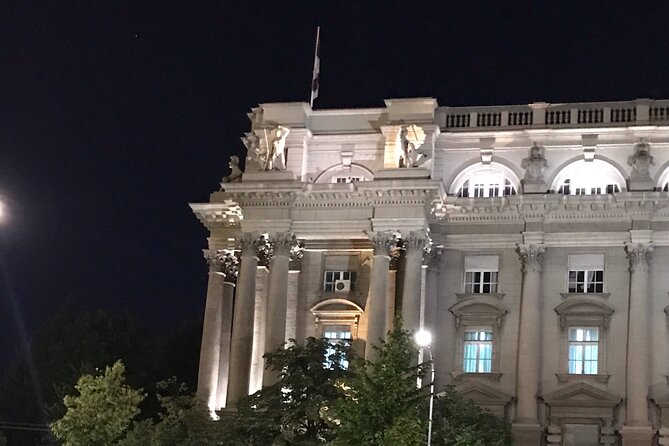
The National Theatre stop lasts about 15 minutes. Here, the focus moves to Russian ballerinas, scenic designers, choreographers, and directors who worked in Belgrade.
This section helps you see emigration as a transfer of creative skills. Russian artists did not simply arrive as people in need. They also contributed to the city’s stage culture and professional life.
The tour brings in the subject of street songs and asks you to remember the people who helped shape Serbian choral traditions. That musical thread gives the stop a more human tone than a list of names and dates.
You will not be attending a performance, and the short timing means the explanation is the main event. Still, the theater is an effective setting. It shows how Russian influence could reach audiences far beyond the émigré community.
If you enjoy music, dance, or theater, this may be one of the most rewarding parts of the route. If you mainly want military history, it may feel like a brief detour, but it is important to the larger point: exile changed Belgrade in many professions, not just politics.
University, the Academy, and the fate of émigré scientists
The route continues to Belgrade University and the Serbian Academy of Sciences and Arts. The discussion turns to Russian scientists and what happened to educated professionals who had left their homeland.
This stop is scheduled for about 30 minutes. It gives the tour room to discuss the difficulty of rebuilding a career in exile. A scientist may have training and experience, yet still face questions about language, recognition, legal status, and employment.
The subject also balances the better-known military and artistic stories. Russian emigration was not one single group with one political goal. It included people whose work could support Serbian institutions and expand the intellectual life of the capital.
This is where the tour’s question about Nansen passports becomes especially useful. Documents and nationality were not small bureaucratic matters for people who had lost a secure place in their former country. The tour connects those papers to the practical problem of living, working, and being recognized elsewhere.
I would consider this a strong section for anyone interested in universities, science, or migration. It may feel less dramatic than the White Army story, but it explains how long-term influence often works. A professional’s contribution can last through an institution even when the person’s name is no longer widely known.
Gavrilo Princip Square and the First World War
The final listed stop is Nemanjina, including Gavrilo Princip Square. The discussion turns to the First World War and the event connected with Princip’s place in world history.
The tour also returns to the everyday places Russian emigrants visited a century ago, including locations that still exist and remain open. That detail is important. You are not only looking at memorials and official buildings. You are tracing ordinary routines through surviving parts of Belgrade.
This section ties together the Russian emigration story and the wider upheaval of the early twentieth century. The First World War, the fall of empires, revolution, exile, and the creation of new states all overlap here.
The stop lasts about 30 minutes. Since this is the final part of the walk, it gives the guide time to connect the different strands: royal support, military settlement, architecture, performing arts, science, and daily life.
The activity ends back at the meeting point. That return is practical because you finish where you began, rather than needing to find your way across the city after a long walk.
Julja’s guiding style and the private format
Julja receives especially warm praise for bringing Serbian history to life with emotion while also handling detailed questions. That combination matters on a specialized subject. You need someone who can explain the broad political story without losing the small details that make the buildings and people memorable.
The tour is private, so only your group participates. This is a major advantage if you want to ask questions, pause over a building, or spend more time on the Russian military story than on theater and architecture. A private walk can also work well for families because the guide can adjust the explanation to the group.
The trade-off is cost. At $173.64 per person, the experience is not priced like a standard low-cost city walk. Group discounts are available, but the supplied details do not specify the discount amount. Ask for the final price for your party before you commit.
The mobile ticket is convenient, and confirmation arrives at booking. Most people can participate, but the experience is a walking tour lasting about three hours, so sensible shoes and a willingness to keep moving are practical choices.
Who will get the most from this tour?
I would recommend it most strongly if you have a specific interest in one or more of these subjects:
- Russian history after the revolution
- White Army figures and military exile
- Serbian and Russian royal connections
- Belgrade architecture
- Migration and stateless identity
- Theater, ballet, music, or science
- Small-group touring with time for questions
It is also a good choice if you have already seen Belgrade’s main sights and want a new way to read the center. The route does not treat the city as a collection of isolated monuments. It shows how one population changed the capital’s institutions and social life.
I would hesitate if you want interior visits, long museum stops, or a relaxed food tour. Most of the route is built around walking and explanation, and the Hotel Moskva break is short. The price is also hard to defend for someone with only a casual interest in the subject.
Free cancellation is available if you cancel at least 24 hours before the local start time. Changes or cancellations made later are not accepted for a refund, so keep that deadline in mind when planning your Belgrade schedule.
Is this Belgrade walking tour worth booking?
Book it if Russian emigration is a genuine interest and you value a private guide who can connect politics, architecture, royal history, music, science, and café culture. The tour’s best quality is its unusual subject. It reveals a Belgrade shaped not only by Serbian history, but also by people forced to reconstruct their lives far from Russia.
The price makes most sense for a small group that can use the private format and qualify for a discount. If Julja is available, her praised ability to answer questions and explain Serbian history with feeling adds real value.
Skip it if you want a broad first introduction to Belgrade or a low-cost sightseeing walk. For the right audience, though, this is a thoughtful and distinctive way to see the city through the experience of Russian émigrés.
FAQ
Where does the tour begin?
The tour begins at St. Mark Orthodox Church, Bulevar kralja Aleksandra 17, Belgrade, Serbia.
Where does the tour end?
The activity ends back at the meeting point.
How long does the experience last?
The tour lasts approximately three hours.
Is this a private tour?
Yes. Only your group participates in the activity.
What is included in the price?
A guide is included.
Are food and drinks included?
Alcoholic beverages and snacks are not included. The route includes a short stop at Hotel Moskva for coffee and the Moskva and Aurora cakes, but the supplied details do not state that these orders are covered by the tour price.
Can I cancel for a full refund?
Yes, if you cancel at least 24 hours before the experience starts. Cancellations or changes made less than 24 hours before the local start time are not refunded or accepted.
Just added in Belgrade
- Private Half Day Serbia Tour Novi Sad and Petrovaradin Fortress★ 5.0 · 3 reviews
- Zasavica Bike Tour★ 5.0 · 1 review
- Private Belgrade Street Art and Adventures Walking Tour★ 5.0 · 4 reviews
- VIP Reservation Service in Belgrade★ 5.0 · 2 reviews
- Private Wine Tasting by Party in Belgrade★ 5.0 · 3 reviews
- Urban & Alternative Belgrade tour★ 5.0 · 4 reviews
- Rakija Tasting for groups in Belgrade★ 5.0 · 1 review
- Wonders of Eastern Serbia a Full Day Tour from Belgrade★ 5.0 · 1 review
Historical Tours, compared.
Football tour: Red Star and Partizan Ultras History
Read our review →
Full-Day Private Royal Heritage Tour to Oplenac With a Winery Visit
Read our review →
Belgrade Time Travel – Half Day Historic Core Private Walking Tour
Read our review →Browse the lists this tour appears in