
Review · YUGOSLAV HISTORY TOURS
Tito and History Vintage Car Tour
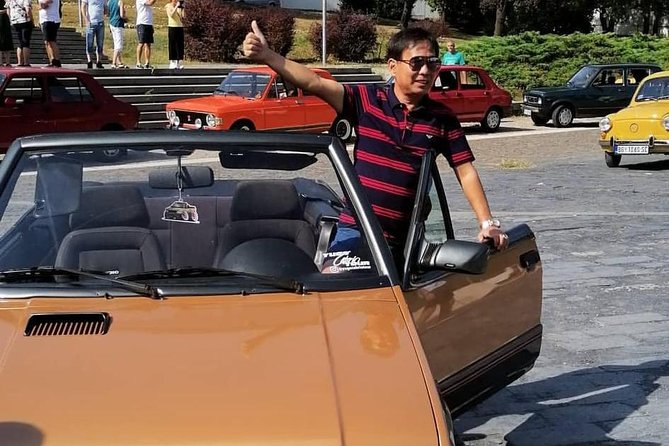
Old cars tell modern stories. The Tito and History Vintage Car Tour uses Yugoslav vehicles, including the famously maligned Yugo, to explain Belgrade’s political past and distinctive architecture. I like the private format, which keeps the outing focused on your group, and I like the mix of cars, city sights, Tito-era history, snacks, and soda. The main drawback is the price: at $144, this is best value for people especially interested in Yugoslavia, cars, or modernist buildings.
The tour lasts about two to three hours and includes several stops across Belgrade. Guide Jovana has earned especially warm praise for her passion and clear command of the subject, which matters on a tour where the stories are as important as the vehicles.
In This Review
- Key points at a glance
- Why Yugoslav cars make a good history lesson
- Starting near the National Assembly
- Park of Friendship and the Peace Alley
- Palata Srbije and the scale of socialist power
- Genex Tower and Belgrade’s brutalist edge
- Forty minutes at the Museum of Yugoslavia
- Snacks, soda, and the value of a private outing
- Timing, pickup, and practical planning
- Who will enjoy this tour most?
- Should you book the Tito and History Vintage Car Tour?
- FAQ
- How long does the Tito and History Vintage Car Tour last?
- Where does the tour begin?
- Is this a private tour?
- What is the price?
- Is admission to the Museum of Yugoslavia included?
- Are snacks and drinks provided?
- Can I cancel for a full refund?
- What happens if bad weather cancels the tour?
Key points at a glance
- Yugo history with a human angle: Learn why the Yugo became famous around the world, including the story of its convertible version.
- Private sightseeing by vintage car: Only your group participates, making it easier to ask questions and keep the pace comfortable.
- Belgrade’s modernist landmarks: See Palata Srbije and the Western City Gate, also called Genex Tower.
- Tito and the Non-Aligned world: Visit the Museum of Yugoslavia and Park of Friendship, where visiting leaders planted trees for peace.
- Simple all-inclusive planning: Pickup can be requested, snacks and soda are provided, and the listed fees are covered.
- A well-regarded guide: Jovana is praised for being passionate and well-informed, a useful strength for this history-heavy route.
Why Yugoslav cars make a good history lesson
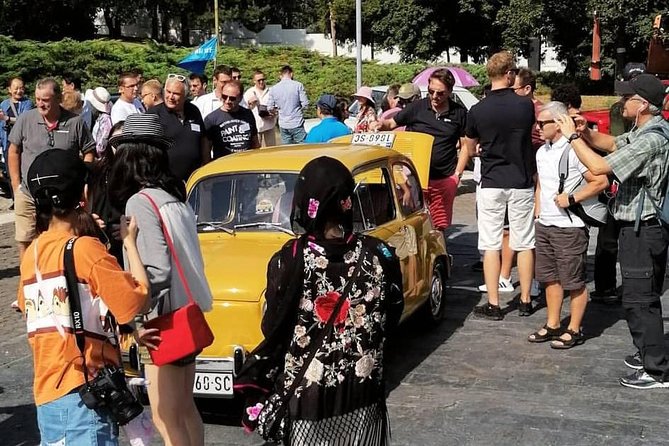
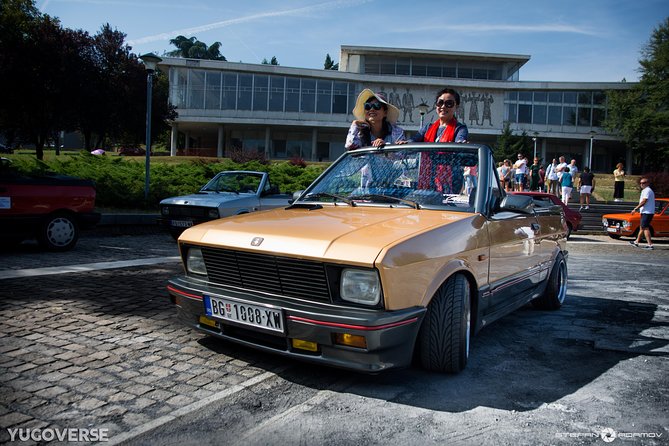
The Yugo is often introduced as one of the worst cars in the world. That reputation makes for an easy joke, but the story is more interesting than the punchline. The car connects to Yugoslavia’s industrial ambitions, its effort to build products for ordinary people, and the country’s unusual position between the Soviet bloc and the West.
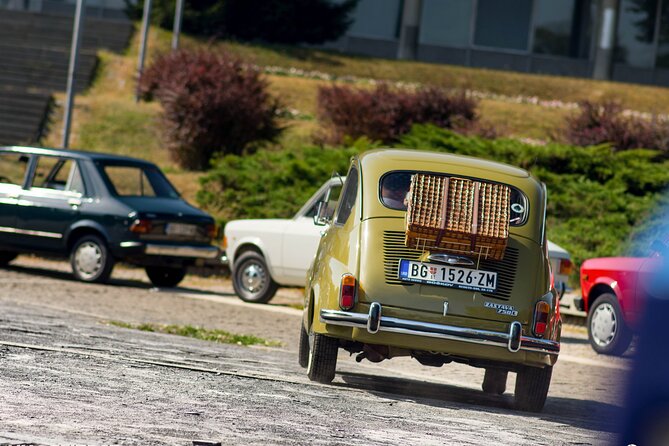
This tour uses vintage Yugoslavian cars as a way into those larger subjects. You are not simply looking at an old vehicle and hearing a list of technical facts. The cars help explain daily life, national pride, manufacturing, travel, and the image Yugoslavia wanted to project abroad.
The tour also covers the Yugo convertible, a detail that adds variety to the usual story. If you know the Yugo only as a punch line, you may find its different versions and international reputation more interesting than expected.
The description does not promise that you will drive the cars yourself. Think of this as a guided sightseeing and history experience built around vintage vehicles, not a driving lesson or a car rental.
More Yugoslav history tours:
- Red Belgrade Communist Tour
★ 5.0 · 78 reviews - Architecture of New Belgrade – Brutalism Decoded
★ 4.5 · 24 reviews - Communist Tour in Belgrade
★ 4.5 · 19 reviews
Starting near the National Assembly
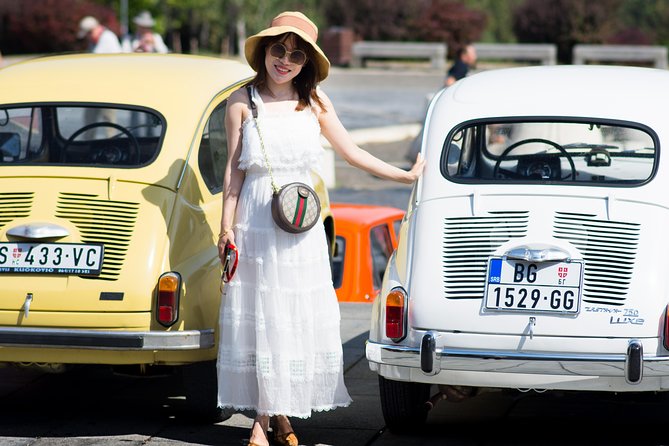
The meeting point is at Dragoslava Jovanovića 14 in central Belgrade. Pickup is also offered, so you can request that option instead of making your own way to the starting point.
The first listed stop is the House of the National Assembly of the Republic of Serbia. The building once served as the royal residence of the Obrenović dynasty and now houses the City Assembly of Belgrade. You have about 15 minutes here, with no admission charge.
This is a short orientation stop rather than a full interior visit. Its value comes from placing the tour’s car stories in a wider political setting. Yugoslavia’s story did not begin with Tito, and this early stop points toward the royal and national institutions that came before the socialist period.
I would treat the 15 minutes as enough time for an exterior look and a concise explanation. If you want a long architectural visit inside the building, this tour is not designed for that.
Park of Friendship and the Peace Alley
Park of Friendship, or Park Prijateljstva, offers one of the tour’s most unusual historical stops. The park was linked to the 1961 Belgrade Conference, remembered as the first summit of the Non-Aligned Movement.
The Peace Alley is a 180-meter path lined by two rows of trees. Presidents and other prominent figures planted trees during the summit as symbols of their commitment to world peace. The list connected with the park includes Queen Elizabeth II, Margaret Thatcher, Robert Mugabe, Jimmy Carter, Indira Gandhi, Nicolae Ceaușescu, and members of the Rolling Stones.
You have around 20 minutes here, and admission is free. That limited time should be enough to understand the park’s purpose and see part of the tree-lined path, though not to study every detail.
I like this stop because it shows a side of Yugoslavia that a standard Belgrade city tour can miss. The country tried to maintain its own place in world politics, neither fully aligned with the Soviet Union nor with the Western powers. Park of Friendship captures that ambition in a simple, slightly strange form: a grand peace project that remains incomplete.
The park’s unfinished quality is part of its appeal. It is not a polished monument with a single clear message. Instead, it reflects the optimism and disappointments of the era. Your guide’s explanation is important here, since the trees alone do not tell the full story.
Palata Srbije and the scale of socialist power
Palata Srbije is one of Belgrade’s major modernist buildings. The tour gives you about 20 minutes to see it and hear about its past.
The building is described as the largest and most spectacular modernist masterpiece in Belgrade. That is a strong claim, but the building’s scale helps explain why it mattered. Palata Srbije was created to represent the authority and ambition of the Yugoslav state, with a grand public presence suited to government meetings and international diplomacy.
The interior is closed to the public, but you will see photographs of the inside. That limitation is worth knowing before you book. You will not receive a conventional indoor architectural tour, yet the exterior and the historical explanation still make the stop useful.
This is one place where a private tour helps. You can ask why the structure looks the way it does, how it relates to Yugoslav government, and what the interior was meant to communicate. A general sightseeing bus might point it out. This tour gives it a reason to matter.
More history tours in Belgrade:
- History and Culture in my Belgrade
★ 5.0 · 41 reviews - NATO Bombing of Belgrade Historical Tour
★ 5.0 · 17 reviews - Football tour: Red Star and Partizan Ultras History
★ 5.0 · 14 reviews - Romantic history tour of Belgrade
★ 5.0 · 8 reviews
Genex Tower and Belgrade’s brutalist edge
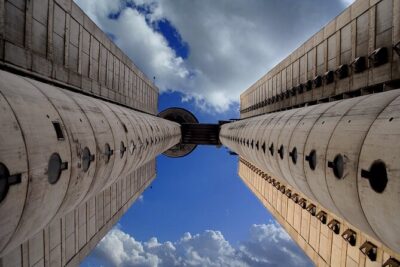
The Western City Gate, better known as Genex Tower, is the architectural showpiece for fans of brutalism. It is a 36-story complex designed in 1977, formed from two towers joined by a two-story bridge.
A revolving restaurant sits at the top. The tower was designed in a style that can seem severe, bold, or even futuristic, depending on your taste. Either way, it is hard to confuse with ordinary office construction.
The Genex Tower stop is particularly valuable because it shows the physical confidence of late socialist Yugoslavia. The building was not designed to blend quietly into its surroundings. Its shape announces movement, height, technology, and modern life.
The information provided does not specify the exact amount of time spent at Genex Tower. That means you should expect it to be one part of a moving route rather than a long standalone visit. If brutalist architecture is your main reason for booking, ask the provider how much time is planned there before confirming.
For many people, this will be the most visually memorable building of the day. For others, it may look cold or imposing. That split reaction is part of the fun. You do not need to love brutalism to understand why Genex Tower remains important to Belgrade’s city view.
Forty minutes at the Museum of Yugoslavia
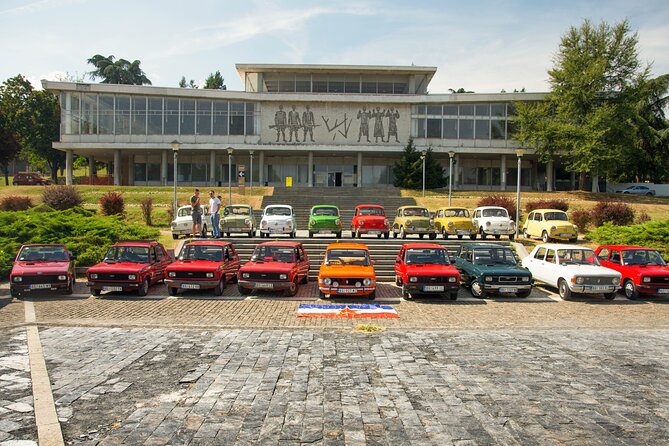
The Museum of Yugoslavia receives the longest scheduled visit, about 40 minutes, and admission is included. This is the tour’s main indoor history stop.
The museum began in 1962 as a place to collect gifts given to Josip Broz Tito by citizens of Yugoslavia and by leaders from around the world. After Tito died, the museum was combined with several related sites and collections, including the House of Flowers, Tito’s residence, the Pool House, the Hunting Lodge, the Old Museum, and Tito’s tomb.
More than 200,000 objects are organized into 20 collections. You will not see all of that in 40 minutes, but the visit gives you a useful framework for understanding Tito’s public image and Yugoslavia’s international connections.
The museum is not a standard chronological history museum. Its starting point was the collection of gifts to Tito, so personal objects, diplomatic gestures, and state symbolism play a large role. That makes the experience more about power, presentation, memory, and political identity than a simple list of dates.
You should also know that the Museum of Yugoslavia is a substantial subject for a short visit. Forty minutes can provide a strong introduction, but it is not enough for a slow, detailed look at every collection. If you become absorbed by the exhibits, you may wish you had more time.
Still, the museum fits the tour well. The cars show how Yugoslavia presented industry and everyday progress at home. The museum shows how the country presented itself abroad. Together, the two parts create a clearer picture than either one would alone.
Snacks, soda, and the value of a private outing
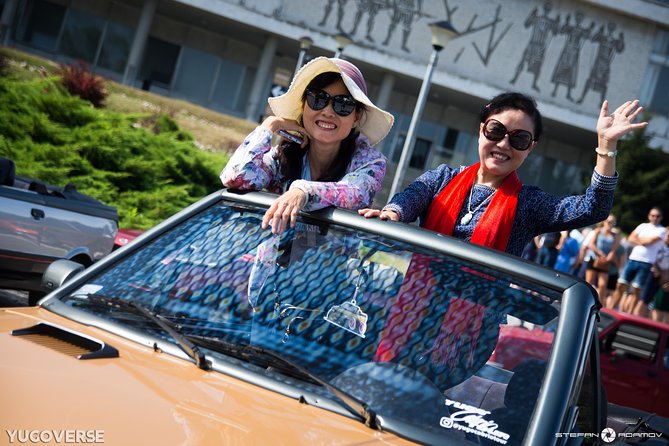
Snacks and soda are provided along the way. This is a small feature, but it helps keep a short sightseeing route comfortable, especially when you are moving between several stops.
The bigger advantage is privacy. Only your group participates, so you are not sharing the guide’s attention with a large coach party. If you want to ask about the Yugo’s design, Tito’s international role, or the difference between socialist modernism and brutalism, you can do so without waiting for a crowd to settle down.
A private tour also lets the experience feel less like a fixed lecture. The guide can give more attention to the subjects that interest you most, although the exact flexibility is not stated and should not be assumed.
The tradeoff is cost. At $144, the tour is not the cheapest way to see Belgrade’s major landmarks. You are paying for private guiding, transportation connected to the vintage car theme, the included museum admission, refreshments, and a specialized subject. If you only want a quick photo at Genex Tower or Palata Srbije, you can likely see more for less through ordinary city sightseeing.
I think the price makes the most sense for two types of visitors. The first is a couple or small group that would rather pay for a private experience than join a larger tour. The second is anyone who sees Yugoslav cars and Tito-era history as a central reason to visit Belgrade.
Timing, pickup, and practical planning
The outing takes approximately two to three hours. That is a useful length for a first or second day in Belgrade because it gives you a broad introduction without taking up an entire day.
Pickup can be requested, or you can go to the central meeting point. The tour ends at a different location, but the exact end point is not provided, so confirm that detail if you have a restaurant booking, train departure, or another timed activity afterward.
Mobile tickets are accepted. Confirmation is sent within 48 hours of booking, subject to availability, so do not leave a time-sensitive reservation until the last moment.
The tour is listed as suitable for most participants. Service animals are allowed, and the route is near public transportation. The activity requires good weather, and it also requires a minimum number of participants. If poor weather or low enrollment causes a cancellation, you are offered another date or experience, or a full refund.
For cancellation, you can receive a full refund if you cancel at least 24 hours before the start time. Changes or cancellations within 24 hours are not refunded or accepted. Keep the local time in mind when calculating the cutoff.
The stated operating hours run from 9 a.m. to 9 p.m., Monday through Sunday, for the listed operating period. The actual departure time still needs to be selected and confirmed when you book.
Who will enjoy this tour most?
I would recommend it to anyone curious about Yugoslavia beyond the usual sightseeing list. It suits people interested in cars, Cold War politics, Tito, diplomatic history, brutalist architecture, and the way governments use buildings and objects to shape public identity.
It also works well for visitors who prefer a private experience and want to ask plenty of questions. The strong praise for Jovana’s passion is important here. A subject like Yugoslavia can become dry if presented as a string of dates, but an engaged guide can connect the cars, buildings, museum objects, and political ideas.
You may want to choose another tour if your main goal is a long museum visit, a full architectural study, or time inside Palata Srbije. The schedule gives you a taste of several places rather than a detailed examination of one.
You should also avoid assuming that the tour is mainly about driving vintage cars. The information focuses on seeing the cars and learning about them. If sitting behind the wheel is essential, ask the provider before booking.
Should you book the Tito and History Vintage Car Tour?
Book it if the words Yugo, Tito, Genex Tower, and Non-Aligned Movement all sound more interesting than a standard checklist of Belgrade sights. You will get a focused private route, a distinctive set of stories, included snacks and soda, and a useful visit to the Museum of Yugoslavia.
At $144, I would not choose it simply because you need a ride around town. I would choose it because the theme is unusual and the guide-led context brings the stops together. The 5-star rating from 11 submitted ratings and the full recommendation rate support the tour’s appeal, especially the guide-led storytelling.
The best booking decision is to confirm the pickup arrangement, final drop-off point, time at Genex Tower, and whether the current car lineup includes the models you most want to see. If those details suit you, this is a lively and practical way to connect Belgrade’s cars, buildings, and twentieth-century politics.
FAQ
How long does the Tito and History Vintage Car Tour last?
The tour lasts approximately two to three hours.
Where does the tour begin?
The listed meeting point is Dragoslava Jovanovića 14, Beograd 11000, Serbia. Pickup can also be requested.
Is this a private tour?
Yes. Only your group participates in the activity.
What is the price?
The listed price is $144.
Is admission to the Museum of Yugoslavia included?
Yes. Admission to the Museum of Yugoslavia is included. The listed admission for the National Assembly stop and Park of Friendship is free.
Are snacks and drinks provided?
Yes. Snacks and soda are provided along the way.
Can I cancel for a full refund?
Yes, if you cancel at least 24 hours before the experience start time. Cancellations within 24 hours are not refunded.
What happens if bad weather cancels the tour?
You will be offered a different date or a full refund. The tour also requires a minimum number of participants, and a cancellation for that reason brings the same options.
Just added in Belgrade
- Private Half Day Serbia Tour Novi Sad and Petrovaradin Fortress★ 5.0 · 3 reviews
- Zasavica Bike Tour★ 5.0 · 1 review
- Private Belgrade Street Art and Adventures Walking Tour★ 5.0 · 4 reviews
- Private Wine Tasting by Party in Belgrade★ 5.0 · 3 reviews
- VIP Reservation Service in Belgrade★ 5.0 · 2 reviews
- Urban & Alternative Belgrade tour★ 5.0 · 4 reviews
- Rakija Tasting for groups in Belgrade★ 5.0 · 1 review
- Wonders of Eastern Serbia a Full Day Tour from Belgrade★ 5.0 · 1 review
Yugoslav History Tours, compared.
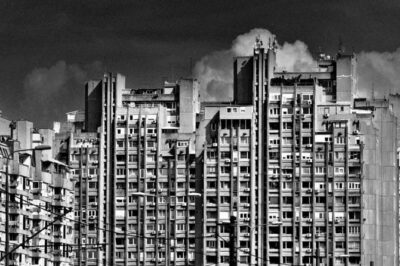
Architecture of New Belgrade – Brutalism Decoded
Read our review →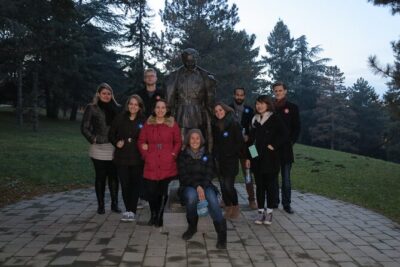
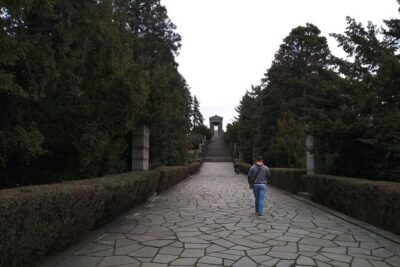
Private 4 Hours Space Architecture Tour in Belgrade
Read our review →
Browse the lists this tour appears in