
Review · HISTORICAL TOURS
History and Culture in my Belgrade
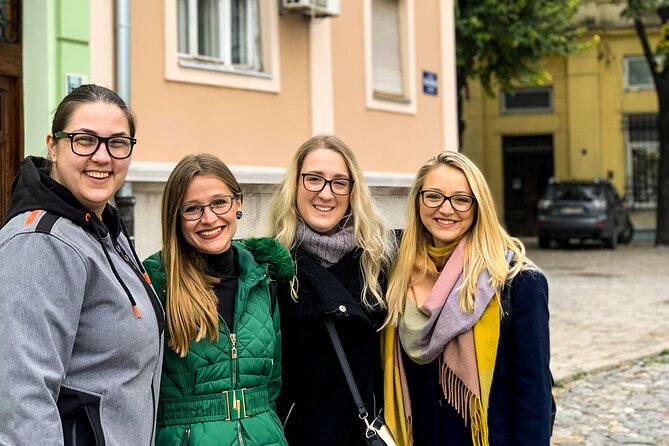
Belgrade reveals itself in layers. This three-hour walk links Orthodox tradition, Yugoslav history, 1999 bombing sites, Ottoman traces, street art, and local food without asking you to spend half a day inside a museum. I like the small-group format, capped at six people in the tour highlights, and the way the route mixes famous places with less obvious corners. I also like the tasting stop, where Serbian rakija, wine, honey, jam, slatko, and juice turn a history lesson into something you can taste.
The guide, Marija, is the heart of the experience. Her style is warm, clear, and suited to difficult subjects, especially Serbia’s recent past. The main consideration is pace: twelve numbered stops plus several passing sights in about three hours means you will see many places, but most visits are short and focused rather than slow, detailed explorations.
In This Review
- Five useful things to know before you book
- Why this short Belgrade walk works
- Starting at St. Mark Orthodox Church
- RTS and the scars of 1999
- Tašmajdan Park and the National Assembly
- Nikola Pašić Square and a historic hotel
- Čumićevo sokače and Serbian flavors
- Republic Square and the pedestrian center
- Students’ Square and the University of Belgrade
- Dorćol, graffiti, and Ottoman Belgrade
- Question Mark kafana and Serbian cafe culture
- Kosančićev Venac and the final view
- Group size, price, and pace
- Who should book this Belgrade tour?
- Should you book History and Culture in my Belgrade?
- FAQ
- Where does the tour begin?
- Where does the tour end?
- How long does the experience last?
- What language is the tour offered in?
- How much does the tour cost?
- What is the group size?
- Are entrance tickets included?
- What food and drinks are included in the tasting?
- Can I cancel for a full refund?
Five useful things to know before you book
- The route crosses Belgrade’s past and present: You move from St. Mark Orthodox Church and Ottoman-era traces to Yugoslav history, modern protests, graffiti, cafes, and local customs.
- Marija receives the strongest praise: Her friendly approach and ability to explain complex events in plain language make this a good first tour in Serbia.
- The tasting is more than a snack: You try rakija, wine, natural juices, jam, slatko, and honey while hearing about Serbian hospitality and old customs.
- The finish gives you a city panorama: Kosančićev Venac offers views toward New Belgrade, the Sava River, and the traditional splavs.
- Three start times help with planning: The tour lasts about three hours, costs $90.11 per person, and is offered in English with a mobile ticket.
Why this short Belgrade walk works
Belgrade can feel hard to read at first. Roman, Byzantine, Ottoman, Habsburg, Yugoslav, and modern Serbian influences sit close together, but the city does not always explain itself. A good guide helps you connect the pieces before they become a blur of churches, squares, ruins, and cafes.
This experience does that through a central walking route. It begins near the National Assembly, cuts through Tašmajdan Park and Dorćol, crosses the main pedestrian area, and finishes in one of the city’s oldest districts. Along the way, you get religion, politics, food, architecture, and everyday life in roughly equal measure.
I would treat it as an orientation tour rather than a full architectural or museum tour. You will enter St. Mark Orthodox Church, but the other stops are mainly viewed from outside. Admission is free at every listed stop, so the price pays for the guide’s time, organization, explanations, and tasting rather than entrance tickets.
The booking pattern also tells you something practical. This experience is often reserved about 40 days ahead, so it is sensible to book early if your dates are fixed. Three available start times give you some room to fit it around a morning arrival, an afternoon plan, or an evening meal.
More history tours in Belgrade:
- NATO Bombing of Belgrade Historical Tour
★ 5.0 · 17 reviews - Football tour: Red Star and Partizan Ultras History
★ 5.0 · 14 reviews - Tito and History Vintage Car Tour
★ 5.0 · 11 reviews
Starting at St. Mark Orthodox Church
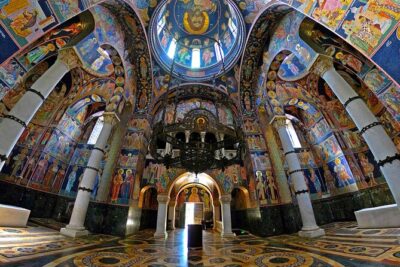
The meeting point is in front of St. Mark Orthodox Church on Bulevar kralja Aleksandra. It is described as the second-largest church in Belgrade, and it gives the tour a strong opening because the guide can begin with Serbia’s major historical events before moving into daily customs and religious practice.
You enter the church with Marija, rather than simply taking a photo outside. She explains Serbian Orthodox customs and points out the remains of one of Serbia’s greatest medieval rulers. The interior visit is brief, about 20 minutes, but that is enough to give you a basic sense of the church’s role.
I especially like this beginning for first-time visitors who want context. Belgrade’s religious sites can be easy to admire without understanding, and a short explanation of ritual and history makes the building more meaningful. The church also provides a quiet start before the route turns toward modern political and social subjects.
RTS and the scars of 1999
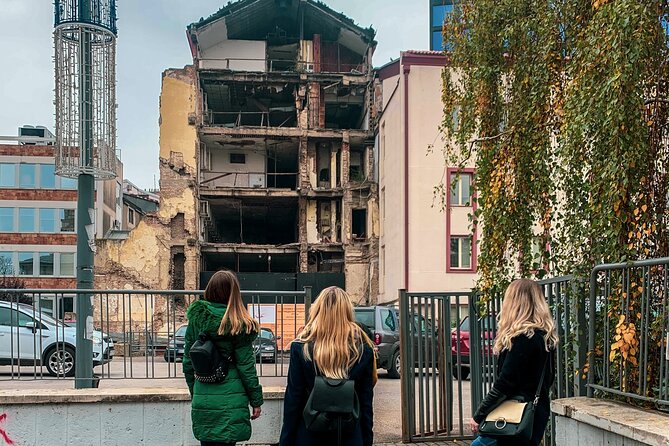
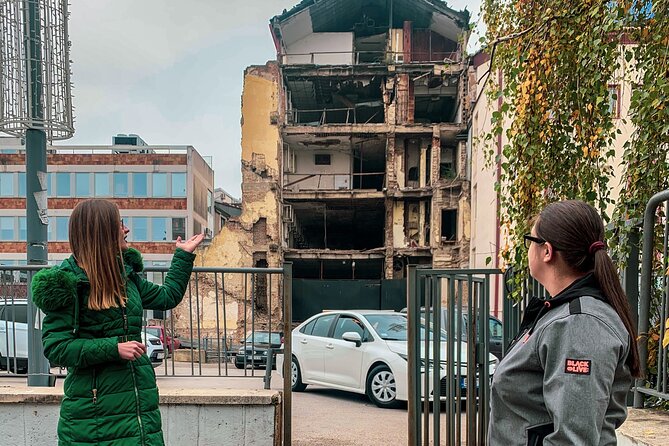
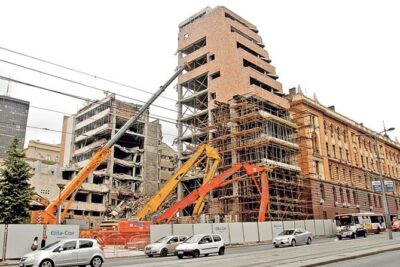
The walk then reaches the Radio Television of Serbia buildings, known locally as RTS. Here you see structures damaged during the 1999 bombing and hear tragic stories connected with the 1990s.
This is one of the most important stops because it refuses to treat Belgrade as an old city frozen in time. Serbia’s recent past still shapes how people understand politics, the economy, Yugoslavia, and contemporary life. A 20-minute stop cannot cover every argument or event, but it can give you a framework for asking better questions during the rest of your stay.
Expect serious subject matter here. If you prefer a light sightseeing walk with little political discussion, this part may feel heavy. For most first visits, though, it is useful. You see physical reminders of a conflict that may otherwise remain an abstract date in a guidebook.
Tašmajdan Park and the National Assembly
Tašmajdan Park offers a change of mood. The setting is calmer, with space to pause and hear about its mysteries and underground passages. The stop lasts about 15 minutes, so you should not expect an extended park visit or a long break.
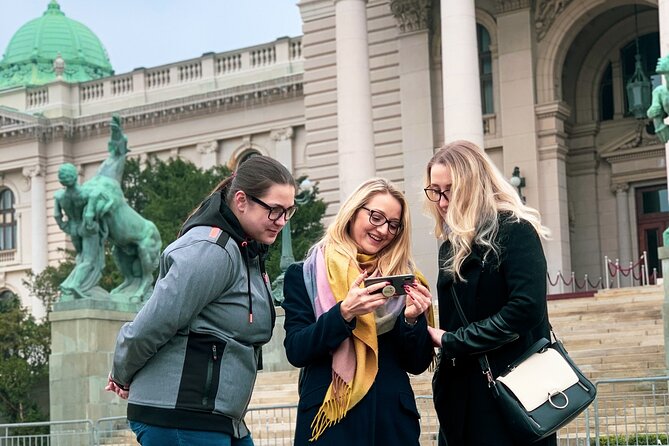
From there, the route reaches the House of the National Assembly of the Republic of Serbia. The monumental building provides a natural setting for stories about power, protests, and Serbia’s political life. Marija explains why the building became associated with Game of Thrones and discusses the major protests that took place here.
The value is not simply the facade. You learn how a government building can become a stage for public anger and political change. It also helps connect the earlier RTS stop with the wider story of Serbia in the 1990s and after.
A completely different kind of day:
- Northern Serbia: Sremski Karlovci and Novi Sad Full-Day Tour from Belgrade
★ 5.0 · 425 reviews - Day Trip from Belgrade: Gems of Eastern Serbia
★ 5.0 · 424 reviews - Belgrade Nightlife Bar Pub Club Crawl with Drinks
★ 5.0 · 277 reviews - Taxi to/from Belgrade Airport to/from Belgrade City Center
★ 5.0 · 241 reviews
Nikola Pašić Square and a historic hotel
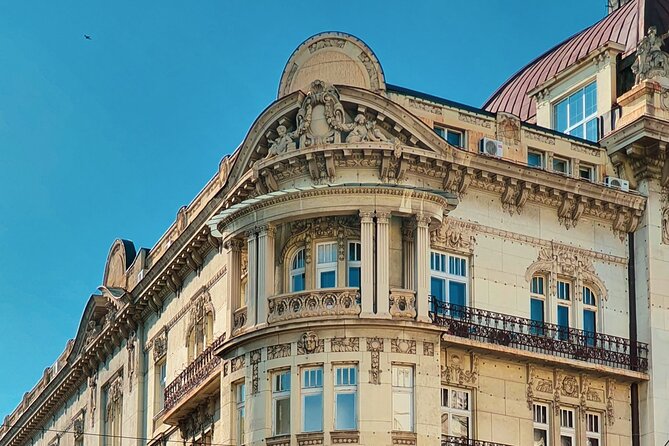
Nikola Pašić Square is described as Belgrade’s youngest square. The stop is short, about 10 minutes, and includes the fountain with its unusual connection to contemporary customs among young people in the city.
That detail is useful because it shifts the tour away from official monuments. You get a glimpse of how local people use public spaces now, not only how historians describe them. Belgrade’s character often appears in these small habits and stories.
Along the way, you also see the only hotel in Serbia included on the worldwide list of historic hotels. No separate visit time is listed for it, so think of it as a passing sight and a quick piece of architectural context rather than a hotel tour.
Čumićevo sokače and Serbian flavors
The tasting at Čumićevo sokače is the tour’s most hands-on section. This small local store sits in Belgrade’s design district and focuses on traditional Serbian products. You have about 30 minutes to sample domestic rakija, wine, natural juices, jam, slatko, and honey.
Slatko is a sweet preserve traditionally served in Serbian homes, and it gives you a direct connection to hospitality customs. You also learn how Serbs say cheers, along with stories about older traditions and local life.
I like that the tasting includes nonalcoholic options. You are not pushed into a single idea of Serbian food or drink, and the natural juices, jam, slatko, and honey make the stop suitable for people who do not want much alcohol. The range also lets you compare everyday pantry flavors with the stronger, more famous rakija.
The shop is in the Belgrade design district, which adds a modern touch to a stop focused on tradition. This is a good place to ask Marija what makes a product genuinely Serbian and what you should look for elsewhere in the country.
The tasting is included without a separate admission charge, but the tour description does not say how much of each product you receive or whether purchases are expected. If you find something you like, you may want to ask about buying it for later.
Republic Square and the pedestrian center
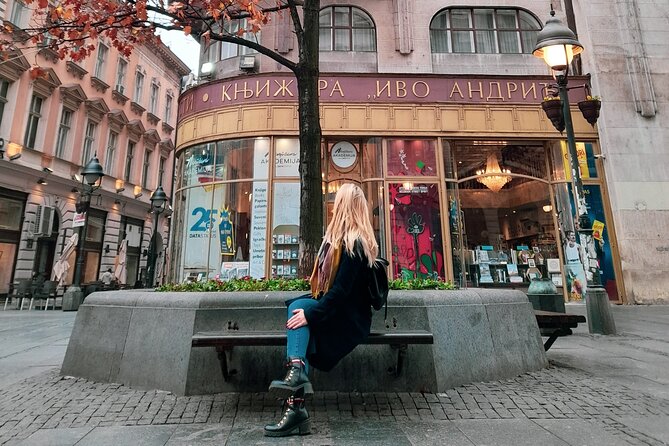
Republic Square brings you back into the city’s public center. You spend about 10 minutes taking in the atmosphere, then cross Belgrade’s main pedestrian zone, known for street musicians, cafes, and an active street scene.
This section is less about one monument and more about getting your bearings. You see where people meet, walk, eat, and listen to music. If you plan to explore Belgrade on your own afterward, this is useful territory to recognize.
The route does not give you a long cafe stop, so plan your own coffee break later. The short crossing is meant to show you the area and connect the next parts of the walk.
Students’ Square and the University of Belgrade
At the University of Belgrade, you see Students’ Square and its park while hearing about education in Serbia. The listed visit lasts about 10 minutes.
This stop adds an important piece of present-day life. The route has already covered churches, wars, government, and traditional food. A discussion of education shows how the city functions beyond its monuments and political headlines.
The stop is brief, but its position in the route works well. It lets you compare a formal national institution with the informal street life around the pedestrian center. You may not leave with a detailed account of the university, but you will understand why this part of central Belgrade matters.
Dorćol, graffiti, and Ottoman Belgrade
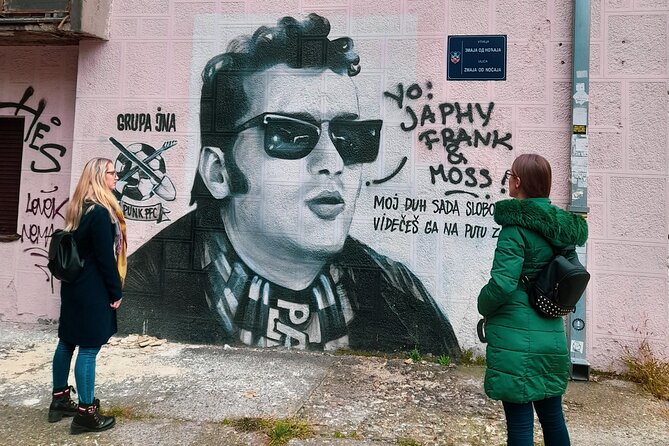
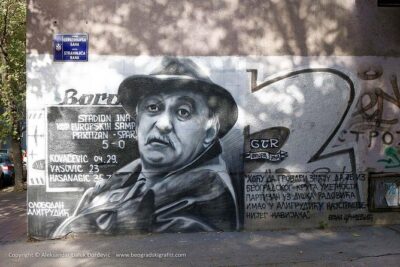
Dorćol brings a different visual note. You walk through the neighborhood and see distinctive graffiti while hearing intriguing stories from its past. The stop lasts about 15 minutes.
Dorćol is valuable because it shows how old districts can carry both memory and modern expression. The graffiti gives the area a present-day voice, while the stories explain how the neighborhood fits into Belgrade’s larger development.
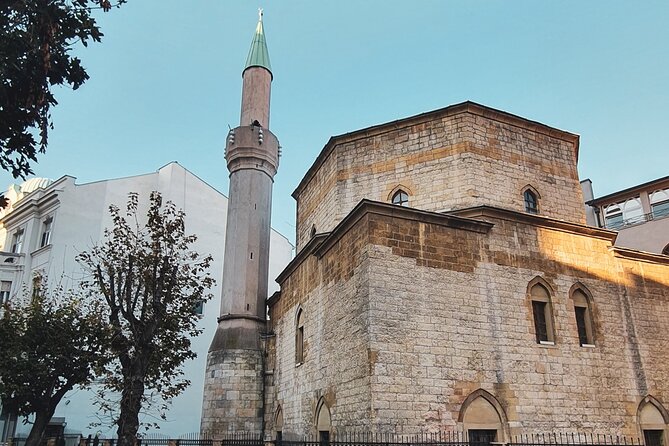
The route then reaches Bayraklee Mosque, also known as Bajrakli džamija. It is the only preserved mosque in Belgrade among the 273 that once existed in the city. Here you learn about nearly five centuries of Ottoman influence in Serbia.
That number gives the stop real weight. Ottoman influence is not a small footnote in Serbian history, and the mosque offers a visible reminder of a period that shaped architecture, religion, food, and public life. Since the tour information does not promise an interior visit, plan to see the mosque from the route unless Marija tells you otherwise.
Question Mark kafana and Serbian cafe culture
Znak Pitanja, or Question Mark, is the oldest traditional kafana in Belgrade. You stop for about 10 minutes to look at its architecture and hear about the role of the kafana.
A kafana is more than a place to eat. It is part restaurant, cafe, meeting place, and social institution. This stop pairs nicely with the earlier food tasting because it shows where food and drink fit into urban life, not only what products Serbia makes.
You should not assume this stop includes a seated meal. The tasting is specifically listed at Čumićevo sokače, while Znak Pitanja is an architectural and cultural visit.
Kosančićev Venac and the final view
The tour ends in Kosančićev Venac, one of Belgrade’s oldest areas. You walk along a cobblestoned street, see a distinctive cultural setting and an Orthodox church, then reach a viewpoint over New Belgrade, the Sava River, and traditional Serbian splavs.
Splavs are floating river venues, a familiar part of Belgrade’s social life. Seeing them from above gives you a useful final contrast: old cobbled streets and religious heritage on one side, modern New Belgrade and river culture on the other.
The end point is Kosančićev venac 22. Because the tour finishes at a viewpoint rather than returning to the starting church, you should plan your next move before you begin. The finish is well suited to continuing your walk, finding a cafe, or heading toward the river, but the tour does not provide onward transportation.
Group size, price, and pace
The price is $90.11 per person. Since the listed stops have no admission fees, the value depends on how much you want a guide to interpret Belgrade for you. I consider it fair for a three-hour English-language tour with a food and drink tasting, especially if you are new to Serbian history and want practical orientation early in your stay.
The advertised highlight is a maximum of six people, though the additional tour information gives a maximum of 15. I would confirm the group size when booking if having a very small group is important to you. Either way, the experience is presented as a guided group walk rather than a private tour.
The pace is active but not designed as a race. Many stops last 10 to 20 minutes, and the tasting lasts 30 minutes. You cover a lot of ground and make many short pauses, so comfortable walking shoes are a sensible choice.
Marija’s approach is one of the main reasons to choose this experience. The praise for her centers on her clear explanations, friendly manner, passion for Belgrade, and ability to make difficult subjects easy to follow. She also adjusts to a pleasant pace, which matters when the subject shifts from medieval rulers to the wars of the 1990s.
Who should book this Belgrade tour?
I would recommend it to first-time visitors who want a quick introduction before exploring alone. It suits anyone interested in the link between Serbian customs, religion, politics, food, and street life.
It is also a good choice for people who prefer stories to long indoor visits. You see churches, government buildings, a mosque, squares, a historic kafana, a park, and a river view, but the focus stays on explanation and local context.
You may want a different experience if you want lengthy time inside monuments, a dedicated food tour, or a quiet photography walk. The route covers many subjects, and some stops are intentionally short.
Free cancellation is available up to 24 hours before the start time for a full refund. Changes or cancellations made less than 24 hours before the start are not accepted for a refund, with cut-off times based on local time.
Should you book History and Culture in my Belgrade?
Book it if you want Belgrade explained through both its proud moments and its painful ones. The best parts are Marija’s personal connection to the city, the clear treatment of recent history, the Serbian tasting, and the final Sava River view.
The $90.11 price makes the most sense when you value interpretation and local conversation, not paid attractions. If you arrive with only a short time in Belgrade, this tour gives you a strong first map of the city and plenty of ideas for what to see next.
FAQ
Where does the tour begin?
It begins in front of St. Mark Orthodox Church at Bulevar kralja Aleksandra 17 in Belgrade, Serbia.
Where does the tour end?
The tour ends at Kosančićev venac 22, Belgrade 11000, Serbia.
How long does the experience last?
The tour lasts approximately three hours.
What language is the tour offered in?
The experience is offered in English.
How much does the tour cost?
The price is $90.11 per person.
What is the group size?
The tour highlights describe a maximum of six people, while the additional information lists a maximum of 15 participants. Confirm the expected group size when booking if this matters to you.
Are entrance tickets included?
The listed stops have free admission. The tour includes entry into St. Mark Orthodox Church, and no separate admission fee is listed for the stops.
What food and drinks are included in the tasting?
The tasting includes domestic rakija, wine, natural juices, jam, slatko, honey, and other traditional Serbian flavors.
Can I cancel for a full refund?
Yes. You can cancel at least 24 hours before the experience start time for a full refund. Cancellations or changes made less than 24 hours before the start time are not accepted for a refund.
Just added in Belgrade
- Private Half Day Serbia Tour Novi Sad and Petrovaradin Fortress★ 5.0 · 3 reviews
- Zasavica Bike Tour★ 5.0 · 1 review
- Private Belgrade Street Art and Adventures Walking Tour★ 5.0 · 4 reviews
- Private Wine Tasting by Party in Belgrade★ 5.0 · 3 reviews
- VIP Reservation Service in Belgrade★ 5.0 · 2 reviews
- Urban & Alternative Belgrade tour★ 5.0 · 4 reviews
- Rakija Tasting for groups in Belgrade★ 5.0 · 1 review
- Wonders of Eastern Serbia a Full Day Tour from Belgrade★ 5.0 · 1 review
Historical Tours, compared.
Football tour: Red Star and Partizan Ultras History
Read our review →
Full-Day Private Royal Heritage Tour to Oplenac With a Winery Visit
Read our review →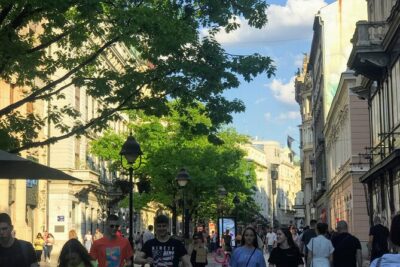
The White Emigration in Serbia in the Wake of the Russian Revolution
Read our review →
Belgrade Time Travel – Half Day Historic Core Private Walking Tour
Read our review →Browse the lists this tour appears in