
Review · YUGOSLAV HISTORY TOURS
Architecture of New Belgrade – Brutalism Decoded
Concrete tells Belgrade’s modern story. This private tour makes New Belgrade’s brutalist architecture easier to read, pairing five major buildings with the political and social ideas behind them. I like the focus on everyday life inside the blocks, and I like that the route leaves the usual central Belgrade sights behind. The main drawback is that the Museum of Contemporary Art admission is not included, and one stop is only a drive-by.
I also value the personal touch. Guide Xenia is praised for explaining both architecture and ordinary city life, including how the blocks felt during their best decades and during the difficult 1990s. At $86.42 per person, the price makes the most sense for a private group that wants context rather than a quick photo stop.
In This Review
- Five details that make this New Belgrade tour different
- Why New Belgrade deserves a closer look
- Meeting at the Museum of Contemporary Art
- The Park of Friendship and Yugoslavia’s global role
- The government building and the politics of changing direction
- Genex Tower, New Belgrade’s boldest landmark
- Sava Center and the race to build a modern congress hall
- Block 23 and the practical side of socialist planning
- What the private format adds
- Timing, pace, and the one mixed point
- Who will get the most from this experience
- Should you book Architecture of New Belgrade?
- FAQ
- Where does the tour begin?
- Where does the tour end?
- How long does the experience last?
- What language is the tour offered in?
- Is this a private tour?
- Is admission to the Museum of Contemporary Art included?
- What is the cancellation policy?
Five details that make this New Belgrade tour different
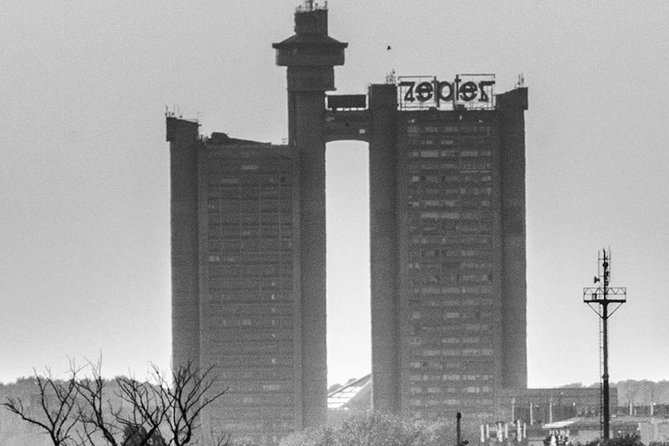
- Genex Tower up close: See the 30-floor Western City Gate, one of Belgrade’s most recognizable concrete landmarks.
- A private guide for your group: The format allows more personal attention and room for questions.
- Architecture linked to politics: The route explains Yugoslavia’s break from Stalin and the role of the Non-Aligned Movement.
- A look inside planned city life: Block 23 brings apartments, a school, kindergarten, sports courts, and shopping into one planned community.
- A practical finish at Sava Center: The tour ends at a major congress building that still functions today.
- A short, focused outing: The experience lasts about two and a half hours and is offered in English.
Why New Belgrade deserves a closer look
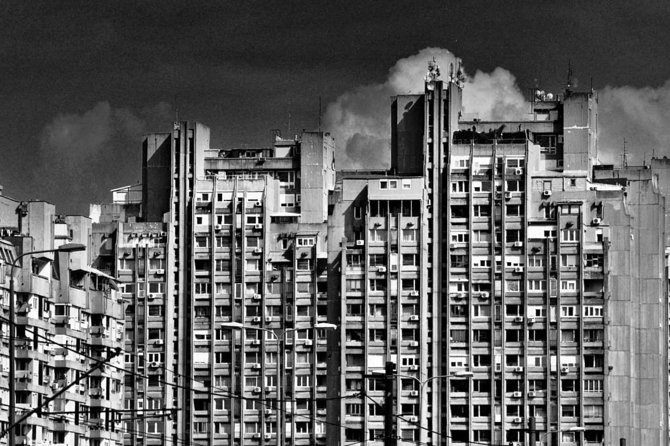
Most first visits to Belgrade focus on the old fortress, the pedestrian streets, and the cafés around the historic center. New Belgrade offers a different story. Built largely in the socialist period, it is a broad district of planned blocks, large public buildings, open spaces, and bold concrete forms.
The word brutalism can make every building sound like a bunker. That is too simple here. The tour presents a wider picture of modernist architecture and concrete expressionism, with attention to marble, glass, unusual volumes, and carefully planned public interiors.
I like this approach because it helps you look past the raw material. Concrete is only part of the story. The more useful question is what each building was meant to do, and what it says about Yugoslavia at the time.
The private format matters. You are not simply walking past façades while trying to keep up with a crowd. Your guide can adjust the explanation to your interests, spend more time on a favorite building, or connect the architecture to daily life in Belgrade.
More Yugoslav history tours:
- Red Belgrade Communist Tour
★ 5.0 · 78 reviews - Communist Tour in Belgrade
★ 4.5 · 19 reviews - E-Scooter Communist Yugoslavia Tour
★ 5.0 · 15 reviews
Meeting at the Museum of Contemporary Art
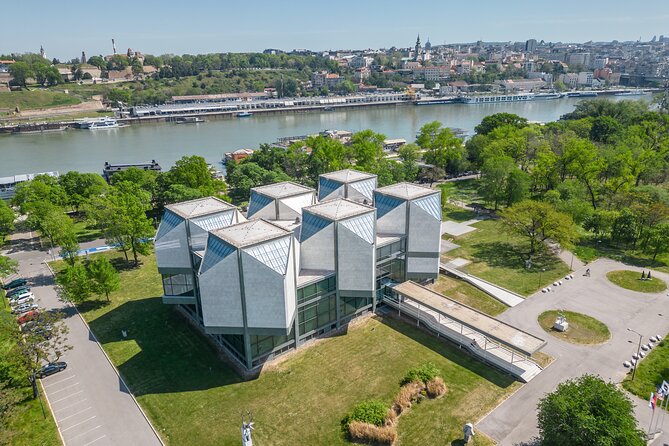
The tour begins in front of the Museum of Contemporary Art at Ušće, at Ušće 10. This is a clear meeting point near public transportation, which makes the start fairly easy to reach.
The museum itself provides the first lesson. Its modernist volumes date from the 1960s, and the building uses precious marble façades. That detail challenges the common idea that socialist architecture was always plain, cheap, or purely functional.
You begin by considering the museum as both an art institution and an architectural object. The guide explains why the choice of marble matters and how the building’s sculptural form fits the ideals of the period.
The listed stop lasts about 20 minutes. Admission to the museum is not included, so you should treat this part as an exterior architecture visit unless you arrange otherwise. That is an important point for anyone hoping to see the exhibitions inside.
The Park of Friendship and Yugoslavia’s global role
The next stop is Park of Friendship, or Park Prijateljstva. Admission is free, and the visit lasts around 15 minutes.
This is where the tour moves from architecture to international politics. In 1961, Belgrade hosted the founding meeting of the Non-Aligned Movement, an organization created by countries that did not want to fall under the control of either major Cold War bloc. The movement eventually included 120 countries.
The park’s trees were planted by heads of state as symbols of peace. That gives the open space a political meaning that is easy to miss if you only pass through it.
I find this stop valuable because it places New Belgrade in a wider setting. The district was not only a housing project or a collection of government offices. It was part of a country presenting itself as independent, modern, and active on the world stage.
The park stop is brief, so do not expect a long garden visit. Its purpose is to give you context before the route turns toward larger buildings and the physical shape of the city.
The government building and the politics of changing direction
Between the park and Genex Tower, the route passes the large Government Building. This is a drive-by rather than a full stop, so you will not have the same close look you get at the other buildings.
Still, it adds an important layer to the story. The building was under construction during the period when Yugoslavia moved away from Stalin’s political model. Its design and construction therefore reflect a country changing direction while its institutions were still taking shape.
This is one reason a guide adds value. A large government structure can look like just another imposing block when seen from a vehicle. With the political background, it becomes a marker of Yugoslavia’s changing identity.
If you want detailed photographs or a long architectural study of this building, you may find the drive-by limited. The trade-off is that the tour keeps moving and fits several major sites into a short outing.
A completely different kind of day:
- Northern Serbia: Sremski Karlovci and Novi Sad Full-Day Tour from Belgrade
★ 5.0 · 425 reviews - Day Trip from Belgrade: Gems of Eastern Serbia
★ 5.0 · 424 reviews - Belgrade Nightlife Bar Pub Club Crawl with Drinks
★ 5.0 · 277 reviews - Taxi to/from Belgrade Airport to/from Belgrade City Center
★ 5.0 · 241 reviews
Genex Tower, New Belgrade’s boldest landmark
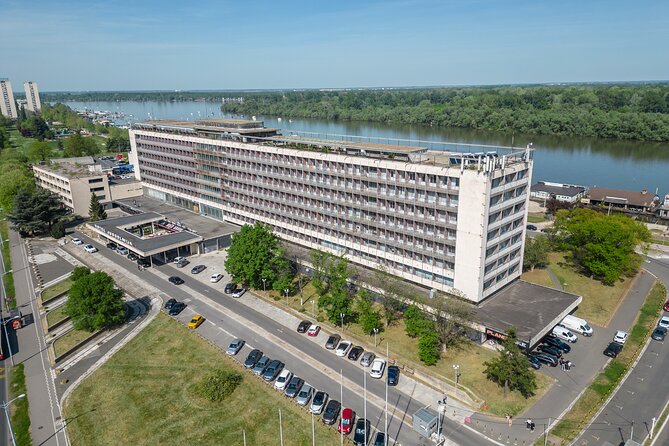
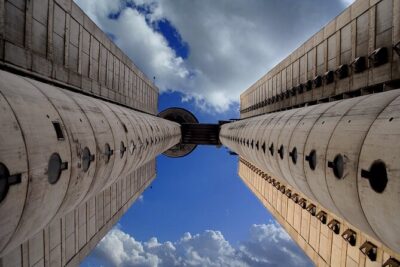
At Narodnih heroja 45, you get a closer look at Genex Tower, also called the Western City Gate of Belgrade. This is the visual centerpiece of the route for many people.
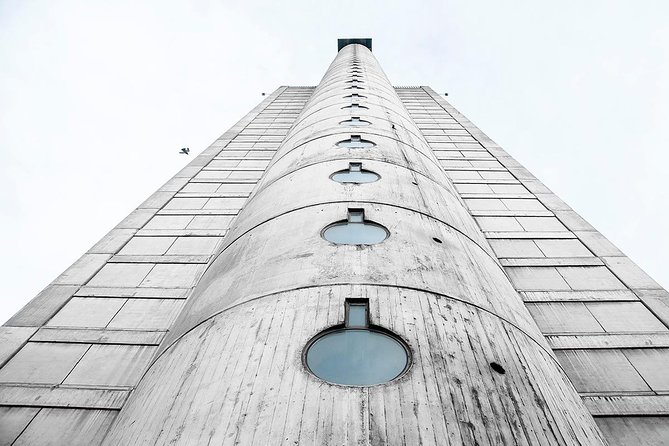
The complex is a 30-floor structure built about 40 years ago. Its form is dramatic, and its scale makes more sense when you see it close up rather than in a distant city view. It has attracted international architectural attention as an important example of brutalism.
The building is also described as the first smart building in the Balkans. That detail helps correct the idea that socialist-era construction was backward or technologically careless. The ambition was large, and the building was meant to represent a modern future.
You will have about 20 minutes here. That is enough for an explanation, close views, and photographs, but it is not a full interior tour. The supplied information does not indicate access inside Genex Tower, so plan on an exterior visit.
I like the way this stop gives the tour a strong visual anchor. Even if you know little about architectural theory, the tower’s unusual shape is easy to remember. The guide’s job is to explain why it was designed that way and how it fit into New Belgrade’s planned development.
Sava Center and the race to build a modern congress hall
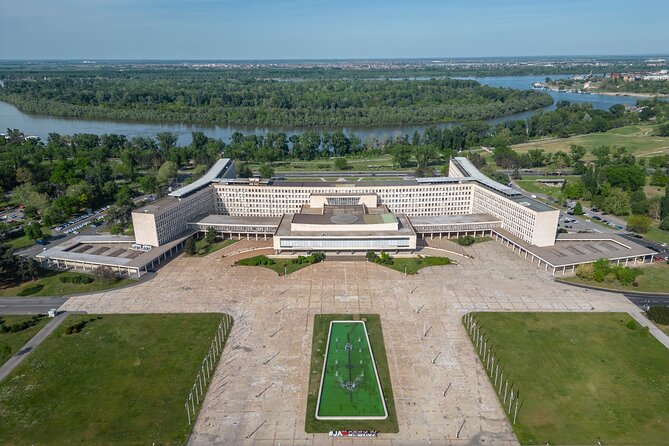
The final major architectural stop is Sava Center at Milentija Popovića 9. The tour ends here, which is useful if you want to continue exploring the area afterward.
Sava Center was built at the end of the 1970s in record time. It was the first building of its kind in this part of Europe, created as a large congress center for an ambitious international city.
The building is still in operation, and the tour draws attention to its interior solutions. That matters because brutalism is often judged only from the outside. Inside, the design can be surprisingly practical and refined, with details that still feel fresh decades later.
The visit lasts around 15 minutes. Since the information provided does not promise a full interior access program, you should expect an architectural introduction rather than a long building tour. Even so, ending here gives the route a clear finish: you have moved from museum culture and international diplomacy to a major public building designed to host the world.
The end point is also practical. You finish at Sava Center rather than returning to the starting museum. If you prefer tours that let you continue independently, this arrangement works well. If you need to return to Ušće, allow extra time for your own transport.
Block 23 and the practical side of socialist planning
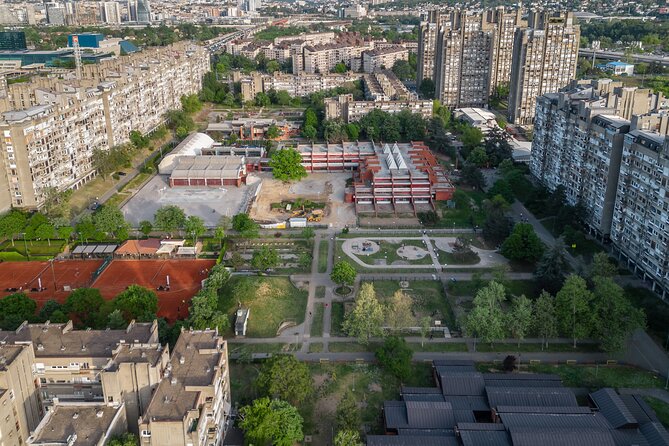
The most human stop is at Primary School Laza Kostić in Block 23. The school sits inside what is described as the most representative public housing project on the route.
Here, the architecture becomes easier to understand because you see the full system around it. The block was planned with apartment buildings, a school, a kindergarten, sports courts, and a small shopping mall. The aim was to provide daily needs within the neighborhood instead of treating housing as a set of isolated towers.
This is the point where the tour moves beyond façades. You can think about how children went to school, where families shopped, and how public space shaped ordinary routines. The guide also shares personal stories of life in New Belgrade during the successful decades of the 1960s, 1970s, and 1980s, followed by stories of the harder conditions of the 1990s.
That personal element received especially strong praise. It gives the concrete a human scale. You are not only looking at a planned housing district; you are hearing how it felt to live there across different political and economic periods.
The stop lasts about 15 minutes, though the full explanation may feel larger than the clock suggests. There is a lot to discuss in a district designed as a complete community.
What the private format adds
A private tour is more expensive than joining a large group, but it changes the experience. Only your group takes part, so the guide can keep the pace comfortable and answer questions without turning every explanation into a public lecture.
For a couple or small group with a strong interest in architecture, $86.42 per person may be fair value. You are paying for an English-language guide, transport between spread-out sites, and a connected story about architecture, politics, and city life.
The value is weaker if you only want quick photographs. Several stops are short, and the tour does not promise interior entry to every building. You might see the main shapes on your own, especially Genex Tower and Sava Center, but you would lose much of the explanation about why they were built and how they were used.
The route also depends on moving between locations. It is not simply a continuous walk from one building to the next. That makes the timing efficient, but it means you should not expect a slow walking tour through every part of New Belgrade.
Timing, pace, and the one mixed point
The advertised duration is about two hours and 30 minutes. The planned stops add up to 85 minutes, leaving the rest for travel between locations and explanations along the way.
That is a sensible length for a focused architecture outing. You get five buildings or areas without spending half a day on one subject. At the same time, one poor experience described the total tour as less than two hours and criticized the guide’s preparation and empathy.
That complaint is worth keeping in mind, even though the stronger feedback gives a very different picture. The best account praises the guide for arriving on time, explaining the sites clearly, and adding a strong sense of everyday humanity. Another specifically praises Xenia for making New Belgrade interesting and showing a side of Belgrade away from the usual route.
The practical advice is simple: confirm the meeting time and expect the experience to move at a steady pace. If you want long pauses, extensive interior visits, or a leisurely photographic walk, this may feel compressed.
Who will get the most from this experience
I would recommend this tour most strongly to:
- People interested in modernist and brutalist architecture
- First-time visitors who want to see more than central Belgrade
- Anyone curious about Yugoslavia, the Cold War, and the Non-Aligned Movement
- Visitors who prefer a private guide to a large group
- People who enjoy connecting buildings with ordinary life and political change
- Photographers looking for Genex Tower and other bold modern structures
You do not need an architecture degree. The guide’s role is to explain the buildings in plain terms and show why materials, scale, placement, and function matter.
I would be more cautious if your main goal is museum access. The Museum of Contemporary Art is the starting point, but admission is not included. I would also think twice if you want a fully walking-based tour, since the route includes a drive-by and transfers between separate locations.
The tour is offered in English, and most people can participate. Confirmation is provided when you book. Free cancellation is available if you cancel at least 24 hours before the local start time. Changes or cancellations inside that window are not refunded.
Should you book Architecture of New Belgrade?
Book it if you want Belgrade’s modern side explained by someone who can connect concrete buildings with politics and personal memory. The strongest reason to go is not simply Genex Tower, impressive as it is. It is the way the route links the museum, park, government building, congress center, and housing block into one story.
The price is reasonable for a private experience if you are sharing it with a small group and care about context. It is less convincing for a solo visitor focused only on photographs. For the best fit, choose this tour when you want to understand how New Belgrade was planned, why its architecture looks the way it does, and how people actually lived among it.
FAQ
Where does the tour begin?
It begins in front of the Museum of Contemporary Art at Ušće 10 in Belgrade, Serbia.
Where does the tour end?
The tour ends at Sava Center, at Milentija Popovića 9, Belgrade 11000.
How long does the experience last?
The expected duration is approximately two hours and 30 minutes.
What language is the tour offered in?
The tour is offered in English.
Is this a private tour?
Yes. Only your group participates in the activity.
Is admission to the Museum of Contemporary Art included?
No. Admission to the Museum of Contemporary Art is not included. The Park of Friendship and the other listed stops have no admission charge.
What is the cancellation policy?
You can receive a full refund if you cancel at least 24 hours before the experience start time. Cancellations or changes made less than 24 hours beforehand are not refunded or accepted.
Just added in Belgrade
- Private Half Day Serbia Tour Novi Sad and Petrovaradin Fortress★ 5.0 · 3 reviews
- Zasavica Bike Tour★ 5.0 · 1 review
- Private Belgrade Street Art and Adventures Walking Tour★ 5.0 · 4 reviews
- Private Wine Tasting by Party in Belgrade★ 5.0 · 3 reviews
- VIP Reservation Service in Belgrade★ 5.0 · 2 reviews
- Urban & Alternative Belgrade tour★ 5.0 · 4 reviews
- Rakija Tasting for groups in Belgrade★ 5.0 · 1 review
- Wonders of Eastern Serbia a Full Day Tour from Belgrade★ 5.0 · 1 review
Yugoslav History Tours, compared.

Private 4 Hours Space Architecture Tour in Belgrade
Read our review →
Browse the lists this tour appears in