
Review · YUGOSLAV HISTORY TOURS
Communist Tour in Belgrade
Belgrade’s past is written in concrete. This three-hour Communist Tour links central squares, socialist architecture, the scarred Generalštab, and the Museum of Yugoslavia into one clear story. I especially like the small group limit of 15 people and the way the tour covers both Tito’s Yugoslavia and the difficult conflicts of the 1990s.
I also like that the Museum of Yugoslavia entrance and trolleybus ticket are included for $24.03 per person. The main consideration is pace: several city stops last only 15 minutes, and the subject is politically complex. Your experience will depend greatly on the guide, with Stefan, Michael, and Milan receiving particular praise for clear English, strong historical insight, and an objective approach.
In This Review
- Key points to know before booking
- Why this three-hour route helps explain Belgrade
- Trg Republike: Tito, youth rituals, and the 1990s
- Mts Dvorana and the look of socialist power
- The National Assembly and the changing state
- Kneza Miloša: a street lined with institutions
- Generalštab and the visible scars of 1999
- The trolleybus ride adds local texture
- The Museum of Yugoslavia and the House of Flowers
- What the guides add to the experience
- Who should book this Belgrade history tour
- Should you book the Communist Tour in Belgrade?
- FAQ
- Where does the Communist Tour in Belgrade begin?
- What time does the tour start?
- Where does the tour end?
- How long does the tour last?
- How much does the tour cost?
- Is admission to the Museum of Yugoslavia included?
- Is public transport included?
- How many people can join the tour?
- Can I cancel for a full refund?
Key points to know before booking
- Tito’s story anchors the tour: Learn about Josip Broz Tito, the Youth Relay Baton, the Non-Aligned Movement, and life in socialist Yugoslavia.
- The damaged Generalštab adds a powerful visual stop: The former Yugoslav Ministry of Defence was heavily damaged during the 1999 NATO bombing.
- A trolleybus ride is part of the experience: The group travels from Generalštab to the Museum of Yugoslavia, with the ride taking about 15 minutes.
- The final hour takes place at the Museum of Yugoslavia: The museum covers both the Kingdom of Yugoslavia and socialist Yugoslavia, with Tito’s grave at the House of Flowers.
- Guiding is a major strength: Stefan, Michael, and Milan are praised for facts, nuance, strong English, and an objective presentation.
- The tour works best for curious adults and first-time visitors: It offers useful context if Yugoslav history is new to you, but it is not a light sightseeing stroll.
Why this three-hour route helps explain Belgrade
Belgrade can be hard to read at street level. One building may recall the monarchy, another socialist Yugoslavia, and another the wars and political changes that followed. This tour gives you a way to connect those layers rather than seeing isolated monuments.
It begins at 3:00 pm at Trg Republike, the Republic Square in central Belgrade. From there, the route moves through important public buildings and streets before ending at the Museum of Yugoslavia. The progression makes sense: public memory, state power, military architecture, then a museum devoted to the country itself.
I like this structure because the tour does not leave the past inside a gallery. You see how ideology shaped public buildings and city streets, then use the museum to fill in the people and events behind them. The result is more useful than a basic walk past famous addresses.
The price is $24.03 per person. For about three hours, that is fair value, especially since the museum admission, trolleybus fare, and professional guide are included. You are paying for interpretation, not just transport between free outdoor sights. Group discounts are also available, which can make the cost more attractive for families or small parties.
The group has a maximum of 15 people. That is small enough to make questions practical, though it is still a group tour rather than a private conversation. The tour is offered in English, and confirmation is provided when you book.
More Yugoslav history tours:
- Red Belgrade Communist Tour
★ 5.0 · 78 reviews - Architecture of New Belgrade – Brutalism Decoded
★ 4.5 · 24 reviews - E-Scooter Communist Yugoslavia Tour
★ 5.0 · 15 reviews
Trg Republike: Tito, youth rituals, and the 1990s
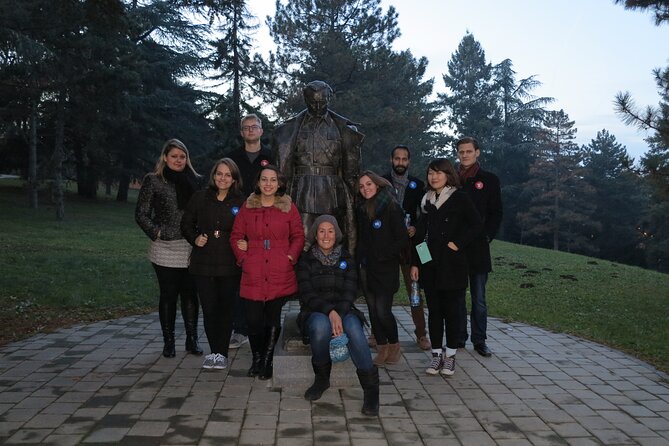
The Republic Square is a strong place to begin because it is one of Belgrade’s central gathering points. The stop lasts about 15 minutes and costs nothing to enter, but its value comes from the guide’s explanation rather than a formal attraction.
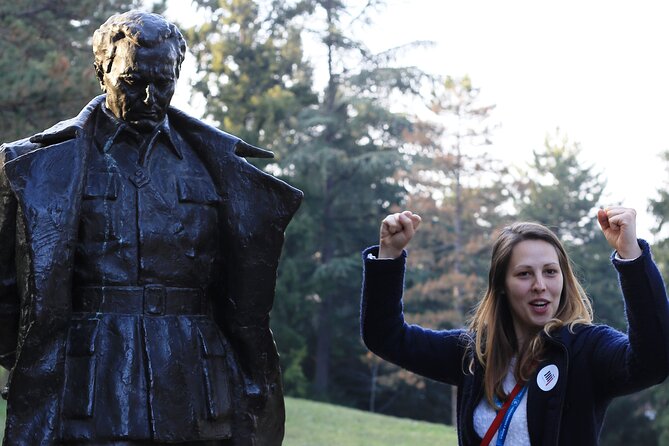
Here, you are introduced to the phenomenon of Josip Broz Tito, the long-serving leader of socialist Yugoslavia. The discussion also covers the Youth Relay Baton, a political and cultural ritual connected with Tito’s birthday. This detail helps show how the state used public ceremonies and youth participation to build loyalty around its leader.
The guide also explains the Non-Aligned Movement. Yugoslavia’s position outside the main Soviet and American blocs is one of the most important facts for understanding why Tito’s country did not fit neatly into the usual Cold War categories. You need this context to make sense of Yugoslavia’s foreign policy and its particular form of socialism.
The stop then moves toward the conflicts of the 1990s, the 1999 NATO bombing of Serbia and Montenegro, and the democratic changes at the beginning of the third millennium. That is a lot for 15 minutes, so expect an introduction rather than a full lesson. I would treat this part as a framework for questions you can explore later.
The best guides handle this material with care. Milan is praised for presenting events objectively, while Stefan is singled out for fact-based information, nuance, and impressive English. If you are sensitive to political shortcuts, those qualities matter here.
Mts Dvorana and the look of socialist power
The next stop is mts Dvorana, formerly Dom Sindikata, or Trade Union Hall. The building was designed by Branko Petričić, and construction began in 1947. The stop lasts about 15 minutes and remains outside, so there is no admission fee.
The building’s socialist-realist style is the point. This architecture was not meant to be shy. Large public buildings were designed to communicate order, collective purpose, and the importance of institutions. Seeing the structure after learning about Tito and the state gives its scale more meaning.
I appreciate this kind of stop because it asks you to look at ordinary city architecture as political evidence. You are not simply checking off a landmark. You are learning how a government tried to express its values through concrete, public halls, and ceremonial spaces.
There is a practical limitation. Fifteen minutes is enough to understand the building’s role and style, but not enough for a long architectural discussion. If modern architecture interests you, you may want to note the name Branko Petričić and return later on your own.
The National Assembly and the changing state
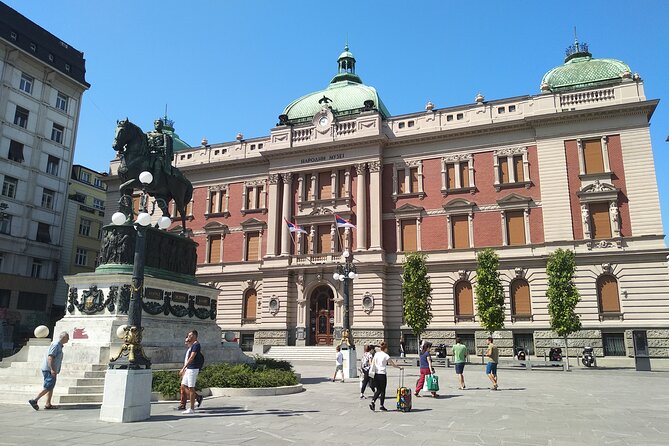
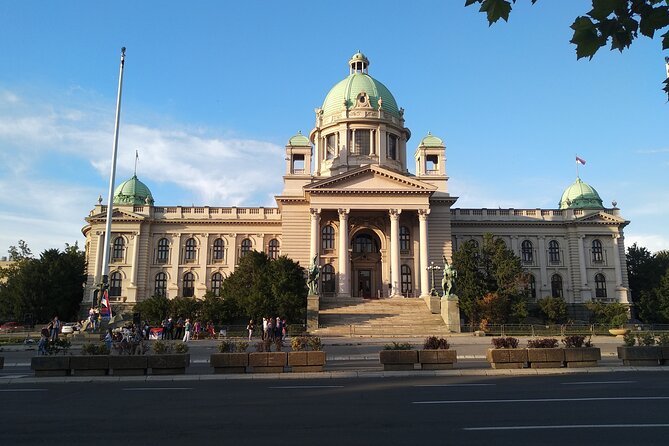
The House of the National Assembly of the Republic of Serbia sits on Nikola Pašić Square. It is a major landmark and tourist attraction, and the tour gives it another 15-minute stop.
The building was completed in 1936. From then until 2006, it served as the seat of the Parliament of Yugoslavia and later the Parliament of Serbia and Montenegro. That timeline makes the building a useful marker for the political changes that shaped the region.
You can think of this stop as a bridge between the pre-socialist state and the later Yugoslav period. It helps correct the common mistake of treating Yugoslavia as if it began with Tito. The building predates socialist Yugoslavia, yet it later housed the institutions of several different political arrangements.
I like that the route places this stop before Kneza Miloša and Generalštab. You gradually move from national representation to government institutions and then military power. It is a short walk through the machinery of the state, with the guide supplying the connections.
Again, the stop is brief. The building is impressive from outside, but this tour does not include entry to the assembly. You should book it for the historical explanation, not for an interior visit.
A completely different kind of day:
- Northern Serbia: Sremski Karlovci and Novi Sad Full-Day Tour from Belgrade
★ 5.0 · 425 reviews - Day Trip from Belgrade: Gems of Eastern Serbia
★ 5.0 · 424 reviews - Belgrade Nightlife Bar Pub Club Crawl with Drinks
★ 5.0 · 277 reviews - Taxi to/from Belgrade Airport to/from Belgrade City Center
★ 5.0 · 241 reviews
Kneza Miloša: a street lined with institutions
Kneza Miloša lasts about 20 minutes, making it the longest outdoor stop. The street was once the city’s main korzo, or promenade. Today it is a major traffic route and the location of important national institutions and many of Belgrade’s embassies.
This change from promenade to traffic artery tells you something about the city’s growth and political role. Streets are not just routes from one sight to another. Their use changes as a capital changes, and Kneza Miloša brings that idea into the open.
The embassies also make the street useful for understanding Belgrade’s international connections. Along with the earlier discussion of the Non-Aligned Movement, this stop can help you see that Yugoslavia’s story was never only domestic.
You should expect some walking beside a busy urban street. The appeal here is not a single monument. It is the combination of city planning, diplomacy, government, and changing public life. If you prefer a tour made up entirely of grand interiors, this part may feel less dramatic.
Generalštab and the visible scars of 1999
Generalštab is likely to be the most striking outdoor stop. The building was formerly occupied by the Yugoslav Ministry of Defence, the department responsible for defending the Federal Republic of Yugoslavia from internal and external military threats.
It is also regarded as a masterpiece of post-war architecture. The NATO bombing of Yugoslavia in 1999 heavily damaged the building, leaving the structure as a direct reminder of a recent conflict. Instead of presenting war as an abstract date, the tour places you beside its physical aftermath.
I find this especially valuable for anyone who knows little about the breakup of Yugoslavia. A damaged building cannot explain every cause or consequence, but it gives the discussion a fixed point. The guide can connect the architecture, the bombing, and the political period without reducing the subject to a simple good-versus-bad story.
The stop lasts about 15 minutes. That is enough to view the exterior and hear the main context, but not enough to cover the full military and political background of the 1990s. You may leave with more questions, which is a reasonable outcome for a short tour.
The condition of the building is part of the experience, so do not expect a restored attraction or an interior visit. This is an outdoor lesson in how a city remembers conflict, often without a polished finish.
The trolleybus ride adds local texture
After Generalštab, the group takes a trolleybus to the Museum of Yugoslavia. The ride takes about 15 minutes, and the ticket is included.
This is a small but welcome feature. You are not being moved in a private vehicle from one controlled stop to another. You use part of Belgrade’s public transport system, giving the route a more ordinary city rhythm. Michael is particularly praised for knowing the transit system, which is useful during this part of the tour.
The trolleybus also creates a natural pause between the street discussion and the museum visit. By this point, you have covered Tito, socialist public architecture, parliament, embassies, and the NATO-damaged defence ministry. The ride gives you time to absorb the shift from central Belgrade to the museum area.
The tour does not promise a scenic transport experience, so keep expectations sensible. Its value is practical and local rather than theatrical. You should also remember that public transport can feel less predictable than a dedicated vehicle, though the supplied details specifically include the ticket and approximate journey time.
The Museum of Yugoslavia and the House of Flowers
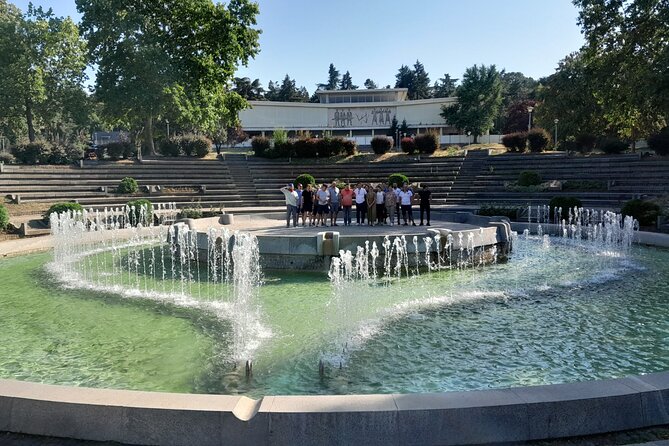
The final stop lasts about one hour and includes admission. The Museum of Yugoslavia chronicles both the Kingdom of Yugoslavia and socialist Yugoslavia, while also focusing on Tito’s life.
This is where the earlier stops begin to fit together. The museum gives you objects, displays, and a more organized account of the country’s political story. After seeing buildings connected with the state, you can consider how Yugoslavia presented itself, how Tito was remembered, and how the country changed over time.
Tito’s grave is located in the House of Flowers, one of the museum buildings. That makes the visit more personal than a general political museum. You are not only learning about an institution or a former country. You are confronting the memory of the leader who shaped Yugoslavia for decades.
The museum is described as Serbia’s most visited museum, with 120,000 visitors annually. That figure suggests it has a major place in the country’s public understanding of Yugoslavia. It also means the museum is an important reason to choose this tour over a standard central-city walk.
One hour is useful but not generous. You will get an introduction and see the main areas covered by the tour, but you may want more time if Yugoslav politics, Tito, or twentieth-century Balkan history interests you. The tour ends in front of the museum at Mihaila Mike Jankovića 6, Belgrade 11000.
The museum visit also benefits from a strong guide. Stefan received praise for his command of English and for offering book and documentary suggestions after the tour. That is a sign of a guide who can help you continue learning rather than treating the final stop as the end of the subject.
What the guides add to the experience
The strongest part of this tour is the guiding. Stefan is praised for handling modern Serbian history with facts, nuance, and insight. Michael is praised for bringing the subject to life and for understanding Belgrade’s transit system. Milan is praised for an objective presentation of both distant and recent events.
Those comments point to the quality you should look for here: not a memorized list of dates, but an explanation of competing viewpoints and difficult transitions. The tour covers Tito, the Non-Aligned Movement, the wars of the 1990s, NATO’s 1999 bombing, and democratic changes. A careless guide could flatten all of that into slogans.
The group size helps. With no more than 15 people, you have a reasonable chance to ask about a confusing point. Still, the tour is offered in English, and the subject is dense. If you want a private, slow-paced academic discussion, a small group walk may not go far enough.
I would also suggest writing down questions as you go. The stops are short, and the route covers a lot. You may want to ask about the difference between the Kingdom of Yugoslavia and socialist Yugoslavia, Tito’s international position, or the events surrounding the 1999 bombing.
Who should book this Belgrade history tour
You should consider this tour if Yugoslavia is new to you, because it gives you a useful starting structure. It is also a good choice if you want to understand modern Serbia through buildings and public spaces rather than only through museum displays.
It suits people who enjoy political history, twentieth-century architecture, and difficult subjects handled in a calm way. The tour is also practical early in a Belgrade visit because it can help you read the city with more context afterward.
You may want to skip it if you prefer a relaxed sightseeing walk with little discussion of war and political conflict. The tour is not designed as a broad introduction to every part of Belgrade. It stays focused on communist Yugoslavia, Tito, state institutions, and the changes that followed.
The 3:00 pm start can fit well into a day of sightseeing, and the tour ends at a museum rather than returning to the Republic Square. Plan your later activities from the Museum of Yugoslavia area, not from the original meeting point.
Free cancellation is available up to 24 hours before the start time for a full refund. Changes or cancellations made less than 24 hours before the start are not accepted for a refund, and the experience requires a minimum number of participants.
Should you book the Communist Tour in Belgrade?
I would book this tour if you want a clear introduction to Tito’s Yugoslavia and the political scars visible in modern Belgrade. The combination of outdoor sites, public transport, a museum visit, and guides praised for objectivity gives you more than a basic monument walk.
At $24.03, the value is strong because admission, transport, and guiding are included. Go in ready to listen, ask questions, and accept that three hours can only outline some of the harder issues. If Stefan, Michael, or Milan is leading, you have especially good reason to expect a thoughtful English-language presentation.
FAQ
Where does the Communist Tour in Belgrade begin?
The tour begins at Trg Republike, also called Republic Square, in Belgrade.
What time does the tour start?
The tour starts at 3:00 pm.
Where does the tour end?
The tour ends in front of the Museum of Yugoslavia at Mihaila Mike Jankovića 6, Belgrade 11000, Serbia.
How long does the tour last?
The tour lasts approximately three hours.
How much does the tour cost?
The listed price is $24.03 per person.
Is admission to the Museum of Yugoslavia included?
Yes. Entrance to the Museum of Yugoslavia is included in the tour price.
Is public transport included?
Yes. A trolleybus ticket is included. The ride from Generalštab to the Museum of Yugoslavia takes about 15 minutes.
How many people can join the tour?
The tour has a maximum group size of 15 people. Group discounts are available.
Can I cancel for a full refund?
Yes. You can cancel at least 24 hours before the experience start time for a full refund. Cancellations made less than 24 hours before the start are not refunded.
Just added in Belgrade
- Private Half Day Serbia Tour Novi Sad and Petrovaradin Fortress★ 5.0 · 3 reviews
- Zasavica Bike Tour★ 5.0 · 1 review
- Private Belgrade Street Art and Adventures Walking Tour★ 5.0 · 4 reviews
- Private Wine Tasting by Party in Belgrade★ 5.0 · 3 reviews
- VIP Reservation Service in Belgrade★ 5.0 · 2 reviews
- Urban & Alternative Belgrade tour★ 5.0 · 4 reviews
- Rakija Tasting for groups in Belgrade★ 5.0 · 1 review
- Wonders of Eastern Serbia a Full Day Tour from Belgrade★ 5.0 · 1 review
Yugoslav History Tours, compared.
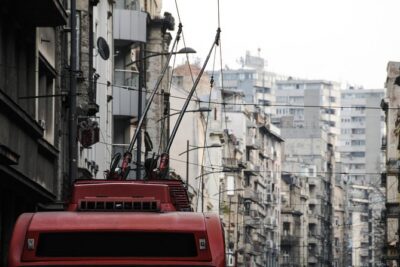
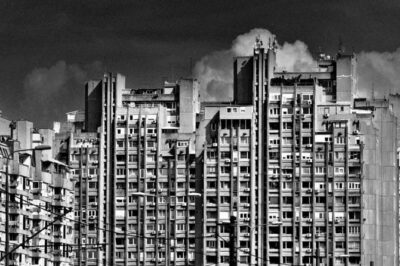
Architecture of New Belgrade – Brutalism Decoded
Read our review →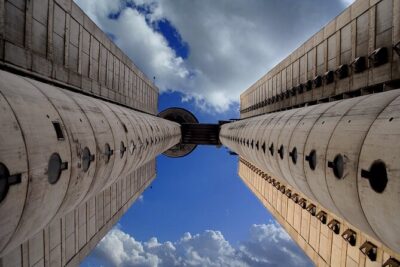

Private 4 Hours Space Architecture Tour in Belgrade
Read our review →
Browse the lists this tour appears in