
Review · YUGOSLAV HISTORY TOURS
Red Belgrade Communist Tour
History gets personal in Belgrade. The Red Belgrade Communist Tour connects Tito-era stories with real streets, squares, monuments, and the Museum of Yugoslavia. I like the way the guide places communism inside Serbia’s larger story, and I like that the tour includes a trolley ride to Dedinje rather than leaving you to find the museum alone. The main drawback is the title: this is not only a tour of communism. It also covers World War II, the breakup of Yugoslavia, Serbia’s recent past, and current tensions.
You will walk for much of the morning, sometimes on hilly streets, so comfortable shoes and water matter. The tour costs $53.10, including the guide, trolley tickets, and museum entry. That is fair value if you want context and conversation, but less so if you prefer a quick city walk with only a few historical facts.
In This Review
- Key points before you book
- Republic Square begins the Yugoslav story
- Terazije reveals glamour, labor, and public life
- Pionirski Park explains childhood under socialism
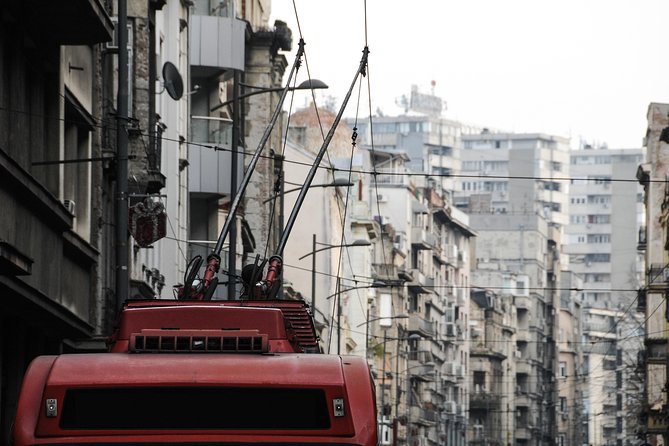
- The trolley ride makes the history practical
- The Museum of Yugoslavia is the tour’s payoff
- How broad is the communist focus?
- Guide quality shapes the morning
- Is $53.10 a fair price?
- Who should book this Belgrade tour?
- Should you book the Red Belgrade Communist Tour?
- FAQ
- How long does the Red Belgrade Communist Tour last?
- Where does the tour begin?
- Where does the tour end?
- Is the tour offered in English?
- Does the tour include public transportation?
- Is museum admission included?
- How many people can join the shared tour?
- What happens if I am the only person booked?
Key points before you book
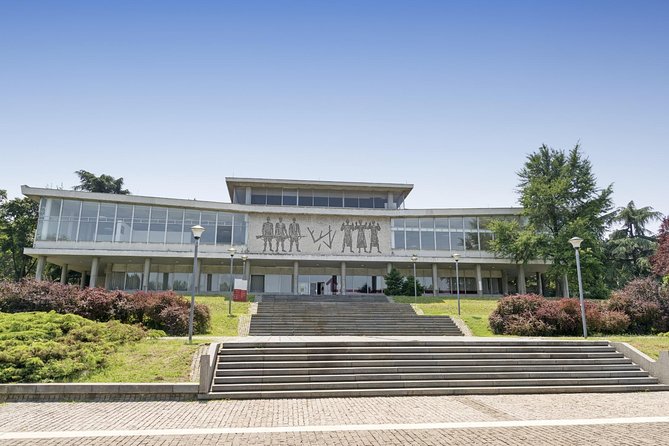
- Tito and the Museum of Yugoslavia are the tour’s main event, including the House of Flowers mausoleum.
- Republic Square, Terazije, and Pionirski Park provide a useful route through Belgrade’s political and social past.
- The trolley ride to Dedinje is both practical transport and a small piece of living Yugoslav-era history.
- Guides such as Nebo, Radica, Dragana, Marko, and Hristina are praised for clear explanations, humor, and personal insight.
- The tour can become private if you are the only person booked, though a 75 percent supplement may apply.
- The subject is broader than communism alone, so book it for 20th-century Yugoslav history rather than a narrow political lecture.
Republic Square begins the Yugoslav story
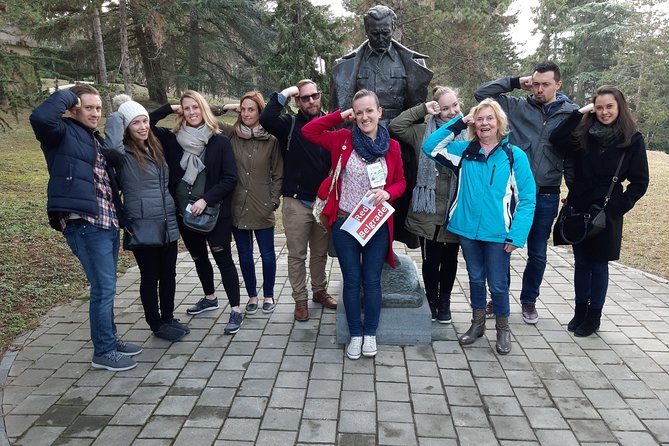
Meet your English-speaking guide at Trg Republike 9 at 10:00 am. Republic Square is a sensible starting point because the tour uses it to discuss the birth of Communist Yugoslavia and Tito’s public role in shaping the new state.
The opening idea is nostalgia. Many people raised in Yugoslavia remember Tito’s period as a time of order, pride, social mobility, and international importance. Others remember censorship, political pressure, unequal treatment, and the darker side of the system. A good guide will not reduce that period to either a golden age or a simple dictatorship.
That balance is one of the tour’s strongest features. Guides including Nebo, Marko, Nina, and Borjan have been praised for presenting several viewpoints and answering direct questions. Borjan, in particular, was noted for using personal experience to explain how political events affected ordinary people. That kind of detail helps turn dates into something you can picture.
As you walk away from the square, you will see a mix of socialist-era buildings, older monuments from the Yugoslav Kingdom, and newer construction. Belgrade does not present its past in a tidy museum display. Different political periods sit beside each other, sometimes in gray concrete and sometimes in grand older facades.
The first stop lasts about 20 minutes, but the walking route continues through central Belgrade. You are not simply being led from one photo stop to another. The streets serve as evidence of the city’s changing ideals, from monarchy to socialism to the unsettled years after Yugoslavia broke apart.
More Yugoslav history tours:
- Architecture of New Belgrade – Brutalism Decoded
★ 4.5 · 24 reviews - Communist Tour in Belgrade
★ 4.5 · 19 reviews - E-Scooter Communist Yugoslavia Tour
★ 5.0 · 15 reviews
Terazije reveals glamour, labor, and public life
Terazije brings a different tone. Here, the guide talks about celebrations, holidays, public gatherings, and Hotel Moskva. The hotel becomes a doorway into the more polished side of Yugoslav life, including famous visitors and unusual guests.
This is useful because it complicates the usual image of communist countries as uniformly dull or closed. Yugoslavia followed its own path. It was socialist, but it was also more open to Western culture than many other communist states. That difference shaped music, fashion, travel, and everyday ambition.
The former Marx and Engels Square, now part of the Terazije area, shifts the conversation toward work. Trade Union Hall and the ideal of the dedicated worker show how labor was treated as a social and political virtue. You will hear how one miner became a public star, a story that captures the way the government built heroes from ordinary working people.
I like this section because it connects official slogans with real social habits. A political system is not only presidents and party speeches. It is also the way a miner is celebrated, the way a public square is named, and the way a hotel becomes a stage for national pride.
The stop is listed at about 20 minutes. In practice, the value depends on your guide’s storytelling. With a strong guide, Terazije becomes a sharp lesson in class, celebrity, work, and public theater. With a rushed guide, it could feel like a short list of names and buildings.
Pionirski Park explains childhood under socialism
At Pionirski Park, the subject turns to children and civic identity. The pioneer oath offers a glimpse of how the socialist state introduced its values at an early age. You will learn how loyalty, discipline, and belonging were presented to schoolchildren.
This part can feel personal even if you did not grow up in Yugoslavia. You begin to see how a political system entered family life, school ceremonies, music, clothing, and ideas about the future. The guide also explains why Yugoslavia was often viewed as the most liberal country within the socialist bloc.
Western influence mattered. Music from abroad was allowed to shape youth culture, and changing access to Western ideas helped create a different lifestyle from the one found in more tightly controlled communist states. The tour does not stop at the pleasant parts. It also covers repression and the contradictions behind the country’s relaxed public image.
You will pass the monument to Ivo Andrić, the Serbian Nobel Prize-winning writer who served as an ambassador in Berlin at the start of World War II. His presence adds another layer to the route, linking literature, diplomacy, wartime decisions, and national memory.
The Pionirski Park portion takes about 40 minutes. It is one of the more thoughtful sections, but it also adds to the walking. You will be on your feet for much of the morning, with stops for explanation rather than long seated breaks. If you need regular rest stops, plan accordingly.
The trolley ride makes the history practical
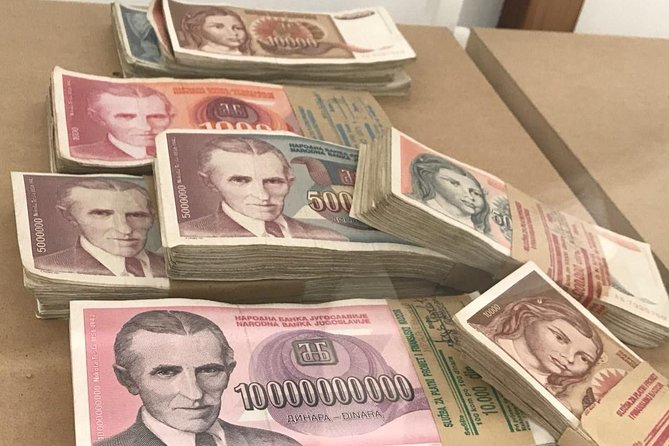
After the central walking route, you board a trolley toward Dedinje. The ride is included in the price, and it does more than move you from one point to another.
Public transport was a major part of daily life in Yugoslavia, and the trolley remains an active symbol of Belgrade’s urban character. You get a practical lesson in reaching a district outside the central sightseeing area, along with a reminder that history continues to operate as part of ordinary city life.
The ride also breaks up the walking. That matters because the tour runs for about four hours and includes a long museum visit. You can look out at Belgrade while the guide continues explaining how the city developed beyond its central squares.
Dedinje is known for embassies, large homes, and residential villas. It has a more exclusive feel than the central route, and its connection with Tito gives the final part of the tour a clear sense of place. The district is not just a backdrop. It helps explain where political power lived and how the Yugoslav leadership presented itself.
The tour is capped at 25 people, though some departures are much smaller. One group had six participants, which made it easier to ask questions and keep the discussion personal. If you are hoping for a small group, the maximum allows for a larger outing, so you should not assume every departure will feel intimate.
A completely different kind of day:
- Northern Serbia: Sremski Karlovci and Novi Sad Full-Day Tour from Belgrade
★ 5.0 · 425 reviews - Day Trip from Belgrade: Gems of Eastern Serbia
★ 5.0 · 424 reviews - Belgrade Nightlife Bar Pub Club Crawl with Drinks
★ 5.0 · 277 reviews - Taxi to/from Belgrade Airport to/from Belgrade City Center
★ 5.0 · 241 reviews
The Museum of Yugoslavia is the tour’s payoff
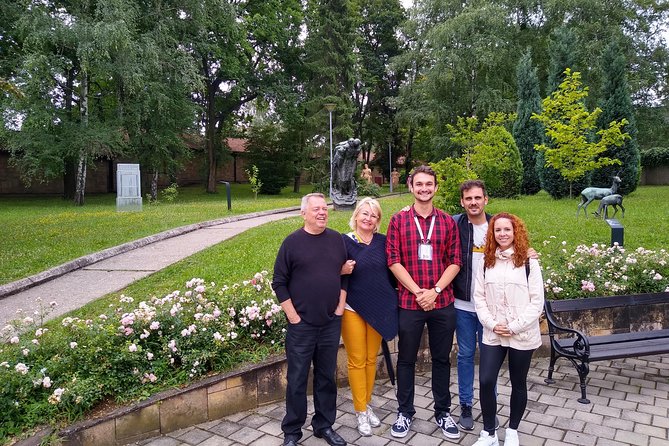
The Museum of Yugoslavia receives about 90 minutes, making it the longest stop. Entry is included, and this is where the tour’s earlier conversations come together.
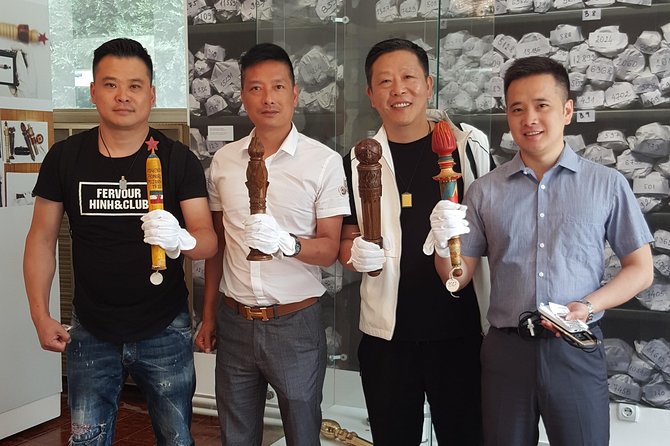
The museum focuses on Josip Broz Tito, his public life, and the country he led. You will see ceremonial gifts presented to the Yugoslav president, including a gift connected with the Apollo 11 crew. These objects show how Yugoslavia tried to maintain a position between East and West.
That middle position is central to understanding Tito’s legacy. Yugoslavia was socialist, but it did not simply follow Moscow. Its leaders cultivated international relationships, and the gifts in the museum give that diplomacy a physical form. A guide can help you read the objects as political signals rather than just impressive souvenirs.
The House of Flowers, Tito’s mausoleum, is the final stop. This gives the museum visit a more solemn finish. The building is tied to mourning, ceremony, memory, and the question of how a leader remains present in national life after death.
The museum is also where the tour may feel least like a conventional city walk. If you wanted only architecture and street scenes, 90 minutes indoors may seem long. If you want to understand Tito, Yugoslav identity, and the country’s final decades, this is the part you will be glad was included.
Several guides have received especially strong praise for this section. Nebo has been described as friendly, patient, and willing to answer every question. Dragana has been praised for clear explanations and a warm manner, while Radica has been singled out for enthusiasm and strong command of the subject. The individual guide matters here because the objects need context.
How broad is the communist focus?
The name suggests a tightly focused tour about communist Serbia. The actual experience is wider. You will cover the transition from the Yugoslav Kingdom to socialist government, World War II, Tito’s rise, daily life under socialism, the breakup of Yugoslavia, the conflicts of the 1990s, and Serbia’s present-day political concerns.
That wider scope is a benefit if you want to understand the period in sequence. You will see how one event led into another rather than learning isolated facts. It also helps explain why Serbian views of Tito, Yugoslavia, nationalism, and the 1990s can be complicated and emotional.
It can be a drawback if you specifically want a detailed study of communist ideology, party structures, secret police, or economic policy. The tour touches on those themes but also spends time on culture, public memory, transportation, monuments, and the city itself.
I would book it as a Yugoslav and 20th-century Belgrade tour with a strong communist-era thread. That description better matches the experience and should help you decide if the content suits your interests.
Guide quality shapes the morning
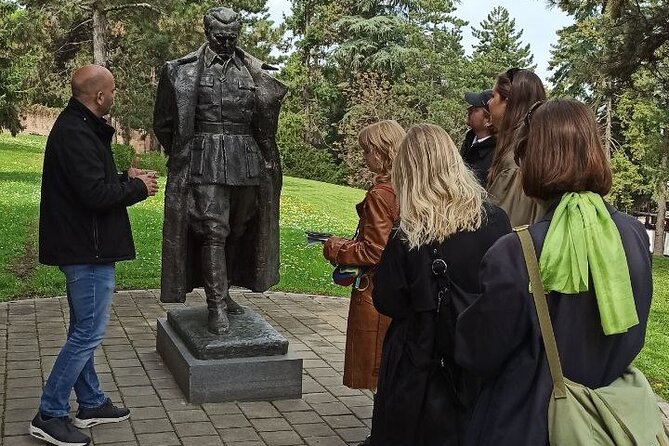
The most praised part of this experience is the guiding. Names that have received particular praise include Nebo, Nebojsa, Radica, Dragana, Marko, Borjan, Nina, Hristina, Isadora, and Cristina.
The recurring strengths are clear speech, humor, patience, and a willingness to discuss difficult subjects without avoiding them. Hristina was praised for explaining Serbia and the region in a sympathetic, thoughtful way. Isadora was noted for arranging special places into a chronological story, while Cristina received high marks for explaining the history step by step.
The tour can also become more personal than expected. One participant booked a shared departure during city protests and ended up alone. The operator still offered the tour, with a choice between canceling, changing to another experience with a partial refund, or paying the supplement to continue privately.
If you are the only person on a shared tour, a 75 percent supplement applies. You should be told at least 24 hours before departure and offered those choices. That policy is worth noting, but the willingness to run the tour privately can be a real advantage if this is the one subject you most want to explore.
Is $53.10 a fair price?
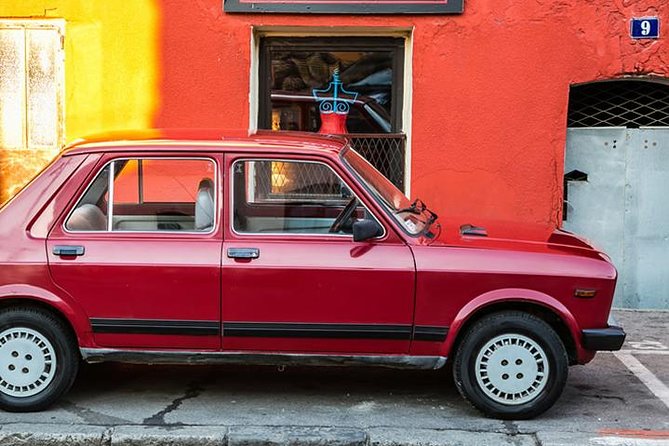
At $53.10 per person, you are paying for about four hours of guiding, central Belgrade walking, a trolley ride, and admission to the Museum of Yugoslavia. You also get help reaching Dedinje, an area you might not visit as easily on your own.
I consider that good value for a history-minded visitor. The museum alone would not explain the city center, and a basic walking tour would not normally include the trolley ride and House of Flowers. The guide is the key part of the price. If your guide encourages questions and connects the sites, the experience gives you a useful framework for the rest of your time in Serbia.
Group discounts are available, and the maximum group size is 25. The average booking time is 28 days ahead, so reserving early makes sense if your dates are fixed. Free cancellation is available up to 24 hours before the 10:00 am start. Changes or cancellations inside that window are not refunded.
Who should book this Belgrade tour?
You should book it if you enjoy political history, museums, personal stories, and walking through places that still carry public meaning. It suits first-time visitors who want a wider introduction to Belgrade, as well as returning visitors who have seen the main sights but want more context.
It is especially useful if you are unsure how to reach the Museum of Yugoslavia. The included trolley ride removes that practical problem and puts the museum into a clear half-day plan.
You may want another activity if you dislike long walks, prefer a short sightseeing circuit, or want a narrow academic focus on communist government. The route is active, the subject is politically sensitive, and the history does not always offer easy answers.
Should you book the Red Belgrade Communist Tour?
Book it if you want the story behind the streets. The strongest reasons are the guides, the thoughtful links between old and new Belgrade, the included trolley journey, and the Museum of Yugoslavia with Tito’s House of Flowers.
Go in expecting a broad account of Yugoslavia rather than four hours devoted only to communism. Wear good shoes, carry water, and come ready to ask questions. At $53.10, it is a solid choice for building an informed first picture of Serbia’s past and present.
FAQ
How long does the Red Belgrade Communist Tour last?
The tour lasts approximately four hours. The listed stops include about 20 minutes at Republic Square, 20 minutes at Terazije, 40 minutes around Pionirski Park, and 90 minutes at the Museum of Yugoslavia, with walking and trolley travel between them.
Where does the tour begin?
The meeting point is Trg Republike 9 in Belgrade. The tour starts at 10:00 am.
Where does the tour end?
The tour ends at the Museum of Yugoslavia after the visit to the House of Flowers.
Is the tour offered in English?
Yes. An English-speaking guide is included.
Does the tour include public transportation?
Yes. Trolley tickets are included, and the trolley takes you toward Dedinje and the Museum of Yugoslavia.
Is museum admission included?
Yes. The entry fee for the Yugoslav History Museum, also referred to as the Museum of Yugoslavia in the tour description, is included.
How many people can join the shared tour?
The maximum group size is 25 people. At least two passengers are required for the shared tour to operate without the solo supplement.
What happens if I am the only person booked?
If you are the only person on a shared departure, a 75 percent supplement applies. You will be informed no later than 24 hours before the tour and can choose to cancel without fees, select a different experience, or pay the supplement to continue with the tour.
Just added in Belgrade
- Private Half Day Serbia Tour Novi Sad and Petrovaradin Fortress★ 5.0 · 3 reviews
- Zasavica Bike Tour★ 5.0 · 1 review
- Private Belgrade Street Art and Adventures Walking Tour★ 5.0 · 4 reviews
- Private Wine Tasting by Party in Belgrade★ 5.0 · 3 reviews
- VIP Reservation Service in Belgrade★ 5.0 · 2 reviews
- Urban & Alternative Belgrade tour★ 5.0 · 4 reviews
- Rakija Tasting for groups in Belgrade★ 5.0 · 1 review
- Wonders of Eastern Serbia a Full Day Tour from Belgrade★ 5.0 · 1 review
Yugoslav History Tours, compared.
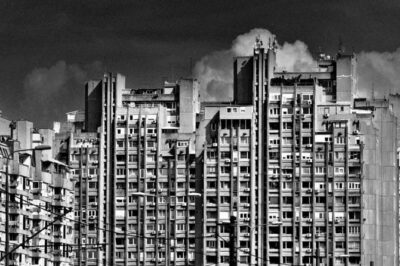
Architecture of New Belgrade – Brutalism Decoded
Read our review →
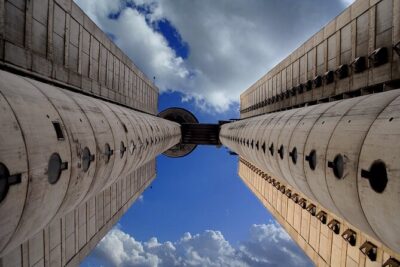

Private 4 Hours Space Architecture Tour in Belgrade
Read our review →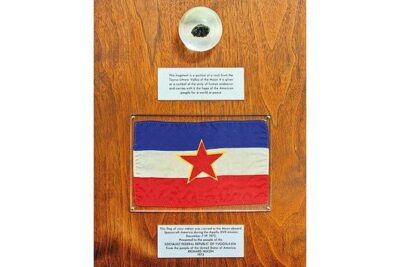
Browse the lists this tour appears in